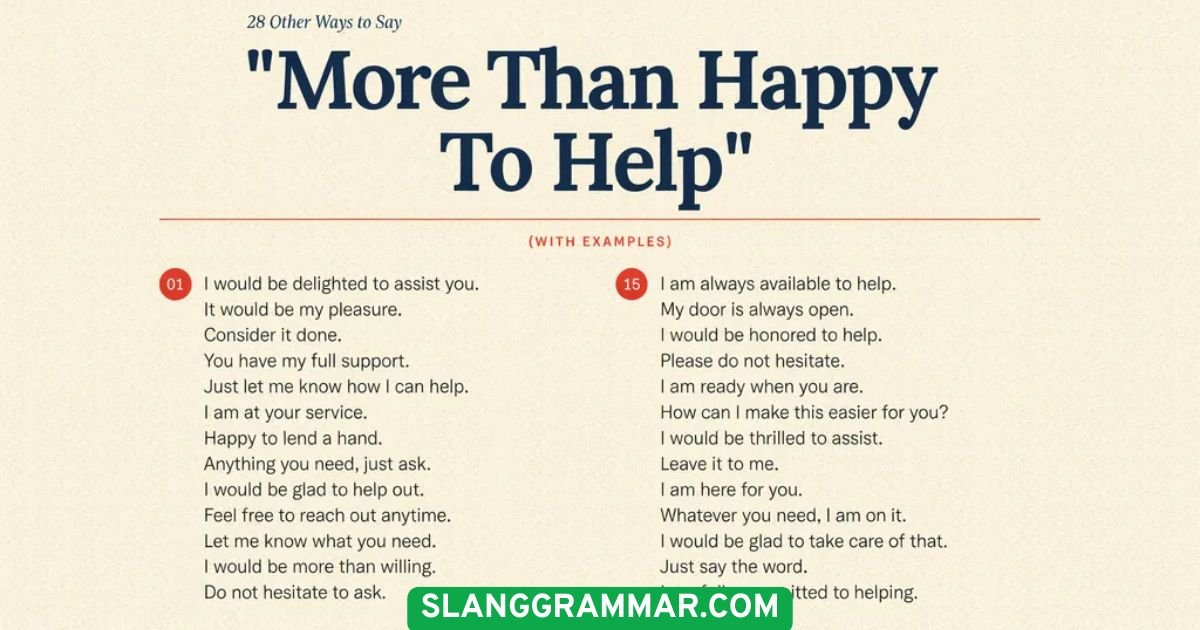
28 Other Ways to Say “More Than Happy to Help” (With Examples)
Picture this: a customer emails you with a tricky problem, and you want to respond in a way that feels genuine instead of robotic. You type out “more than happy to help” for the third time this week, and something in you pauses — does this phrase still sound sincere, or has it started to feel like a copy-paste line? That little hesitation is exactly why so many people search for fresh ways to express the same warm, willing attitude without sounding repetitive.
The phrase more than happy to help is one of the most common polite alternatives used in customer service, email replies, and everyday conversation. It signals enthusiasm, positive attitude, and genuine willingness — but using the exact same words over and over can drain the sincerity right out of them. Whether you’re writing a professional response to a client, replying to a coworker, or just trying to sound less scripted in a text message, knowing a variety of helpful expressions gives you the flexibility to match your tone to the moment.
In this article, we’ll break down what the phrase actually means, when it works best, whether it holds up in professional wording, and then walk through 28 solid alternatives you can swap in depending on the situation. By the end, you’ll have a toolkit of assistance synonyms ready for almost any context — formal, casual, or somewhere in between.
What Does “More Than Happy to Help” Mean?
At its core, “more than happy to help” is an intensified version of simply saying you’re willing to assist someone. The word “more” does the heavy lifting here — it’s not just that you’re happy to help, you’re exceptionally happy to, as if the request brought you genuine joy rather than mild inconvenience. This phrase grew out of everyday spoken English and slowly made its way into customer support phrases, email templates, and workplace communication because it strikes a nice balance: it’s warm enough to feel human, but still polished enough for business communication.
You’ll typically see it used in three main settings. First, in customer service, where representatives use it to reassure a client that their issue matters and won’t be brushed aside. Second, in workplace emails, where a colleague offers support on a task or project without sounding forced. Third, in casual conversation, where a friend or family member offers a hand with something small, like moving furniture or proofreading a resume. In every case, the phrase carries the same underlying message — willingness paired with a touch of enthusiasm — even though the context changes how formal or relaxed it should sound.
One thing worth understanding is that this phrase works best as a closing or offering line, not usually as the entire response. It’s meant to invite further conversation or signal openness, which is why so many versions of it end with something like “just let me know” or “feel free to reach out.” That structure — offer plus invitation — is part of what makes it effective, and it’s a pattern you’ll notice repeated across most of the alternatives we’ll cover below.
When to Use “More Than Happy to Help”
This phrase fits naturally into a handful of everyday situations, and recognizing them will help you decide when to use it as-is versus when to reach for one of the alternatives later in this guide. The first common scenario is responding to a customer or client inquiry, especially when they’ve expressed frustration or confusion. Saying you’re more than happy to help can soften the interaction and reassure them that their concern is being taken seriously rather than treated as a burden.
The second scenario is when offering support to a coworker or team member on a task that isn’t technically your responsibility. In this case, the phrase signals collaboration and a positive attitude toward teamwork, which matters a lot in workplace culture. The third situation is in follow-up emails, particularly when someone thanks you for previous assistance and you want to let them know the door remains open for future questions. Here, the phrase works almost like a friendly sign-off.
A fourth scenario worth mentioning is in service-based industries — hospitality, healthcare administration, tech support — where staff are trained to project warmth alongside competence. And finally, the phrase shows up often in casual personal exchanges, like helping a friend move apartments or assisting a family member with a tech issue, where it conveys genuine eagerness rather than obligation. Across all five of these situations, the common thread is that the phrase works best when the helper actually has the time, ability, and willingness to follow through — using it insincerely tends to backfire quickly.
Is It Professional or Polite to Say “More Than Happy to Help”?
The honest answer is that it depends heavily on context, tone, and how often you use it. In most business and customer-facing situations, the phrase is considered both professional and polite — it’s widely used in email response templates, support scripts, and workplace messaging precisely because it sounds friendly without crossing into overly casual territory. That said, it does have a few drawbacks worth knowing before you lean on it constantly.
Repetition is the biggest issue. When a phrase becomes a default reply used dozens of times a day, it starts to read as automatic rather than sincere, which can actually undercut the warmth it’s meant to convey. There’s also a slight risk of sounding overly eager in very formal or high-stakes communication, such as legal correspondence or executive-level emails, where a more measured tone might serve you better. Below is a simple breakdown of where it shines and where it falls short.
| Aspect | Strength | Limitation |
| Tone | Feels warm, friendly, and approachable | Can sound insincere if overused |
| Setting | Works well in customer service and casual workplace emails | Slightly too casual for formal legal or executive writing |
| Frequency | Builds rapport when used occasionally | Loses impact when repeated constantly |
| Clarity | Clearly communicates willingness | Doesn’t specify how you’ll help, so follow-up is often needed |
In short, the phrase is a solid, professional response in the right setting, but it shouldn’t be your only tool. That’s exactly where having a rotation of alternatives becomes genuinely useful — not just for variety, but for matching the specific tone a situation calls for.
28 Other Ways to Say “More Than Happy to Help”
Below is a full rundown of alternatives, each with its own personality, tone, and best-fit scenario. Some lean formal, some are clearly casual use, and others sit comfortably in semi-formal territory. Read through them with your own typical conversations in mind — you’ll likely find two or three that immediately feel like “your” phrases.
I’m Happy to Help
This is the simpler, more grounded cousin of the original phrase, and it’s one of the most versatile helper expressions out there. It drops the intensifier “more than,” which makes it feel calm and genuine rather than overly enthusiastic. The tone is warm but measured, which makes it a great fit for almost any professional response, from a quick Slack message to a formal client email.
“I’m happy to help with the report once you send over the data.”
It works particularly well when you want to sound supportive without seeming over-the-top, though it can feel slightly flat if the person you’re responding to is visibly stressed and needs extra reassurance.
I’d Be Glad to Assist
This version leans a touch more formal, making it a strong choice for business communication, official emails, or first-time interactions with a client. The word “assist” carries a slightly more professional weight than “help,” which is why this phrase often shows up in corporate or administrative settings.
“I’d be glad to assist with the onboarding process for your new team members.”
It fits beautifully in situations where you want to sound competent and composed, but it can feel a bit stiff if you’re chatting with a close friend or a casual coworker who’d expect something more relaxed.
It Would Be My Pleasure
There’s an old-school courtesy to this phrase that makes it ideal for formal settings — think hospitality, client relations, or any situation where you want to convey genuine graciousness. It signals that helping isn’t just acceptable to you, it’s something you actually enjoy.
“It would be my pleasure to arrange the meeting room for your visit.”
This phrase shines in customer-facing roles where politeness is part of the brand experience, but it can sound overly formal or even theatrical in a quick text message between coworkers who know each other well.
Let Me Know How I Can Help
This phrase works almost like an open invitation rather than a direct offer, which makes it especially useful when you’re not yet sure what kind of support is needed. The tone is friendly and flexible, fitting comfortably into both semi-formal and casual conversations.
“Let me know how I can help with the move this weekend.”
It’s a great choice when someone hasn’t fully explained their problem yet, since it invites them to specify what they need. The one place it falls short is when someone has already clearly stated their request — in that case, it can feel like you didn’t fully listen.
Feel Free to Reach Out
Often used as a closing line rather than an immediate offer, this phrase signals long-term availability rather than a one-time gesture. It carries a relaxed, approachable tone that works well in professional wording for follow-up emails or after a meeting wraps up.
“Feel free to reach out if anything comes up before the deadline.”
It’s perfect for situations where you want to leave the door open without committing to a specific task right then. It doesn’t work as well, though, when someone needs help right now, since it implies a future action rather than immediate support.
Don’t Hesitate to Ask
This alternative carries a reassuring, almost protective tone, gently nudging the other person to overcome any reluctance they might feel about asking for help. It’s commonly used in teaching, mentoring, and customer support contexts.
“Don’t hesitate to ask if any part of the instructions is unclear.”
It’s especially effective with people who tend to be shy about requesting assistance, since it directly addresses that hesitation. On the flip side, it can sound slightly patronizing if used with someone who is already confident and direct about their needs.
Read Also: 28 Other Ways to Say “Thanks for the Clarification” (With Examples)
I’m Here to Help
Short, steady, and dependable — this phrase works in almost any setting because it focuses on presence rather than enthusiasm. The tone is calm and supportive, making it a favorite in customer support phrases and crisis-response messaging.
“I’m here to help, so just walk me through what happened.”
It’s particularly strong when someone is frustrated or overwhelmed, since it reassures them without adding extra cheerfulness that might feel mismatched to their mood. It’s slightly less effective as an opening line in upbeat, celebratory contexts, where a warmer phrase might land better.
Glad to Be of Service
This one leans formal and slightly old-fashioned, which actually works in its favor for industries like hospitality, retail, or client services where a touch of traditional courtesy is expected. The tone is professional with a warm undercurrent.
“Glad to be of service — let us know if you need anything else during your stay.”
It’s an excellent fit for service-industry communication but can feel oddly formal in everyday personal messages, like replying to a friend’s text.
Happy to Lend a Hand
Casual and friendly, this phrase suits informal settings like helping a neighbor, a classmate, or a coworker with a non-urgent task. The imagery of “lending a hand” makes it feel personal and grounded rather than corporate.
“Happy to lend a hand with the yard work this weekend.”
It works well in relaxed, community-oriented contexts, but it doesn’t suit highly formal business writing, where it might come across as too informal for the setting.
Count on Me
This phrase emphasizes reliability over cheerfulness, making it a strong choice when someone needs reassurance that you’ll genuinely follow through. The tone is confident and supportive.
“Count on me to handle the client call while you’re out.”
It’s particularly effective in team settings where trust matters more than tone, but it can sound a little too casual or bold in a first-time professional email with someone you don’t know well yet.
At Your Service
Playful yet polite, this phrase carries a slightly theatrical charm that works nicely in hospitality, customer service, or lighthearted workplace banter. The tone is warm with a hint of old-fashioned formality.
“At your service — just tell me what you need for the presentation.”
It adds personality to routine interactions, but it can feel out of place in serious or sensitive conversations, such as addressing a customer complaint.
Ready to Help
Direct and energetic, this version conveys immediate availability without extra flourish. The tone sits comfortably between friendly and professional.
“Ready to help whenever you need me this afternoon.”
It’s a solid pick for fast-paced work environments where brevity matters, though it can sound a touch abrupt in more formal written correspondence that calls for fuller sentences.
Happy to Offer My Help
This phrasing softens the offer slightly by framing it as something you’re presenting rather than insisting on, which can feel more respectful in situations where the other person might want to decline. The tone is courteous and unforced.
“Happy to offer my help if you’d like a second opinion on the proposal.”
It’s especially useful when you’re unsure whether your help is wanted, but it can sound indirect or hesitant in situations that call for a more confident, immediate offer.
No Trouble at All
This phrase works best as a reply after being thanked, rather than as an initial offer. It reassures the other person that their request wasn’t burdensome. The tone is reassuring and modest.
“No trouble at all — happy I could fix it before your trip.”
It’s ideal for closing out a help interaction on a warm note, but it doesn’t function well as an opening line since it responds to gratitude rather than offering assistance upfront.
Delighted to Assist
This is one of the more elevated, formal options on this list, often appearing in luxury service, executive assistance, or high-end client communication. The tone is polished and genuinely warm.
“Delighted to assist with arranging your travel itinerary.”
It performs beautifully in premium service contexts, but it would feel noticeably out of place in a casual text to a friend or a quick internal team chat.
I’m Always Willing to Help
This phrase emphasizes consistency over a single instance of assistance, making it useful when you want to establish yourself as a reliable resource over time. The tone is steady and dependable.
“I’m always willing to help, so don’t worry about asking too often.”
It works well in mentoring relationships or long-term professional connections, though it can sound slightly repetitive if used in every single message rather than as an occasional reassurance.
It’s My Pleasure to Assist
A slightly more formal cousin of “it would be my pleasure,” this version works well in written correspondence and customer service scripts. The tone is gracious and composed.
“It’s my pleasure to assist with any questions about your account.”
It’s a strong fit for structured customer service replies, but it can feel scripted if used identically across many different conversations without variation.
I’ll Be Happy to Support You
This phrase leans toward ongoing collaboration rather than a single task, making it suitable for project-based work or mentorship. The tone is professional and encouraging.
“I’ll be happy to support you throughout the transition to the new system.”
It’s particularly effective when the help spans multiple steps or weeks, but it can feel like overkill for a tiny, one-off favor.
I’m More Than Willing to Help
Close in meaning to the original phrase but slightly less intense, this version still conveys strong willingness without the added flourish of “happy.” The tone is sincere and direct.
“I’m more than willing to help if you need extra hands for the event.”
It suits situations where you want to express genuine commitment, though it can sound a touch formal for very casual, low-stakes conversations.
Consider It Done
This phrase shifts the focus from offering help to guaranteeing the outcome, which conveys confidence and decisiveness. The tone is assured and energetic.
“Consider it done — I’ll have the slides ready by tomorrow morning.”
It works great when someone needs reassurance that a task will actually get finished, but it’s risky to use if you’re not fully certain you can deliver, since it sets a firm expectation.
I’ve Got You Covered
Casual, friendly, and reassuring, this phrase is popular in everyday workplace chat and personal relationships. The tone is warm and dependable.
“I’ve got you covered for tomorrow’s shift if something comes up.”
It’s perfect for informal settings where trust and ease matter more than polish, but it doesn’t translate well into formal written communication, like a client-facing email.
Read Also: 28 Other Ways to Say “Thank You for Your Consideration” (With Examples)
I’m Always Available to Help
This version highlights ongoing accessibility, which works particularly well in support roles, IT help desks, or customer service teams. The tone is steady and professional.
“I’m always available to help if any issues come up after the update.”
It reassures people that support won’t disappear after the initial interaction, though it can sound slightly impersonal if used as the very first response to someone in distress.
Whatever You Need, I’m Here
This phrase carries an emotional warmth that goes beyond typical task-based help, making it well-suited for personal relationships or supportive workplace mentorship. The tone is caring and open-ended.
“Whatever you need, I’m here, even if it’s just to talk things through.”
It’s a strong fit for emotionally sensitive situations, but it can feel slightly too intimate or vague for transactional business communication.
It Would Be a Pleasure to Assist
A more formal variation of “it’s my pleasure to assist,” this phrase suits written correspondence where a slightly elevated tone is appropriate, such as client onboarding letters or executive assistant communication. The tone is composed and respectful.
“It would be a pleasure to assist with the logistics for your upcoming conference.”
It works beautifully in polished, professional writing, but it can sound overly stiff in quick, informal exchanges.
I’m Glad to Lend My Support
This phrase softens “help” into “support,” which can feel more collaborative and less hierarchical, especially useful in team environments. The tone is friendly yet professional.
“I’m glad to lend my support as you prepare for the presentation.”
It fits well in peer-to-peer workplace communication, though it can feel slightly formal for very close personal relationships where simpler language would suit better.
You Can Rely on Me

This phrase centers on trust and dependability rather than enthusiasm, making it ideal for situations where consistency matters more than warmth. The tone is confident and steady.
“You can rely on me to handle the client follow-ups this week.”
It works particularly well in professional settings that value accountability, but it might feel a bit too formal or distant in a casual chat with a close friend.
I’m Eager to Assist
This version injects genuine enthusiasm into the offer, making it a good fit for situations where you want to convey real excitement about helping, such as starting a new project or mentoring someone. The tone is energetic and sincere.
“I’m eager to assist with the new client onboarding process.”
It works well when enthusiasm is appropriate and welcome, but it can feel mismatched in serious or somber situations where calm reassurance matters more than excitement.
It’s No Problem at All to Help
This closing phrase reassures the other person that their request wasn’t a burden, similar to “no trouble at all” but slightly more explicit about the act of helping itself. The tone is warm and easygoing.
“It’s no problem at all to help you move those boxes.”
It’s ideal for casual, friendly exchanges where you want to put someone at ease, but it doesn’t carry enough polish for formal business correspondence.
Quick Reference Table
Here’s a clean summary of every alternative covered above, along with its tone and the setting it suits best, so you can pick the right one quickly without rereading the full breakdown.
| Phrase | Tone | Best Use Case |
| I’m happy to help | Friendly, calm | Semi-formal, everyday replies |
| I’d be glad to assist | Professional | Formal business emails |
| It would be my pleasure | Warm, formal | Hospitality, client relations |
| Let me know how I can help | Friendly, flexible | Semi-formal, open-ended offers |
| Feel free to reach out | Friendly, relaxed | Follow-up emails |
| Don’t hesitate to ask | Reassuring | Teaching, mentoring |
| I’m here to help | Calm, steady | Customer support |
| Glad to be of service | Formal, warm | Hospitality, retail |
| Happy to lend a hand | Casual, friendly | Informal personal help |
| Count on me | Confident | Team-based work |
| At your service | Playful, formal | Hospitality, lighthearted offers |
| Ready to help | Direct, energetic | Fast-paced workplaces |
| Happy to offer my help | Courteous | Uncertain or sensitive offers |
| No trouble at all | Reassuring | Replying after thanks |
| Delighted to assist | Polished, formal | Premium or executive service |
| I’m always willing to help | Steady | Long-term professional relationships |
| It’s my pleasure to assist | Gracious | Customer service scripts |
| I’ll be happy to support you | Encouraging | Project-based collaboration |
| I’m more than willing to help | Sincere | General professional use |
| Consider it done | Confident | Guaranteeing outcomes |
| I’ve got you covered | Casual, warm | Informal workplace chat |
| I’m always available to help | Professional | IT and support roles |
| Whatever you need, I’m here | Caring | Personal, emotional support |
| It would be a pleasure to assist | Formal | Executive or client letters |
| I’m glad to lend my support | Friendly, professional | Peer collaboration |
| You can rely on me | Confident, steady | Accountability-focused work |
| I’m eager to assist | Enthusiastic | New projects, mentorship |
| It’s no problem at all to help | Easygoing | Casual personal exchanges |
Frequently Asked Questions
How do you say “I am more than happy to help”?
You can say, “I’d be glad to assist you” or “I’m happy to support you.”
These sound warm, polite, and professional.
What can I say instead of happy to help?
You can say, “Glad to assist,” “I’m here to help,” or “It’s my pleasure to help.”
These phrases work well in emails, chats, and customer service.
What to say instead of “more than happy”?
Use “very glad,” “pleased,” “delighted,” or “happy to assist.”
For example, “I’d be pleased to help with this.”
How do I professionally say I’m happy to help?
Say, “I’d be happy to assist you with this” or “Please let me know how I can support you.”
Both options sound respectful and business-friendly.
Is it professional to say “happy to help”?
Yes, “happy to help” is professional in most situations.
For a more formal tone, use “I’d be glad to assist.”
Conclusion
Every person can use many words to show willingness to help. The phrase More Than Happy to Help works well in many places, like emails, chats, and friendly talks. Friends, coworkers, and customers all like clear and warm words. A good speaker picks the right words for each moment. Simple words often work best, and they build trust fast.
Readers can practice these phrases every day to sound more natural. Practice builds confidence and skill over time. Anyone can choose calm words for calm moments and bright words for happy moments. The phrase More Than Happy to Help stays useful for many situations, both at work and at home. Good words build trust and respect between people, and they make every conversation smoother.
Related Guides:
1: 28 Other Ways to Say “You Got This” (With Real Examples)
2: 28 Other Ways to Say “It Was a Pleasure Meeting You” (Professional & Polite Alternatives)
3: 26 Other Ways to Say Okay (Formal, Casual & Professional)
4: 28 Professional Ways to Say “I Am Interested in This Position”
5: 25 Other Ways to Say “Sorry I Missed Your Call” (Professional & Polite Alternatives)