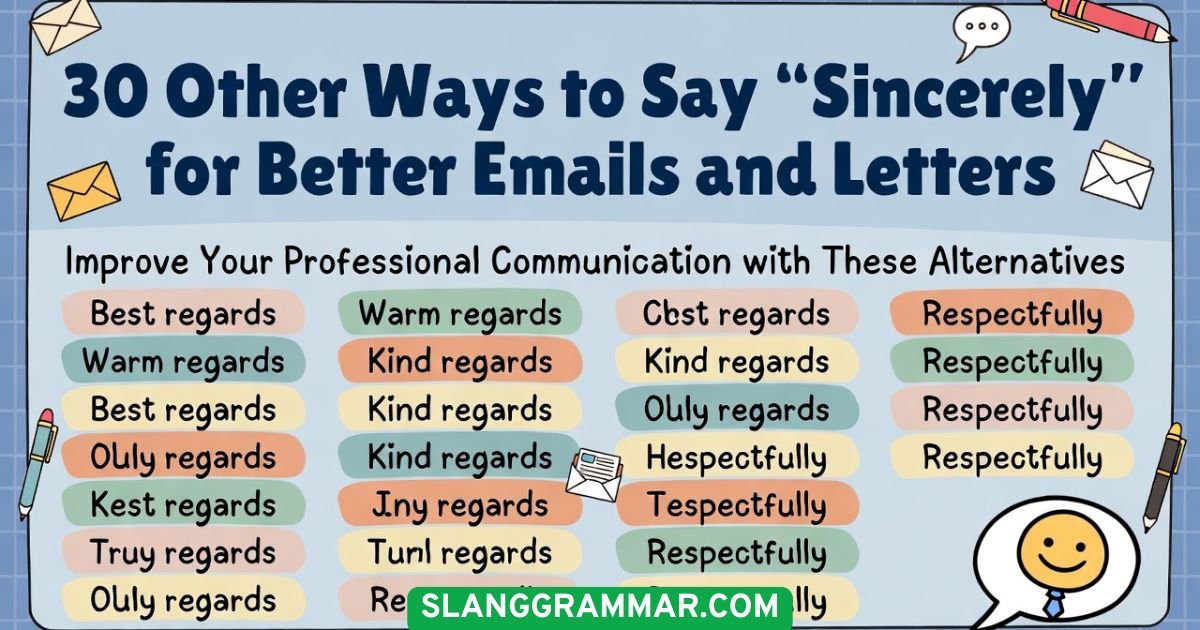
30 Other Ways to Say “Sincerely” for Better Emails and Letters
Sincerely is a polite word used at the end of a letter or email. It shows that your message is honest, respectful, and clear. People often use it in formal emails, cover letters, and business messages.
A good ending can make your message feel more professional. Sincerely helps the reader trust your words and understand your tone. It is simple, but it gives your writing a clean and respectful finish.
Sincerely is useful when you write to teachers, employers, or clients. It fits well in serious messages where respect matters. You can also use other phrases when you want a warmer or friendlier ending.
What Does “Sincerely” Mean?
Sincerely means honestly, genuinely, and with real intention. When you use it as a letter closing or email sign-off, you are telling the reader that your message comes from a respectful and truthful place. It gives your writing a respectful tone without sounding too emotional.
In older and formal writing, sincerely became a trusted closing phrase because it worked well in serious written communication. It was often used in business letters, official notes, job applications, and polite requests. Even today, many people in the USA still use it because it feels clear, professional, and familiar.
You will often see sincerely at the end of a formal letter, cover letter, complaint letter, or professional request. For example, a job seeker may end a cover letter with, “Sincerely, Amanda Clark.” This works because the message needs a formal expression and a respectful closing.
When to Use “Sincerely”
You can use sincerely when your message needs to sound respectful, polished, and serious. It works well when you are writing to someone you do not know closely, such as a hiring manager, professor, company representative, client, or government office.
It is also a strong choice for a cover letter because it keeps the ending simple and professional. If you are applying for a job, writing a business proposal, sending a formal complaint, or asking for official support, sincerely usually fits well. It shows that you understand basic email etiquette and know how to end a message with care.
However, sincerely may feel too stiff in friendly workplace chats or casual messages. If you are emailing a coworker you talk to often, a phrase like best regards, thanks, or take care may feel more natural. The goal is to match your message ending with the relationship and purpose of your note.
Is It Professional or Polite to Say “Sincerely”?
Yes, sincerely is both professional and polite. It remains one of the safest business correspondence closings because it is clear, respectful, and widely understood. Most readers will not find it strange or rude. In fact, many people expect it in formal writing.
The only issue is that sincerely can sometimes sound a little old-fashioned or distant. It does not always add warmth. If your message is friendly, thankful, or personal, another polite ending may work better. The table below shows the basic pros and cons.
| Point | Pros | Cons |
| Tone | Sounds professional, honest, and respectful | Can feel stiff or too formal |
| Best use | Great for a formal letter, cover letter, or serious business email | Not ideal for casual chats or friendly updates |
| Reader reaction | Most readers understand and accept it | Some may see it as plain or old-fashioned |
| Flexibility | Works in many formal situations | Does not show much warmth or personality |
30 Other Ways to Say “Sincerely”
Finding the right alternative to sincerely is easier when you know the tone you want. Some closings sound polished and professional. Some feel warm and friendly. Others show thanks, care, support, or hope for a reply.
Below are 30 useful ways to replace sincerely, plus one extra supportive option because it appears often in caring messages.
Best regards
Best regards is one of the most useful alternatives to sincerely because it works in many types of professional communication. It means you are ending your message with respect and good wishes, but it feels a little warmer than a strict formal closing.
You can use best regards in a business email, client message, workplace update, or networking email. It carries a professional tone without sounding cold. For example, you could write, “Thank you for reviewing the proposal. Best regards, Daniel.”
This phrase fits best when you want to sound polite and modern. It may not fit very emotional messages because it is still more professional than personal.
Kind regards
Kind regards is a softer and warmer version of best regards. It still works as a professional email closing, but it adds a friendly feeling. It tells the reader that you are being respectful and thoughtful.
This is a good choice for coworkers, clients, teachers, and people you have spoken with before. For example, “I appreciate your quick response and will send the files today. Kind regards, Melissa.”
Use kind regards when you want a polite but human email closing. It may feel too gentle for a very strict legal or official letter, where respectfully may work better.
Warm regards
Warm regards gives your message a kind and personal touch. It is still polite enough for many professional settings, but it has more warmth than regards or sincerely.
You might use warm regards when writing to a client you know well, a helpful coworker, or someone you want to encourage. For example, “I hope the new plan helps your team move forward smoothly. Warm regards, Rachel.”
This phrase works best in semi-formal messages. It may not be the best fit for a very serious complaint letter or a highly formal request.
With gratitude
With gratitude is a strong closing when your message is centered on thanks. It means you truly appreciate the reader’s help, time, support, or kindness. This phrase has a warm closing style and feels more meaningful than a simple “thanks.”
You can use with gratitude after someone writes a recommendation, gives advice, offers support, or helps with an important matter. For example, “Your guidance helped me understand the next steps clearly. With gratitude, Jason.”
This phrase fits best when thankfulness is the main feeling of the message. It may not fit a normal work update where no special thanks are needed.
Yours truly
Yours truly is a classic letter closing that sounds traditional and respectful. It means the writer is ending the message with sincerity and personal respect. In American English, it is often used in formal letters, though it can feel a little old-fashioned today.
You may use yours truly in official letters, formal requests, or traditional personal letters. For example, “I appreciate your attention to this matter. Yours truly, Rebecca Stone.”
This phrase works best in formal or traditional writing. It may sound too dated for a quick business email or modern workplace message.
All the best
All the best is friendly, positive, and easy to use. It means you are wishing the reader well. Compared with sincerely, it feels more relaxed and personal.
You can use all the best in friendly workplace emails, networking messages, goodbye notes, or casual professional updates. For example, “I hope your presentation goes well next week. All the best, Tyler.”
This phrase fits best in semi-formal or friendly writing. It may not be strong enough for a serious formal letter or official complaint.
Best wishes
Best wishes is a kind and supportive closing. It shows goodwill and care without sounding too emotional. It is one of the most common friendly email closings when you want to end with a positive feeling.
You might use best wishes when congratulating someone, sending a farewell note, or writing a friendly message. For example, “Congratulations on your new role. Best wishes, Lauren.”
This phrase works well in personal and semi-formal messages. It may not be the best choice for a direct business request where best regards sounds more professional.
Respectfully
Respectfully is a strong formal closing that shows serious respect. It is useful when writing to someone in authority or when the message needs a careful, polite tone.
You can use respectfully in letters to school officials, managers, government offices, or senior professionals. For example, “I ask that you please review my request at your earliest convenience. Respectfully, Aaron Miller.”
This closing fits best in formal and serious business correspondence. It may sound too stiff in a friendly email to a coworker.
Cheers
Cheers is casual, friendly, and positive. It is more common in relaxed communication, but many people also use it in workplace emails when the relationship is comfortable.
You might write, “I’ll send the updated file before noon. Cheers, Megan.” This sounds light and friendly, so it works well with teammates or familiar contacts.
Use cheers only when the setting allows a casual tone. It would not fit a cover letter, official complaint, or serious formal letter.
Read Also: Friendly Guide to 35 Other Ways to Say “Well Noted”
With appreciation
With appreciation is a polite and professional way to show thanks. It feels slightly more formal than “thank you” and more specific than sincerely.
This phrase works well when someone has helped you, answered a question, reviewed your work, or supported your request. For example, “Thank you for taking the time to explain the policy. With appreciation, Nicole.”
Use with appreciation in thank-you notes and respectful business email messages. It may feel unnecessary if the message is not about gratitude.
Warmest regards
Warmest regards is warmer than warm regards and more personal than best regards. It shows kindness, friendliness, and respect at the same time.
You can use warmest regards when you already have a positive connection with the reader. For example, “It was wonderful speaking with you again. Warmest regards, Andrew.”
This closing works well for friendly professional relationships. It may sound too warm for a first-time formal email or official letter.
Take care
Take care is a kind and friendly message ending. It shows that you care about the reader’s well-being. It is not as formal as sincerely, but it feels natural in many personal or relaxed professional messages.
You could write, “I hope your week gets easier from here. Take care, Olivia.” This works well when the message has a caring or supportive tone.
Use take care with friends, close coworkers, or familiar clients. Avoid it in very formal applications or official letters.
Looking forward
Looking forward shows that you expect something positive to happen next. It is often used when you are waiting for a reply, meeting, update, or future conversation.
For example, “I appreciate your time and am looking forward to our meeting on Friday.” This creates a hopeful and professional ending.
Use looking forward when there is a clear next step. It may not fit if the conversation is finished and no future action is expected.
Faithfully yours
Faithfully yours is a traditional and formal closing. It sounds respectful and serious. It is similar to yours faithfully, which is more common in British-style formal writing, but people in the USA still understand it.
You might write, “Thank you for considering my request. Faithfully yours, Margaret Lee.” This gives the message an old-style formal tone.
Use faithfully yours in traditional letters or formal personal notes. It may feel too old-fashioned for most modern emails.
Best regards always

Best regards always adds a lasting, friendly feeling to best regards. It suggests ongoing respect and goodwill. This phrase is more personal than a standard professional sign-off.
For example, “Thank you for your continued support over the years. Best regards always, Patrick.” This works when you have an established relationship with the reader.
Use it with long-term clients, trusted contacts, or people you know well. It may feel too familiar in a first email.
Thank you
Thank you is simple, clear, and useful. As a closing, it works well when you are asking for help, giving appreciation, or ending a request politely.
You might write, “Please let me know if you need any more details. Thank you, Sarah.” This sounds polite and direct.
Use thank you when gratitude or a request is part of the message. It may feel too plain if you want a warmer or more polished formal email ending.
Until next time
Until next time is friendly and conversational. It suggests that you expect to talk again. It feels more personal than sincerely and works well in casual messages.
For example, “I enjoyed catching up and hope we can talk again soon. Until next time, Chris.” This creates a relaxed ending.
Use it with friends, newsletter readers, or close contacts. Avoid it in serious business letters or formal requests.
Regards
Regards is short, neutral, and professional. It is one of the most common polite email sign-offs because it works in many everyday work messages.
You can write, “The report is attached for your review. Regards, Amanda.” This sounds clear and businesslike.
Use regards when you want a simple email sign-off without extra warmth. It may feel a little cold if the message is personal or thankful.
With best wishes
With best wishes is warm, polite, and thoughtful. It is similar to best wishes, but the added “with” makes it feel more complete and graceful.
For example, “I hope your move goes smoothly. With best wishes, Hannah.” This works well in personal notes, farewell messages, and gentle professional emails.
Use this phrase when you want to show kindness. It may not fit a direct business update where a shorter closing works better.
Stay safe
Stay safe is a caring closing used when safety, health, travel, weather, or difficult circumstances matter. It shows concern in a simple way.
You might write, “I hope the storm passes quickly in your area. Stay safe, Daniel.” This feels thoughtful and supportive.
Use stay safe when the situation makes care appropriate. It would feel odd in a normal sales email or job application.
Take it easy
Take it easy is very casual and relaxed. It means you want the reader to feel calm or not stress too much. It is friendly, but not formal.
For example, “You’ve done a lot this week, so enjoy the weekend. Take it easy, Jake.” This works with friends or close coworkers.
Use it in casual communication only. Do not use it in a formal letter, serious business email, or professional application.
Until we meet again
Until we meet again is warm, personal, and slightly emotional. It suggests that you hope to see or speak with the reader in the future.
You could write, “I enjoyed our time together and hope our paths cross soon. Until we meet again, Maria.” This gives the message a thoughtful ending.
Use it for farewell notes, personal letters, or meaningful messages. It is usually too emotional for normal business correspondence.
In appreciation
In appreciation is formal and thankful. It shows that you respect what the reader has done and want to end with gratitude.
For example, “Your support made this project much easier to complete. In appreciation, Steven.” This sounds polished and sincere.
Use in appreciation for professional thank-you letters, formal notes, or recognition messages. It may feel too formal for a quick casual reply.
Looking forward to hearing from you
Looking forward to hearing from you is a practical and professional closing when you expect a response. It works well in job emails, proposals, requests, and follow-ups.
You might write, “I have attached my resume for your review and am looking forward to hearing from you.” This politely reminds the reader that a reply is welcome.
Use it when your message needs a response. Avoid it when no reply is needed because it can create unnecessary pressure.
With warm thoughts
With warm thoughts is gentle, personal, and caring. It works best when your message is emotional, supportive, or thoughtful.
For example, “I’m keeping your family in my thoughts during this time. With warm thoughts, Elaine.” This creates a soft and compassionate ending.
Use it for sympathy notes, supportive messages, or personal letters. It is not a good fit for standard business emails.
Read Also:
With much appreciation
With much appreciation shows stronger gratitude than with appreciation. It tells the reader that their help or kindness truly mattered.
You could write, “Your time and advice meant a lot to me. With much appreciation, Kevin.” This sounds sincere and respectful.
Use it when someone gave meaningful support. It may feel too strong for a small routine favor.
Take care of yourself
Take care of yourself is personal and caring. It shows concern for the reader’s well-being in a direct way.
For example, “I know this has been a difficult week, so please take care of yourself. Emma.” This phrase feels warm and human.
Use it with friends, family, close coworkers, or someone going through a hard time. Avoid it in formal professional writing because it can feel too personal.
All the best to you

All the best to you is a friendly and positive closing. It is slightly more personal than all the best because it speaks directly to the reader.
You might write, “I hope your new business grows beautifully. All the best to you, Rachel.” This sounds supportive and kind.
Use it in friendly professional messages, farewell notes, or personal emails. It may feel too casual for official documents.
With kindest regards
With kindest regards is polished, warm, and respectful. It is a more formal version of kind regards and works well when you want to sound extra courteous.
For example, “Thank you for your time and thoughtful consideration. With kindest regards, Laura.” This gives your message a refined professional tone.
Use it in formal but friendly business writing. It may sound too fancy in quick everyday emails.
In solidarity
In solidarity means you stand with the reader or support a shared cause. It carries a serious and supportive tone.
You might write, “We support your efforts to bring positive change to the community. In solidarity, Marcus.” This works in advocacy, nonprofit, community, or support-based messages.
Use it when the message is about shared values, support, or unity. Do not use it in normal workplace emails unless that meaning truly fits.
Stay strong
Stay strong is encouraging and supportive. It tells the reader to keep going during a difficult time. This phrase is more personal than professional.
For example, “I know this season has been hard, but I believe you will get through it. Stay strong, Natalie.” This sounds caring and hopeful.
Use stay strong in personal support messages. Avoid it in formal business writing because it can feel too emotional.
Quick Reference Table
This table gives you a simple way to compare each alternative to sincerely by tone and best use.
| Alternative Phrase | Best Use Case | Tone |
| Best regards | Formal / semi-formal emails | Professional, polite |
| Kind regards | Workplace or client emails | Warm, professional |
| Warm regards | Friendly professional messages | Warm, respectful |
| With gratitude | Thank-you notes | Grateful, sincere |
| Yours truly | Traditional letters | Formal, classic |
| All the best | Friendly professional notes | Positive, friendly |
| Best wishes | Congratulations or farewells | Kind, warm |
| Respectfully | Serious formal requests | Respectful, formal |
| Cheers | Casual work messages | Friendly, informal |
| With appreciation | Professional thank-you emails | Polite, thankful |
| Warmest regards | Warm business relationships | Very warm, respectful |
| Take care | Personal or relaxed messages | Caring, friendly |
| Looking forward | Follow-ups and next steps | Hopeful, professional |
| Faithfully yours | Traditional formal letters | Formal, old-fashioned |
| Best regards always | Long-term contacts | Warm, loyal |
| Thank you | Requests or appreciation | Polite, direct |
| Until next time | Friendly notes or newsletters | Casual, conversational |
| Regards | Short business emails | Neutral, professional |
| With best wishes | Personal or gentle messages | Warm, polite |
| Stay safe | Health, travel, or concern | Caring, supportive |
| Take it easy | Friends or close coworkers | Relaxed, informal |
| Until we meet again | Farewell messages | Personal, thoughtful |
| In appreciation | Formal thanks | Respectful, grateful |
| Looking forward to hearing from you | Requests needing replies | Professional, clear |
| With warm thoughts | Sympathy or support notes | Gentle, caring |
| With much appreciation | Strong thank-you messages | Deeply grateful |
| Take care of yourself | Personal support | Caring, personal |
| All the best to you | Friendly farewells | Positive, warm |
| With kindest regards | Courteous formal emails | Polished, respectful |
| In solidarity | Advocacy or support messages | Serious, supportive |
| Stay strong | Personal encouragement | Caring, emotional |
Common Mistakes to Avoid When Choosing an Email Closing
A good email closing should match the message, not fight against it. One common mistake is using a casual phrase in a serious message. For example, ending a cover letter with cheers or take it easy can make the message feel less professional.
Another mistake is using a very formal phrase when the relationship is friendly. If you email a close coworker every day, faithfully yours may sound unnatural. A warmer phrase like best regards, thank you, or take care may fit better.
You should also avoid using a closing that creates the wrong expectation. Looking forward to hearing from you is helpful when you want a reply, but it may feel pushy if the message does not need one. The best professional sign-off is the one that supports your purpose clearly.
FAQ
How do you politely end an email?
You can politely end an email with Sincerely, Best regards, or Thank you.
These closings sound respectful and professional.
What is another way to say sincerely in an email?
Another way to say Sincerely is Best regards.
You can also use Kind regards or Respectfully.
What is a synonym for closing a letter?
A synonym for closing a letter is sign-off.
You can also call it a letter closing or closing phrase.
What is a better word for “sincerely”?
A better word for Sincerely can be Best regards.
Use With gratitude when you want to show thanks.
What is better than sincerely?
Best regards is often better than Sincerely for modern emails.
It sounds polite, professional, and friendly.
Conclusion
Sincerely is a helpful word for ending formal letters and emails in a polite way. It shows honesty, respect, and a clear purpose. Many students, workers, and professionals use this word when they want their message to sound serious and kind. It fits well in cover letters, school emails, business messages, and official notes. This closing helps the reader feel that the writer has shared a genuine message.
Learning other ways to say Sincerely can make writing better and more useful. Some messages need a warm ending, and some need a professional ending. Phrases like “Best regards,” “Kind regards,” “With gratitude,” and “Respectfully” help writers choose the right tone. A strong closing makes the whole message feel complete, clear, and respectful.
Related Guides:
1: Better Ways to Say Have a Good Rest of Your Day in Everyday and Professional Conversations
2: 30 Other Ways to Say “In the Text It States” Clearly and Professionally
3: 30 Other Ways to Say “Token of Appreciation”
4: 30 Other Ways to Say “I Enjoyed Your Company” Naturally
5: 30 Professional Ways to Say “Thank You for the Update” in Emails and Workplace Messages