25 Other Ways to Say I Was Referred to You By
Picture this: you are halfway through a job application when a small field stops you cold — “Referred by.” Or maybe you are staring at a blank email, trying to open a message to someone you have never met without sounding like a stranger. Plenty of people pause at exactly that moment and search what does referred by mean, because the words you choose here decide whether your message gets a warm reply or none at all.
The classic opener I was referred to you by does a lot of heavy lifting. It names your mutual contact, borrows their credibility, and gives the reader a reason to keep reading. But it is not the only way to make that introduction — and sometimes not the best one. A hiring manager, a potential mentor, and a future business partner all respond to slightly different wording.
Below, you will find what the phrase means, when it works best, and 25 polished alternatives — each with its tone, a realistic example, and honest guidance on where it shines or falls flat.
What Does I Was Referred to You By Mean?
At its core, I was referred to you by means: someone we both know suggested I contact you. That someone — a colleague, friend, or former manager — has made a personal introduction on your behalf, and you are cashing in some of their trust and reputation to open the conversation.
The phrase signals three things at once. It explains how you found the person, so your message does not feel like random cold outreach. It offers a quiet endorsement — the referrer thinks well of both sides. And it creates instant common ground: you already share a connection.
Its shorter cousin, “referred by,” appears on forms and applications, where only a name is expected. In full sentences — emails, cover letters, LinkedIn messages — the complete phrase sounds warmer.
When to Use I Was Referred to You By
The most common setting is the job search. When a current employee passes your name to a recruiter or hiring manager, saying so in your first message moves you out of the anonymous pile. A job referral mentioned clearly and early can be the difference between a skimmed application and a real conversation.
It is also the standard opener for networking outreach. Reaching out for an informational interview, industry advice, or a possible collaboration feels far less intrusive when a shared contact explains why you are writing. The referral turns a cold message into a warm introduction.
Mentorship requests are another natural home. Asking a busy person for guidance is a big request, and naming the person who suggested them shows respect for their time and explains why you chose them specifically, rather than blasting the same note to fifty people.
Finally, it works in business development and sales — carefully. A genuine referral from a happy client opens doors cold pitches cannot — but only when the connection is real and the referrer would confirm it.
Is It Professional or Polite to Say I Was Referred to You By?
Yes — it is both professional and polite, and the safe default for a first message to someone you do not know. It is honest about how you got their name, it credits the person who helped you, and it flatters the reader slightly: someone thought highly enough of them to pass their name along.
The honest caveats are about fit, not correctness. With a close friend or existing contact, it can sound oddly stiff — as if you are writing to a stranger. And if the referral is weak — a name you overheard, not a real recommendation — the phrase can backfire when the reader checks.
| Pros | Cons |
|---|---|
| Instantly builds trust and credibility | Can sound stiff with people you already know |
| Explains why you are reaching out | Only works when the referral is genuine |
| Flatters the reader and credits the referrer | Slightly formal for casual messages or chats |
25 Other Ways to Say I Was Referred to You By
The phrases below are all i was referred to you by synonyms, ranging from boardroom-formal to friendly and light. Every one keeps the [Name] placeholder for your referrer’s name.
1. We Were Introduced Through [Name]
We were introduced through [Name] frames the referral as a two-way introduction, not a one-sided approach. It carries a friendly tone with a professional edge, best when the referrer has mentioned you both to each other.
Example: “We were introduced through Emma, who mentioned you lead the design team here.”
It shines in networking emails with a mutual connection. If the referrer only gave you a name, it promises more than actually happened.
2. Your Name Came Highly Recommended by [Name]
Your name came highly recommended by [Name] leads with praise for the reader — one of the warmest openers on this list. The professional tone suits consultants and specialists whose expertise is the reason you are writing.
Example: “Your name came highly recommended by Dr. Patel, who said your clinic handles cases like mine every week.”
Save it for people whose reputation is the point. For a routine request, it overshoots and sounds like buttering up.
3. I Learned About You from [Name]
I learned about you from [Name] is calm, factual, and modest — the referrer shared who this person is, without claiming a strong endorsement. Its neutral tone suits academic and research first contact.
Example: “I learned about you from Sarah, your former student, while researching graduate programs.”
It fits when the referrer simply passed along information. When someone actively championed you, it undersells their support.
4. I Was Guided to You by [Name]
I was guided to you by [Name] suggests the referrer did more than drop a name — they steered you deliberately, like a guide pointing down the right path. Its respectful, slightly formal tone suits advice-seeking messages.
Example: “I was guided to you by Mr. Alvarez, who felt your lab would be the right fit for my research.”
Use it when asking for guidance yourself. For a straightforward business pitch, the imagery feels heavier than the situation needs.
5. I Heard About Your Work from [Name]
I heard about your work from [Name] compliments the reader’s output rather than their name, which creative professionals appreciate. Its warm tone works well for collaboration and project outreach.
Example: “I heard about your work from Laura, who showed me the community garden project you designed last spring.”
It lands best when you can name something specific. If you know nothing about their work, the compliment rings hollow fast.
6. I Was Given Your Details by [Name]
I was given your details by [Name] is the practical, no-frills option: your contact details changed hands, nothing more. The formal tone suits applications and formal inquiries, especially British-style business writing.
Example: “I was given your details by James in HR regarding the analyst opening.”
Reach for it when the exchange was just information. Between people who know each other socially, it sounds like a police report.
7. [Name] Spoke Very Highly of You
Starting with the referrer — [Name] spoke very highly of you — puts praise first and your request second, which readers love. It carries a warm tone and genuine appreciation, ideal for mentorship and consulting outreach.
Example: “Mark spoke very highly of you and suggested your coaching could help our sales team.”
It works when the praise is real and specific. As empty flattery to a senior executive, it sounds like a sales script.
8. I Was Pointed in Your Direction by [Name]
I was pointed in your direction by [Name] is the classic idiom for a casual steer — someone aimed you the right way without a formal introduction. Its friendly tone sits comfortably in everyday work emails.
Example: “I was pointed in your direction by Priya, who said you handle small-business tax questions.”
It suits informal, practical requests. For a senior leadership role or legal matter, it undersells the approach.
9. I’m Reaching Out at [Name]’s Recommendation
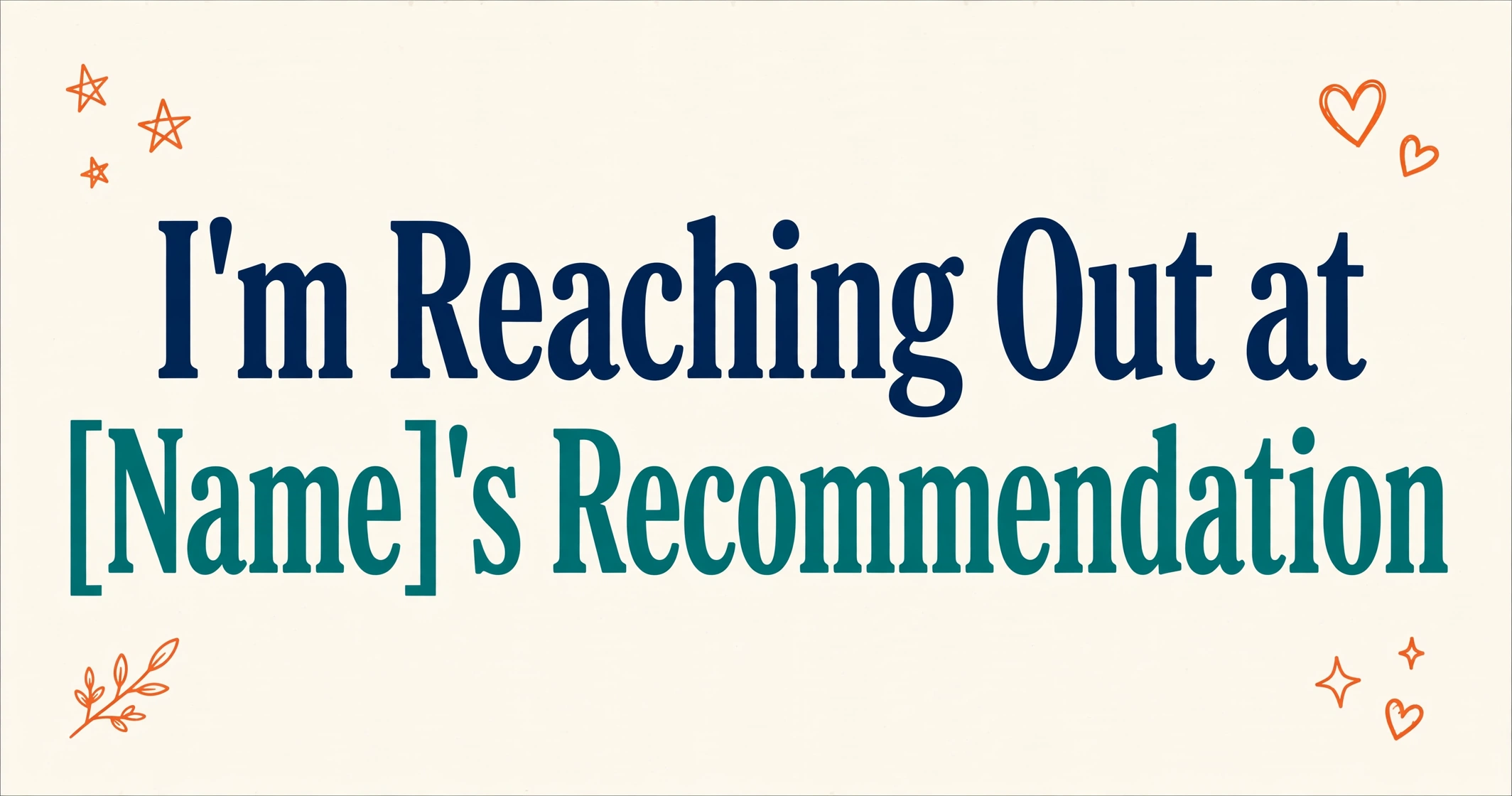
I’m reaching out at [Name]’s recommendation is crisp and modern — it names the recommendation as the reason for writing right away. The professional tone makes it a favorite for LinkedIn messages and short business emails.
Example: “I’m reaching out at Anna’s recommendation — she thought my logistics experience could interest your team.”
It shines when brevity matters. In a long, formal cover letter, it can feel abrupt.
10. We Share a Connection in [Name]
We share a connection in [Name] highlights the mutual connection itself, building instant rapport and common ground. Its friendly tone suits networking platforms and alumni outreach.
Example: “We share a connection in Tom, who worked with both of us at the Harbor Festival.”
It works when the shared person genuinely links you both. If the referrer barely knows the reader, it stretches things.
11. I Was Told You’d Be the Right Person to Speak With by [Name]
I was told you’d be the right person to speak with by [Name] flatters the reader’s judgment — someone identified them as the person for this question. Its confident, polite tone suits advice and consulting requests.
Example: “I was told you’d be the right person to speak with by Rachel, who says nobody knows grant funding like you do.”
Use it when you genuinely need their specific expertise. For a general inquiry, it overpromises.
12. I Received Your Contact from [Name]
I received your contact from [Name] is the most transactional phrase here — short, factual, entirely about how the information reached you. Its formal tone fits applications, vendor inquiries, and official correspondence.
Example: “I received your contact from Daniel at the trade fair and wanted to follow up about wholesale pricing.”
It is perfect when efficiency beats warmth. For a mentorship request, it sounds like a delivery notification — too cold for a personal favor.
13. Your Work Was Brought to My Attention by [Name]
Your work was brought to my attention by [Name] is the most elevated option here — the reader’s work has a reputation that travels. The formal tone suits academic, publishing, and senior outreach.
Example: “Your work was brought to my attention by Sofia, who shared your paper on coastal erosion with our department.”
Save it for established figures whose work circulates. To a junior colleague, it sounds like a legal letter.
14. I Was Introduced to Your Expertise Through [Name]
I was introduced to your expertise through [Name] compliments the reader’s skill rather than their name — the referrer showcased their ability. It carries a respectful, professional tone for specialist outreach.
Example: “I was introduced to your expertise through Chris, who showed me the data dashboard you built for his startup.”
It fits when their skill is exactly why you are writing. For a general networking hello, praising expertise you have not seen feels presumptuous.
15. [Name] Thought I Should Get in Touch with You
[Name] thought I should get in touch with you is conversational and disarming — it reads like a friend suggesting it over coffee. The casual tone works well for peer networking and community introductions.
Example: “Nina thought I should get in touch with you since we are both launching food blogs this year.”
Use it where a relaxed opener builds rapport. In a formal application to a large firm, it sounds too loose.
16. I Reached Out on [Name]’s Suggestion
I reached out on [Name]’s suggestion is light and modern — the contact reads as a friendly tip rather than a formal referral. Its casual tone suits follow-up messages and social-professional platforms.
Example: “I reached out on Alex’s suggestion — he mentioned you might need a photographer for the spring campaign.”
It shines for low-pressure outreach. When you need the referrer’s endorsement to do real work — a competitive job, say — a suggestion sounds weaker.
17. I Was Told You Could Help Me by [Name]
I was told you could help me by [Name] is direct about what you need: help. Its honest, friendly tone suits support requests, community groups, and practical problem-solving.
Example: “I was told you could help me by Grace, who said you fixed her visa paperwork timeline last year.”
It works when the ask is clear and modest. Opening a senior partnership discussion by asking for help puts you in a weaker position.
18. [Name] Connected Us
[Name] connected us is the shortest phrase here — three words crediting the referrer as the active link between you. Its punchy, casual tone fits follow-ups after an introduction has already been made.
Example: “Peter connected us last week, and I wanted to follow up on the venue partnership we discussed.”
It is ideal for second messages, once the introduction exists. As a true first contact, it claims a connection the reader may not recall.
19. Through [Name], I Had the Pleasure of Hearing About You
Through [Name], I had the pleasure of hearing about you is the most gracious option here, pairing the referral with real gratitude. Its warm tone, edging formal, suits thank-you-flavored outreach and mentorship requests.
Example: “Through Olivia, I had the pleasure of hearing about you and your work with first-time homebuyers.”
It shines when the referrer described the reader glowingly. Laid on thick in a sales context, it reads as polished flattery.
20. I Discovered Your Profile Through [Name]
I discovered your profile through [Name] is the digital-age staple — honest about finding someone online, with the referrer as the bridge. Its neutral tone is built for LinkedIn and portfolio sites.
Example: “I discovered your profile through Ben, who shared your post on warehouse automation.”
Use it when the discovery happened online. In a handwritten or formal letter, it makes no sense.
21. I Was Encouraged to Connect with You by [Name]
I was encouraged to connect with you by [Name] suggests the referrer actively pushed you to make contact — a small vote of confidence both ways. Its motivated, friendly tone suits collaboration outreach.
Example: “I was encouraged to connect with you by Maria, who thinks our tutoring programs could share resources.”
It fits when the referrer truly urged the meeting. If they merely shared an email address, “encouraged” inflates things.
22. I Found My Way to You Thanks to [Name]
I found my way to you thanks to [Name] tells a small story — you were looking, and the referrer pointed the way. The warm tone suits personal requests, local services, and community tips.
Example: “I found my way to you thanks to Kevin, who swears by your piano lessons for his daughter.”
It works for personable, small-scale outreach. In corporate or legal contexts, the storytelling feels out of place.
23. I Was Lucky Enough to Be Referred to You by [Name]
I was lucky enough to be referred to you by [Name] frames the referral as good fortune, flattering the reader and thanking the referrer in one breath. Its warm tone suits mentorship requests and competitive opportunities.
Example: “I was lucky enough to be referred to you by Julia, who interned on your team two summers ago.”
Use it when the opportunity feels like a real break. For a routine inquiry, calling yourself lucky sounds like you doubt you belong there.
24. I Was Fortunate to Be Introduced to You by [Name]
I was fortunate to be introduced to you by [Name] is the most gracious introduction phrase here, pairing a real introduction with sincere appreciation. The formal tone fits award, academic, and executive contexts.
Example: “I was fortunate to be introduced to you by Sam at the alumni dinner, and I have wanted to continue our conversation since.”
It shines after an in-person introduction with some ceremony. In a quick chat message, it feels like a suit at a barbecue.
25. I Was Sent Your Way by [Name]
I was sent your way by [Name] is the breeziest option — relaxed, brief, and confident. Its casual tone suits tradespeople, local services, and friendly favors.
Example: “I was sent your way by Hannah, who said you are the only plumber she trusts with an old house.”
It works where speed and friendliness matter. In a corporate cover letter, it sounds like you wandered in.
Quick Reference Table
The table below puts all 25 alternatives side by side, matched to situation and tone.
| Alternative Phrase | Best Use Case | Tone |
|---|---|---|
| We were introduced through [Name] | Networking emails | Friendly |
| Your name came highly recommended by [Name] | Consultant outreach | Professional |
| I learned about you from [Name] | Academic contact | Neutral |
| I was guided to you by [Name] | Mentorship requests | Formal |
| I heard about your work from [Name] | Project collaboration | Warm |
| I was given your details by [Name] | Formal inquiries and applications | Formal |
| [Name] spoke very highly of you | Consulting outreach | Warm |
| I was pointed in your direction by [Name] | Everyday requests | Friendly |
| I’m reaching out at [Name]’s recommendation | LinkedIn messages | Professional |
| We share a connection in [Name] | Alumni networking | Friendly |
| I was told you’d be the right person to speak with by [Name] | Expert advice requests | Polite |
| I received your contact from [Name] | Vendor and official inquiries | Formal |
| Your work was brought to my attention by [Name] | Senior and academic outreach | Formal |
| I was introduced to your expertise through [Name] | Specialist referrals | Professional |
| [Name] thought I should get in touch with you | Peer networking | Casual |
| I reached out on [Name]’s suggestion | Low-pressure follow-ups | Casual |
| I was told you could help me by [Name] | Practical help requests | Friendly |
| [Name] connected us | Follow-up messages | Casual |
| Through [Name], I had the pleasure of hearing about you | Mentorship outreach | Warm |
| I discovered your profile through [Name] | Online platforms | Neutral |
| I was encouraged to connect with you by [Name] | Collaboration outreach | Friendly |
| I found my way to you thanks to [Name] | Personal requests | Warm |
| I was lucky enough to be referred to you by [Name] | Competitive opportunities | Warm |
| I was fortunate to be introduced to you by [Name] | Executive introductions | Formal |
| I was sent your way by [Name] | Friendly favors | Casual |
Frequently Asked Questions About I Was Referred to You By
Should I always name the person who referred me?
Yes, almost always. Naming the referrer gives the phrase its credibility — a real name lets the reader place you instantly. If they asked not to be named, say a colleague suggested the contact instead.
Can I write just a name in the “Referred by” field on a job application?
That is exactly what the field is for — the full name of the person who referred you. Save the full sentences for your cover letter and first email to the team.
Is it rude to say I was referred to you by someone the reader barely knows?
Not rude, but weaker. A distant connection still explains how you found them, which beats unexplained cold outreach. Be honest about the relationship rather than dressing it up as an endorsement.
What if I cannot remember exactly who referred me?
Do not guess — a wrong name damages your first impression more than no name at all. Check your messages or ask around until you can confirm who sent you.
How do I thank the person who referred me?
Send a short note once you have made contact, and again if it leads somewhere. Genuine gratitude takes a minute and keeps the door open for future networking.
Conclusion
So, what does referred by mean when you strip it down? It means a real person vouched for the connection. I was referred to you by will always be a solid, professional way to say it, but the 25 alternatives above let you tune the warmth, formality, and confidence to the reader in front of you. Name your referrer honestly, pick the tone that matches the relationship, and let the shared connection do what it does best: turn a stranger’s inbox into a conversation.
If these outreach openers helped, you may also enjoy our guide to other ways to say please let me know — polite follow-up phrases that keep a new professional conversation moving without sounding pushy.