Better Encouragement: 28 Other Ways to Say Rooting for You
Rooting for You means you support someone and want them to succeed. It shows that you believe in their effort, dream, or goal. People use it to give hope, confidence, and encouragement.
Sometimes, one kind phrase can make a person feel stronger. When someone feels nervous or unsure, supportive words can help. That is why Rooting for You is a warm and powerful message.
You can use Rooting for You with friends, family, coworkers, or students. It fits interviews, exams, games, new jobs, and hard times. It is simple, friendly, and full of positive support.
What Does rooting for you Mean?
Rooting for you means “I support you, I believe in you, and I hope you succeed.” It is a friendly phrase often used in American English when you want to cheer someone on. The word “rooting” is commonly connected to sports, where fans “root for” a team because they want that team to win.
Over time, the phrase became useful outside of sports too. Today, people say Rooting for You before interviews, exams, competitions, business launches, medical treatments, personal challenges, or any situation where someone needs moral support.
When you say it, you are not just saying “good luck.” You are showing friendly support, reassurance, and care. It tells the other person, “I am on your side, and I want things to go well for you.”
When to Use rooting for you
You can use rooting for you when someone is about to do something important. For example, if a friend has a final exam, saying “I’m rooting for you” feels natural because it gives them motivation and comfort before a stressful moment.
It also works well when someone is trying to reach a goal. If your coworker is applying for a promotion, your sibling is starting a small business, or your partner is training for a race, this phrase shows personal encouragement and positive support expressions without sounding too serious.
You can also use it during tough times. If someone is recovering from a setback, dealing with rejection, or trying to keep going, saying rooting for you can offer gentle hope, resilience, and supportive words for a friend.
Is It Professional or Polite to Say rooting for you?
Yes, rooting for you is polite, but it is usually more casual than formal. It works well with coworkers you know, friendly managers, classmates, teammates, and clients who use a relaxed communication style. In many American workplaces, it can sound warm and human.
However, in very formal emails, official letters, or serious business settings, you may want to choose professional ways to say Rooting for You. Phrases like I have full confidence in you, you’ve got my full support, or “I wish you continued success” may sound more polished.
| Pros | Cons |
| Sounds warm, human, and supportive | May feel too casual for formal business writing |
| Shows encouragement and belief in someone | May not fit official letters or strict professional settings |
| Works well in friendly workplace messages | Can sound emotional if the situation needs a neutral tone |
| Gives a strong confidence boost | Some people may prefer clearer professional wording |
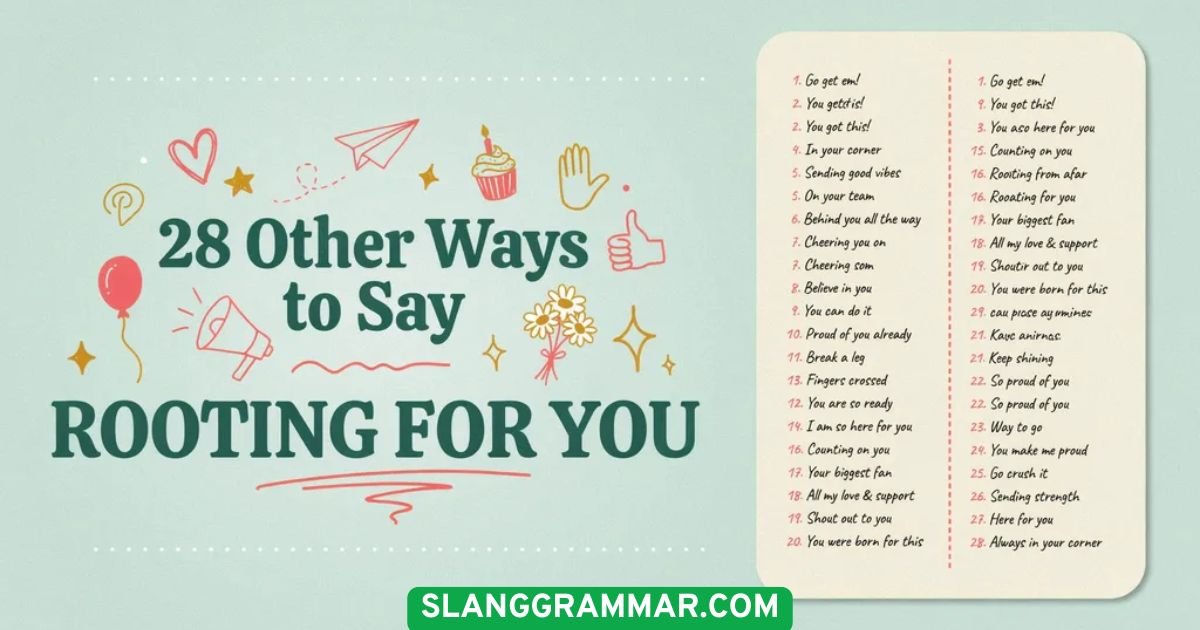
28 Other Ways to Say rooting for you
Below are Rooting for You synonyms and better alternatives you can use in different situations. Some are friendly, some are professional, and some are best for supportive phrases for tough times.
I’m Cheering You On
I’m cheering you on means you are actively supporting someone and hoping they do well. It is one of the closest Rooting for You synonyms because it gives the same feeling of encouragement, support, and positive energy.
This phrase has a warm and friendly tone. It works best with friends, family, students, teammates, or coworkers you know well. It feels natural when someone is about to take a test, give a speech, play a game, or try something important.
You could say, “You’ve worked so hard for this moment, and I’m cheering you on.” It is best for personal or casual situations. It may not fit a very formal business email because it sounds more friendly than professional.
You’ve Got This
You’ve got this means the person can handle the situation. It gives a quick confidence boost and tells someone they are ready, capable, and strong enough to succeed.
This phrase is casual, friendly, and very common in American English. It works well before interviews, exams, presentations, sports games, difficult conversations, or personal challenges. It is one of the best casual encouragement phrases.
You could say, “Take a deep breath before your interview. You’ve got this.” It is best for quick motivation. It may not fit a formal workplace email where I have full confidence in you would sound more professional.
I Believe in You
I believe in you means you trust someone’s ability, strength, and potential. It is deeper than a simple good-luck message because it shows real belief in someone.
This phrase has a warm, emotional, and supportive tone. It works well with close friends, family members, partners, students, or coworkers you have a good relationship with. It is useful when someone feels nervous, unsure, or discouraged.
You could say, “I know this feels hard right now, but I believe in you.” It is best for personal encouragement and emotional support. It may feel too personal for a distant coworker or a very formal business message.
You Can Do It
You can do it is a simple way to tell someone they are capable of success. It gives direct motivation and reminds the person not to give up.
This phrase is friendly, clear, and easy to understand. It works for students, athletes, children, coworkers, and anyone facing a challenge. It is one of the most common motivational words used in everyday English.
You could say, “Keep practicing and stay focused. You can do it.” It is best for casual encouragement. It may sound a little basic in formal writing, so use a stronger phrase in professional situations.
I’m Behind You All the Way
I’m behind you all the way means you fully support someone from start to finish. It shows loyalty, care, and strong moral support.
This phrase has a warm and committed tone. It is best for big decisions, long-term goals, career changes, personal dreams, or difficult life moments. It tells the person they are not facing the situation alone.
You could say, “If this is the path you want, I’m behind you all the way.” It is best for close relationships and meaningful situations. It may feel too strong for a small everyday task.
I’m Here for You
I’m here for you means you are available to support, listen, or help someone. It focuses more on emotional support than success or performance.
This phrase is caring, gentle, and comforting. It works best when someone is stressed, sad, grieving, overwhelmed, or going through a hard time. It is one of the best supportive phrases for tough times.
You could say, “I know this week has been difficult, but I’m here for you.” It is best when someone needs comfort. It may not be the best choice before a competition or performance because it is more emotional than motivational.
I’ve Got Your Back
I’ve got your back means you will support and stand by someone. It can also mean you will protect them if things get difficult.
This phrase has a loyal, casual, and confident tone. It works well with friends, teammates, close coworkers, or people you trust. It is useful when someone is nervous about speaking up, taking a risk, or facing pressure.
You could say, “Say what you need to say in the meeting. I’ve got your back.” It is best for teamwork and close relationships. It may sound too informal for formal emails or official workplace communication.
You’re Going to Crush It
You’re going to crush it means someone is going to do very well. It gives strong positive energy and makes the person feel confident before an important moment.
This phrase is casual, upbeat, and energetic. It works best before interviews, presentations, auditions, games, exams, or creative work. It is common among friends, students, and relaxed coworkers.
You could say, “Your presentation is strong. You’re going to crush it.” It is best when you want to hype someone up. It would not fit a formal email because the phrase sounds very casual.
Read Also: 30 Other Ways to Say “Infectious Smile” With Clear Examples
I’m Wishing You the Best
I’m wishing you the best means you hope things go well for someone. It is a soft and polite way to show support and kindness.
This phrase has a warm, semi-formal, and respectful tone. It works well in emails, cards, professional messages, farewell notes, and polite conversations. It is a good option when you want to sound caring but not too emotional.
You could say, “I’m wishing you the best in your new job.” It is best for semi-formal and professional situations. It may feel too general if someone needs strong motivation or direct encouragement.
I’m Rooting for You All the Way
I’m rooting for you all the way is a stronger version of rooting for you. It means your support is steady and complete.
This phrase has a loyal, warm, and encouraging tone. It works well for long-term goals, recovery, school, sports, personal growth, or any situation where someone needs ongoing motivation.
You could say, “This journey may take time, but I’m rooting for you all the way.” It is best for meaningful personal support. It may sound too emotional for formal business writing.
You’re Gonna Make It
You’re gonna make it means the person will get through the situation and succeed. It gives hope, comfort, and reassurance during a hard moment.
This phrase is casual, emotional, and supportive. It works best with close friends, family members, or someone who is struggling. Because “gonna” is informal, it sounds natural in speech or text messages.
You could say, “Things are hard right now, but you’re gonna make it.” It is best for personal encouragement. It should not be used in formal writing unless changed to “You are going to make it.”
I Have Full Confidence in You
I have full confidence in you means you strongly believe someone can succeed. It is one of the best professional ways to say Rooting for You.
This phrase has a polished, respectful, and professional tone. It works well in work emails, leadership messages, mentoring, school settings, and business communication. It gives encouragement without sounding too casual.
You could say, “I have full confidence in you and your ability to lead this project.” It is best for professional encouragement. It may sound slightly formal in a casual message to a close friend.
I’m Pulling for You
I’m pulling for you means you hope someone succeeds and you are emotionally supporting them. It is very close in meaning to rooting for you.
This phrase is friendly, warm, and common in American English. It works well for personal goals, sports, recovery, job interviews, exams, and difficult challenges. It gives a natural feeling of friendly support.
You could say, “I know how much this means to you, and I’m pulling for you.” It is best for casual or semi-formal support. It may not be clear to every non-native English speaker, so use it carefully.
I’ve Got Your Six
I’ve got your six means “I’ve got your back.” It means you are watching out for someone and ready to support them.
This phrase has a protective, loyal, and informal tone. It comes from military-style language, where “six” refers to the area behind someone. It works best with teams, close friends, or people who understand the phrase.
You could say, “Take the lead on this. I’ve got your six.” It is best for teamwork and close relationships. It would not fit well in formal writing because not everyone knows what it means.
I’m in Your Corner
I’m in your corner means you support someone and stand with them. It suggests loyalty, care, and steady moral support.
This phrase has a warm and reassuring tone. It works well when someone feels judged, pressured, nervous, or alone. It is useful for friends, family, students, coworkers, or anyone who needs to know someone is on their side.
You could say, “No matter what happens, I’m in your corner.” It is best for personal or semi-formal encouragement. It may feel too personal for someone you barely know.
I’m Here to Help You Succeed

I’m here to help you succeed means you are willing to support someone with action, not only words. It shows care, guidance, and practical help.
This phrase has a helpful and professional tone. It works well for teachers, coaches, managers, mentors, trainers, and team leaders. It is a strong choice for encouragement messages for work.
You could say, “Ask questions anytime. I’m here to help you succeed.” It is best when you are actually offering help. It may sound too formal for a casual friend conversation.
You’ve Got My Support
You’ve got my support means the person can count on you. It is simple, clear, and direct.
This phrase has a steady, semi-formal, and respectful tone. It works well in personal decisions, workplace projects, school goals, and family situations. It tells someone you are standing by them.
You could say, “If you decide to apply for the position, you’ve got my support.” It is best for clear support. It may not feel emotional enough if someone needs deep comfort.
You’re Doing Great
You’re doing great means the person is already making good progress. It gives reassurance and helps them feel more confident.
This phrase has a friendly, warm, and encouraging tone. It works well when someone is learning, practicing, healing, working, studying, or trying to improve. It is one of the easiest positive phrases to use.
You could say, “I know it feels slow, but you’re doing great.” It is best when someone is already trying. It may not fit before someone starts something because it focuses on current progress.
I’m Behind You 100%
I’m behind you 100% means you fully support someone. It shows complete trust, loyalty, and encouragement.
This phrase has a strong, confident, and supportive tone. It works best for big decisions, career moves, personal goals, creative projects, or family choices. It tells the person your support is complete.
You could say, “If this is your dream, I’m behind you 100%.” It is best for meaningful choices. It may sound too intense for small everyday situations.
You’re on the Right Path
You’re on the right path means someone is moving in the right direction. It gives reassurance when results are slow or uncertain.
This phrase has a calm, thoughtful, and supportive tone. It works well for career growth, learning, healing, personal development, and long-term goals. It gives confidence without pressuring the person.
You could say, “Your progress may feel slow, but you’re on the right path.” It is best for long-term encouragement. It may not fit a high-energy moment where someone needs quick motivation.
Keep Pushing Forward
Keep pushing forward means continue trying and do not give up. It focuses on perseverance, effort, and resilience.
This phrase has a motivational and strong tone. It works well during setbacks, fitness goals, business challenges, studies, or difficult personal seasons. It is one of the best motivational phrases for success.
You could say, “You’ve already come so far, so keep pushing forward.” It is best when someone needs motivation. It may not fit when someone needs rest, comfort, or emotional care instead.
Read Also: 24+ Other Ways to Say “Thank You for Having Me” Naturally and Politely
You’re Not Alone in This
You’re not alone in this means someone has support and does not have to face the situation by themselves. It gives comfort and emotional safety.
This phrase has a caring, gentle, and supportive tone. It works best during grief, stress, illness, family problems, failure, or overwhelming situations. It is one of the strongest supportive phrases for tough times.
You could say, “This is a lot to handle, but you’re not alone in this.” It is best for emotional support. It may not fit light or casual situations because the tone is serious and caring.
I’m Rooting for Your Success
I’m rooting for your success means you want someone to do well and reach their goal. It is a more specific version of rooting for you.
This phrase has a positive, polished, and semi-formal tone. It works well for career goals, business launches, school achievements, personal growth, and professional messages. It connects support directly with success.
You could say, “I’m rooting for your success as you begin this new role.” It is best for professional or goal-related encouragement. It may sound slightly formal in a casual text.
You’ve Got My Full Support
You’ve got my full support means someone has your complete backing. It shows strong trust and clear approval.
This phrase has a confident, respectful, and professional tone. It works well for workplace projects, leadership, business decisions, family choices, and serious goals. It is one of the best encouraging words for coworkers.
You could say, “Move forward with the plan. You’ve got my full support.” It is best for professional and serious situations. It may sound too heavy for small casual tasks.
I’m in Your Camp
I’m in your camp means you are on someone’s side. It shows agreement, loyalty, and support.
This phrase has a friendly and informal tone. It works well when someone needs to know you support their idea, choice, or position. It is similar to I’m in your corner, but a little more casual.
You could say, “Some people may disagree, but I’m in your camp.” It is best for friendly support. It may not fit formal writing because it sounds like an idiom.
I’m Your Number One Fan
I’m your number one fan means you strongly support and admire someone. It is playful, warm, and affectionate.
This phrase works best with close friends, family members, partners, children, or creative people. It gives personal encouragement and makes the other person feel appreciated. It is especially useful when you want to sound loving and enthusiastic.
You could say, “No matter what happens, I’m your number one fan.” It is best for close relationships. It would not fit a formal business email because it sounds too personal.
I’m All In for You

I’m all in for you means you are fully committed to supporting someone. It shows deep loyalty and care.
This phrase has a strong, emotional, and supportive tone. It works well for close relationships, teamwork, big dreams, and serious personal goals. It tells the person your support is not half-hearted.
You could say, “If this dream matters to you, I’m all in for you.” It is best for meaningful support. It may feel too intense for casual workplace communication.
Go for It
Go for it means take the chance and try. It gives someone a quick push to act with courage.
This phrase is casual, direct, and motivating. It works well when someone is thinking about applying for a job, starting a project, asking a question, joining a competition, or taking a new opportunity. It is one of the simplest uplifting words to use.
You could say, “That opportunity sounds perfect for you. Go for it.” It is best for quick motivation. It may not be enough when someone needs deeper emotional support or reassurance.
Quick Reference Table
This table gives you a simple way to compare Rooting for You synonyms by tone and use case.
| Alternative Phrase | Best Use Case | Tone |
| I’m Cheering You On | Informal support | Warm and friendly |
| You’ve Got This | Informal motivation | Confident and casual |
| I Believe in You | Personal encouragement | Warm and heartfelt |
| You Can Do It | Everyday motivation | Simple and positive |
| I’m Behind You All the Way | Strong personal support | Loyal and warm |
| I’m Here for You | Tough times | Caring and emotional |
| I’ve Got Your Back | Team or friend support | Loyal and casual |
| You’re Going to Crush It | Before a performance | Energetic and casual |
| I’m Wishing You the Best | Semi-formal messages | Polite and warm |
| I’m Rooting for You All the Way | Long-term goals | Supportive and loyal |
| You’re Gonna Make It | Hard personal moments | Comforting and casual |
| I Have Full Confidence in You | Work or formal settings | Professional |
| I’m Pulling for You | Friendly encouragement | Warm and natural |
| I’ve Got Your Six | Team loyalty | Protective and informal |
| I’m in Your Corner | Personal support | Loyal and reassuring |
| I’m Here to Help You Succeed | Mentoring or work | Helpful and professional |
| You’ve Got My Support | Semi-formal support | Clear and steady |
| You’re Doing Great | Progress encouragement | Reassuring and friendly |
| I’m Behind You 100% | Big decisions | Strong and loyal |
| You’re on the Right Path | Long-term progress | Calm and reassuring |
| Keep Pushing Forward | Challenges and goals | Motivational |
| You’re Not Alone in This | Emotional hardship | Caring and supportive |
| I’m Rooting for Your Success | Career or goals | Positive and polished |
| You’ve Got My Full Support | Professional support | Clear and confident |
| I’m in Your Camp | Taking someone’s side | Friendly and loyal |
| I’m Your Number One Fan | Close relationships | Playful and warm |
| I’m All In for You | Deep support | Loyal and emotional |
| Go for It | Taking action | Casual and motivating |
Best Professional Ways to Say rooting for you
For work, you usually want encouragement that sounds kind but still polished. The best professional ways to say Rooting for You include I have full confidence in you, you’ve got my full support, I’m here to help you succeed, and I’m wishing you the best.
These phrases work well in emails, team messages, performance reviews, mentorship conversations, and project updates. They show professional encouragement without sounding too personal or too casual.
Best Casual Encouragement Phrases Like rooting for you
For friends, family, classmates, or close coworkers, casual encouragement phrases often feel more natural. You can say you’ve got this, go for it, you’re going to crush it, I’m cheering you on, or you’re doing great.
These phrases are easy to use in texts, social media comments, birthday cards, good-luck messages, and everyday conversations. They give positive energy without sounding stiff.
FAQ
What does rooting for you mean?
Rooting for you means someone supports you and wants you to succeed. It shows encouragement, hope, and belief in your ability.
Is it correct to say “I’m rooting for you”?
Yes, “I’m rooting for you” is correct and natural English. It is common in the USA and sounds friendly and supportive.
Is “rooting for you” just a saying?
Yes, rooting for you is an idiom or common saying. It means “I am supporting you” or “I hope you do well.”
Is it cheering or rooting for you?
Both are correct, but they are slightly different. Cheering for you sounds more active, while rooting for you means supporting and hoping you succeed.
How do I reply to “I’m rooting for you”?
You can reply, “Thank you, that means a lot.” You can also say, “I really appreciate your support.”
Conclusion
Rooting for You is a kind and supportive phrase. It means you want someone to do well and reach success. People use it when a friend, student, coworker, or family member needs hope and courage. This phrase can help before a test, interview, game, project, or hard life moment. It shows care in a simple and clear way. It also gives confidence to the person who hears it. A short phrase like this can make someone feel valued, strong, and ready to keep going.
There are many other ways to say Rooting for You, and each one can fit a different situation. Some phrases sound friendly, while others sound more formal and professional. Words like “I believe in you,” “You can do it,” “I have full confidence in you,” and “You have my full support” give strong encouragement. These words help people stay brave, work hard, and move forward. The right supportive phrase can bring comfort, motivation, and positive energy when someone needs it most.
Related Guides:
1: 30 Other Ways to Say “Please Confirm Receipt of This Email”
2: 32 Other Ways to Say “Family Emergency” With Examples
3: 30 Professional Ways to Say “Congratulations to You Both”
4: 25 Other Ways to Say “Happy Birthday in Advance” for Any Situation
5: 30 Other Ways to Say “Sincerely” for Better Emails and Letters