Better Formal Wording: 30 Ways to Say “It Would Be Greatly Appreciated”
“It Would Be Greatly Appreciated” means someone would be very thankful for help. People use it when they ask for support, feedback, approval, or a quick reply. It makes a request sound polite, formal, and respectful.
Simple words can make a big request sound kind and professional. This phrase helps you ask for something without sounding rude or demanding. It also shows that you respect the other person’s time and effort.
“It Would Be Greatly Appreciated” is common in emails and workplace messages. It works well when you write to a boss, client, teacher, or colleague. Using the right alternative can make your message clearer and more natural.
What Does It Would Be Greatly Appreciated Mean?
It Would Be Greatly Appreciated means “I would be very thankful if you did this.” It is a courteous expression used when someone wants to ask for help, action, support, or a response in a respectful way. Instead of saying, “Please do this,” the phrase softens the request and adds gratitude in advance.
This phrase is common in professional communication because it keeps the message polite. You might use it when asking a manager to approve something, asking a client to send documents, or asking a colleague to reply by a certain date. It works especially well in workplace communication, where tone matters as much as the request itself.
The phrase does not have a special hidden origin. It comes from formal English used in letters, office writing, and business writing. Over time, it became a standard part of email etiquette because it sounds respectful and careful. The only issue is that it can sometimes feel too formal if used in a casual message to a friend or close coworker.
When to Use It Would Be Greatly Appreciated
You can use It Would Be Greatly Appreciated when you want your request to sound polite, respectful, and professional. It fits best when the other person is doing something helpful for you, especially if the request takes time or effort.
For example, you can use it in a document request when asking someone to send files, forms, reports, or missing details. A sentence like “Your help in sending the completed form by Friday would be greatly appreciated” sounds polite and clear.
It also works well in a feedback request. If you need someone to review a draft, proposal, article, report, or design, this phrase shows that you respect their time and value their opinion. In that case, your input would be valuable or your feedback would be appreciated may sound even more natural.
You can also use it for an approval request, especially in a workplace or client setting. If you need permission before moving forward, saying your approval would be valued keeps the tone formal without sounding demanding.
The phrase also fits when you need a timely response or prompt attention. For example, “Your prompt attention to this matter would be greatly appreciated” works when something needs action soon. Still, be careful not to use it as a hidden way to pressure someone. A good respectful tone should feel polite, not forceful.
Is It Professional or Polite to Say It Would Be Greatly Appreciated?
Yes, It Would Be Greatly Appreciated is both professional and polite. It creates a professional impression because it shows care, respect, and good email etiquette. In many USA workplaces, this kind of formal wording works well in messages to managers, clients, vendors, professors, and people you do not know well.
The phrase does have one small weakness. It can sound a little distant or old-fashioned if the rest of your message is simple and direct. In modern client communication and team emails, people often prefer clear wording such as “I would appreciate your help” or your review and response would be helpful.
Here is a simple pros and cons table.
| Point | Benefit | Possible Issue |
| Politeness | Shows respect and gratitude in advance | Can sound too formal in casual chats |
| Professional use | Works well in business email and office writing | May feel stiff if repeated often |
| Clarity | Softens a formal request | The action needed must still be clear |
| Tone | Creates a respectful tone | Can feel indirect if overused |
The best approach is to use the phrase when the situation calls for refined language. For everyday messages, choose a shorter and more natural alternative.
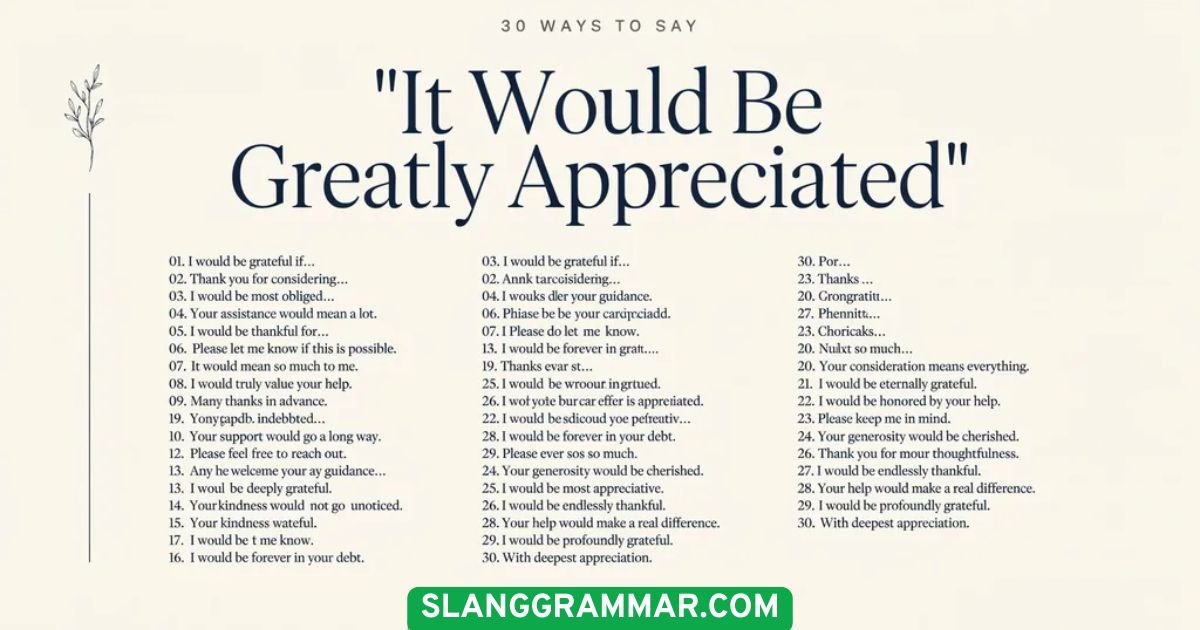
30 Other Ways to Say It Would Be Greatly Appreciated
Below are 30 formal ways to say appreciated when making a polite request. Each option gives you a slightly different tone, so you can choose the one that fits your message best.
1. Your assistance would be sincerely appreciated
Your assistance would be sincerely appreciated is a polite way to ask someone for help. It means you would truly value their time, effort, or support. This phrase works well when you need help with a task, request, or problem in a professional communication setting.
The tone is formal, respectful, and professional. It sounds warm without being too casual, which makes it useful in a business email, office message, or client request. It is a good choice when you want to make a polite request without sounding demanding.
Example: “Your assistance would be sincerely appreciated as we complete the final review.” This phrase works best when asking for general help. It would not fit well in a casual message to a close friend because it may sound too formal.
2. Your support in this matter would be highly valued
Your support in this matter would be highly valued means the person’s help or involvement would be important to you. It is useful when the request is connected to a serious task, project, or decision. This phrase makes the reader feel that their role matters.
The tone is formal, warm, and professional. It works especially well in workplace communication, team projects, and client communication. It also creates a strong professional impression because it shows respect for the other person’s contribution.
Example: “Your support in this matter would be highly valued as we move forward with the next step.” Use this phrase when asking for meaningful support. Avoid it for very small requests, because it may sound too serious.
3. Any help you can provide would be most appreciated
Any help you can provide would be most appreciated is a flexible and polite phrase. It means you are thankful for any level of help the person can offer. This is useful when you do not want to pressure the reader.
The tone is polite, humble, and professional. It works well in a formal request where the other person may or may not be able to fully help. It also keeps the message friendly and respectful.
Example: “Any help you can provide would be most appreciated as we gather the missing details.” This phrase is best when you are open to different types of help. It would not fit well when you need one exact action by a strict deadline.
4. Your cooperation on this would mean a great deal
Your cooperation on this would mean a great deal means you value the person’s willingness to work with you. It is useful when the request involves teamwork, shared responsibility, or following a process. This phrase feels more personal than many other formal email phrases.
The tone is warm, respectful, and semi-formal. It works well when you want to sound polite but not cold. It is especially helpful in office messages, group projects, and professional follow-ups.
Example: “Your cooperation on this would mean a great deal as we complete the required updates.” Use this phrase when teamwork is needed. Avoid it when asking for expert advice, because your input would be valuable may fit better.
5. Your prompt attention would be extremely helpful
Your prompt attention would be extremely helpful means you need someone to look at the matter soon. It is a clear way to make a time-sensitive polite request. This phrase is useful when a delay could slow down a project or decision.
The tone is professional, direct, and slightly urgent. It still sounds respectful, but it clearly shows that the request needs quick action. This phrase is common in a business email or formal follow-up.
Example: “Your prompt attention would be extremely helpful, as the deadline is approaching.” Use this phrase when something needs quick review or action. Avoid it when the matter is not urgent, because it may make your message sound too serious.
6. Your timely response would be of great benefit
Your timely response would be of great benefit means a reply soon would help you move forward. It is useful when you are waiting for confirmation, information, feedback, or approval. This phrase helps the reader understand that their reply affects the next step.
The tone is formal, clear, and professional. It works well in email etiquette because it asks for a response politely. It is a good option when you need a timely response but do not want to sound impatient.
Example: “Your timely response would be of great benefit as we finalize the schedule.” Use this phrase in follow-up emails or planning messages. Avoid it in casual chats, where “Please reply when you can” may sound more natural.
7. Your input would be of immense value
Your input would be of immense value means you respect the person’s ideas, advice, or opinion. This phrase is useful when asking for comments, suggestions, or expert guidance. It shows that you do not just need a reply; you need their judgment.
The tone is respectful, thoughtful, and professional. It works well in a feedback request, planning discussion, or review process. It also makes the other person feel trusted and appreciated.
Example: “Your input would be of immense value as we review the proposal.” Use this phrase when asking for advice or ideas. Avoid it when you simply need someone to complete a basic task.
8. Your effort in this matter would be deeply appreciated
Your effort in this matter would be deeply appreciated means you understand the request may take time or work. It is a thoughtful way to show gratitude in advance. This phrase works well when the person’s help requires real effort.
The tone is sincere, formal, and respectful. It can make your request feel more human because you are recognizing the other person’s time. It works well in serious workplace requests or support messages.
Example: “Your effort in this matter would be deeply appreciated by our team.” Use it when the task needs patience or careful work. Avoid it for very small favors, because it may sound too heavy.
9. Your collaboration would be very much appreciated
Your collaboration would be very much appreciated means you value the person’s teamwork. It is useful when both sides need to work together on a project, task, or shared goal. This phrase fits naturally in workplace communication.
The tone is professional, cooperative, and respectful. It sounds positive because it focuses on working together. It is a good phrase for team emails, project updates, and business planning.
Example: “Your collaboration would be very much appreciated as we prepare the final presentation.” Use it when teamwork is needed. Avoid it when the person only needs to approve something or send one quick file.
Read Also: 30 Other Ways to Say “Infectious Smile” With Clear Examples
10. Your cooperation would be extremely beneficial
Your cooperation would be extremely beneficial means the person’s support would help the process succeed. It is useful when the request involves rules, steps, teamwork, or shared responsibility. This phrase sounds practical and formal.
The tone is businesslike, professional, and respectful. It is a strong choice for official messages or workplace procedures. It helps you sound clear without sounding rude.
Example: “Your cooperation would be extremely beneficial to the process.” Use this phrase when someone’s support helps complete a task smoothly. Avoid it in friendly messages because it may sound too corporate.
11. Your assistance with this request would be invaluable
Your assistance with this request would be invaluable means the person’s help would be extremely useful. It is stronger than simply saying your assistance would be appreciated. This phrase is best when the matter is important.
The tone is formal, grateful, and serious. It works well in professional messages where the request carries real importance. It also shows that the person’s help could make a major difference.
Example: “Your assistance with this request would be invaluable as we resolve the issue.” Use it for important requests or complex problems. Avoid it for small favors because it can sound too strong.
12. Any guidance you can offer would be greatly valued
Any guidance you can offer would be greatly valued means you are asking for advice, direction, or suggestions. It is useful when you do not need someone to do the task for you, but you need their knowledge. This phrase is ideal for a professional communication setting.
The tone is polite, respectful, and humble. It shows that you trust the other person’s experience. It is a strong choice when writing to a manager, mentor, teacher, expert, or senior colleague.
Example: “Any guidance you can offer would be greatly valued as we decide on the next step.” Use this phrase when asking for advice. Avoid it when you need action rather than guidance.
13. Your swift support would be genuinely appreciated
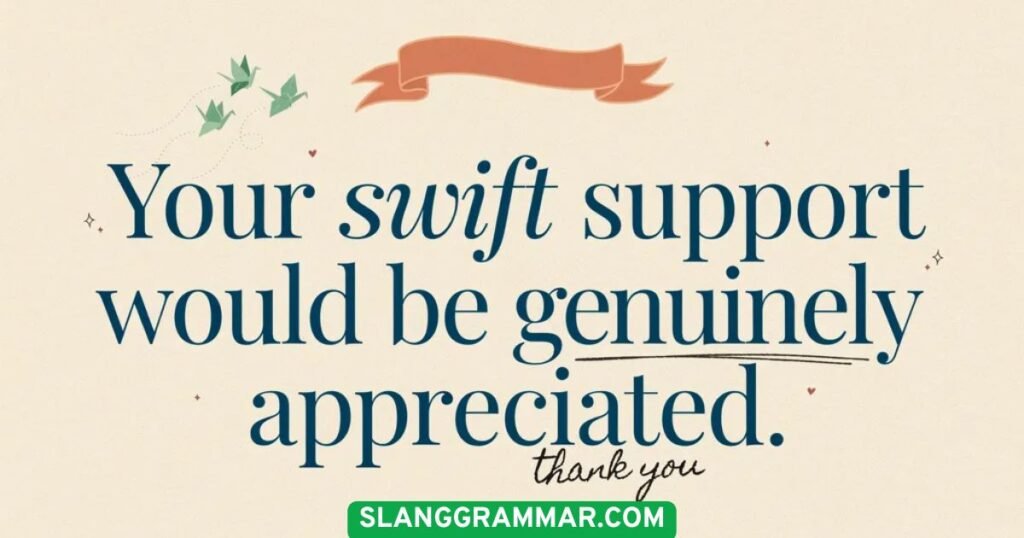
Your swift support would be genuinely appreciated means you need quick help and would truly value it. This phrase combines urgency with gratitude. It is useful when time matters but you still want to keep a respectful tone.
The tone is professional, warm, and urgent. It works well when a deadline is close or a problem needs fast attention. It sounds more personal than some other urgent phrases.
Example: “Your swift support would be genuinely appreciated, as we need to address this before the end of the day.” Use it for urgent help requests. Avoid it when there is no real time pressure.
14. Your attention to this matter would be highly appreciated
Your attention to this matter would be highly appreciated means you want someone to notice, review, or act on an issue. It is a common phrase in formal email phrases. It works especially well when the matter is important.
The tone is formal, serious, and professional. It is useful in official messages, customer service emails, and workplace concerns. It helps you sound respectful while making the issue clear.
Example: “Your attention to this matter would be highly appreciated.” Use it when you need someone to review or address a serious matter. Avoid it in casual emails because it can sound stiff.
15. Your response at your earliest convenience would be most helpful
Your response at your earliest convenience would be most helpful means you would like a reply soon, but you are still giving the person some flexibility. It is a polite way to ask for a response without setting a hard deadline.
The tone is formal, polite, and professional. It works well in follow-up emails, office messages, and business writing. It shows good email etiquette because it respects the reader’s schedule.
Example: “Your response at your earliest convenience would be most helpful.” Use it when you need a reply soon but not immediately. Avoid it when you need a specific deadline, because the wording is too open.
16. Your consideration of this request would mean a lot
Your consideration of this request would mean a lot means you want the person to think carefully about your request. It is softer and warmer than many formal alternatives. It works well when the decision is important to you.
The tone is warm, respectful, and semi-formal. It can make your message sound more personal while still staying professional. It is helpful for approval, support, or review requests.
Example: “Your consideration of this request would mean a lot to our team.” Use it when asking someone to review or think about something. Avoid it in very strict business or legal writing where a neutral tone is better.
17. Any assistance you could provide would be greatly beneficial
Any assistance you could provide would be greatly beneficial means any help from the reader would be useful. It is a careful phrase that does not pressure the person too much. This makes it good for uncertain situations.
The tone is formal, polite, and flexible. It works well when you do not know exactly what kind of help the person can give. It also sounds respectful in support requests and workplace emails.
Example: “Any assistance you could provide would be greatly beneficial as we work through this issue.” Use it when you are open to different types of help. Avoid it when your request needs one specific action.
18. Your approval would be greatly valued
Your approval would be greatly valued means you need permission or sign-off from someone. It is direct but still polite. This phrase is useful when you cannot move forward without approval.
The tone is formal, clear, and professional. It works well in an approval request to a manager, client, supervisor, or decision-maker. It also helps your message sound respectful instead of demanding.
Example: “Your approval would be greatly valued before we proceed with the final version.” Use it when asking for permission. Avoid it when you want suggestions or comments, because your feedback would be appreciated would fit better.
19. Your feedback would be highly appreciated
Your feedback would be highly appreciated means you want someone’s opinion, comments, or suggestions. It is one of the most useful alternatives because it clearly explains what you need. This phrase is common in business email and workplace writing.
The tone is professional, neutral, and polite. It works well when asking someone to review a document, design, proposal, plan, or draft. It also shows that you value the person’s point of view.
Example: “Your feedback would be highly appreciated before we publish the final draft.” Use it for review and comment requests. Avoid it when you need approval only, because feedback and approval are not the same thing.
20. Your willingness to assist would be sincerely valued
Your willingness to assist would be sincerely valued means you appreciate the person’s readiness to help. It focuses more on their kindness and support than on the task itself. This phrase feels thoughtful and respectful.
The tone is warm, formal, and appreciative. It works well when you want to sound sincere and polite. It can be useful in team messages, client requests, or professional support emails.
Example: “Your willingness to assist would be sincerely valued during this process.” Use it when you want to show appreciation for someone’s help. Avoid it when you need a quick, direct answer.
21. Your help on this matter would be greatly beneficial
Your help on this matter would be greatly beneficial means the person’s help would improve the situation or make the work easier. It is simple, clear, and useful in many professional situations.
The tone is professional, practical, and polite. It works well in office emails, colleague requests, and formal support messages. It is less emotional and more direct than some warmer alternatives.
Example: “Your help on this matter would be greatly beneficial as we prepare the final report.” Use it for workplace help requests. Avoid it in personal messages where simpler wording would sound better.
22. Your cooperation at this stage would be most appreciated
Your cooperation at this stage would be most appreciated means the person’s support is important at this part of the process. It is useful when a project, plan, or task has reached a key point.
The tone is formal, organized, and professional. It works well in project updates, process emails, and workplace coordination. It shows that timing matters, but it does not sound too forceful.
Example: “Your cooperation at this stage would be most appreciated as we complete the review process.” Use it during an ongoing project or process. Avoid it when the request is not connected to a specific stage.
23. Any support you may offer would be truly valued
Any support you may offer would be truly valued means even a small amount of support would matter. It is a gentle and polite way to ask for help. This phrase works well when you want to sound humble.
The tone is warm, polite, and semi-formal. It is useful in sensitive workplace situations or when asking for help without pressure. It also sounds more human than many strict formal phrases.
Example: “Any support you may offer would be truly valued during this transition.” Use it for general support requests. Avoid it when you need a firm action by a fixed deadline.
Read Also: Better Encouragement: 28 Other Ways to Say Rooting for You
24. Your attention and assistance would be of great importance
Your attention and assistance would be of great importance means the matter needs both review and help. This phrase sounds serious because it suggests the issue is important. It is useful for formal situations.
The tone is formal, serious, and professional. It works well in official emails, client concerns, and important workplace matters. It helps show that the request should not be ignored.
Example: “Your attention and assistance would be of great importance as we address this concern.” Use it for serious issues that need action. Avoid it for small tasks because it may sound too heavy.
25. Your prompt cooperation would be highly beneficial
Your prompt cooperation would be highly beneficial means quick support from the person would help a lot. It is useful when teamwork and speed both matter. This phrase is direct but still polite.
The tone is professional, firm, and formal. It works well in deadline-based tasks, compliance matters, or urgent workplace coordination. It shows urgency without being rude.
Example: “Your prompt cooperation would be highly beneficial as we work to meet the deadline.” Use it when fast cooperation is needed. Avoid it in relaxed messages because it may sound too strict.
26. Any contribution you can make would be sincerely appreciated
Any contribution you can make would be sincerely appreciated means you value whatever effort, idea, or support the person can give. It is useful when many people may be involved in a task or project.
The tone is inclusive, polite, and professional. It works well in group projects, team planning, and shared work. It makes people feel welcome to help in a way they can manage.
Example: “Any contribution you can make would be sincerely appreciated as we improve the process.” Use it for group work or shared tasks. Avoid it when one person must complete one exact duty.
27. Your willingness to review this would mean a great deal
Your willingness to review this would mean a great deal means you would value the person’s time in checking something. It is useful for reports, drafts, documents, proposals, and applications.
The tone is warm, respectful, and professional. It sounds more personal than “Please review this.” It also shows that you understand the person is giving time and attention.
Example: “Your willingness to review this would mean a great deal before we submit the final version.” Use it when asking for a review. Avoid it when you need action beyond reviewing.
28. Your assistance at this point would be most valuable
Your assistance at this point would be most valuable means the person’s help is especially useful right now. It suggests that timing matters. This phrase works well when a project has reached an important stage.
The tone is formal, professional, and timely. It helps explain why the person’s support is needed at this moment. It is a good option for workplace updates and project emails.
Example: “Your assistance at this point would be most valuable as we prepare for the next phase.” Use it when the timing of the help matters. Avoid it for general requests with no special timing.
29. Your timely collaboration would be deeply appreciated
Your timely collaboration would be deeply appreciated means you need someone to work with you within a useful time frame. It is a strong phrase when teamwork and deadlines are both important.
The tone is formal, cooperative, and deadline-aware. It works well in project communication, team emails, and professional planning. It sounds polite while still showing that time matters.
Example: “Your timely collaboration would be deeply appreciated as we finalize the client materials.” Use it for deadline-based teamwork. Avoid it when the person is not actively collaborating with you.
30. Your support on this request would be greatly beneficial
Your support on this request would be greatly beneficial means the person’s help would make the request easier to complete. It is broad, polite, and useful in many professional settings.
The tone is formal, respectful, and practical. It works well in client communication, colleague requests, and office emails. It is a safe choice when you want formal wording without sounding too strong.
Example: “Your support on this request would be greatly beneficial as we move toward completion.” Use it for general professional requests. Avoid it in casual messages because the wording may sound too formal.
Quick Reference Table
Use this table when you want to choose the right phrase quickly without reading every explanation again.
| Alternative Phrase | Best Use Case | Tone |
| Your assistance would be sincerely appreciated | General help | Formal, professional |
| Your support in this matter would be highly valued | Important work support | Warm, formal |
| Any help you can provide would be most appreciated | Flexible help request | Polite, humble |
| Your cooperation on this would mean a great deal | Team or process support | Warm, respectful |
| Your prompt attention would be extremely helpful | Urgent matter | Professional, direct |
| Your timely response would be of great benefit | Quick reply request | Formal, clear |
| Your input would be of immense value | Advice or ideas | Respectful, thoughtful |
| Your effort in this matter would be deeply appreciated | Time-consuming task | Sincere, formal |
| Your collaboration would be very much appreciated | Teamwork | Professional, cooperative |
| Your cooperation would be extremely beneficial | Process support | Formal, practical |
| Your assistance with this request would be invaluable | Important help | Strong, formal |
| Any guidance you can offer would be greatly valued | Advice request | Polite, respectful |
| Your swift support would be genuinely appreciated | Urgent help | Warm, professional |
| Your attention to this matter would be highly appreciated | Official concern | Formal, serious |
| Your response at your earliest convenience would be most helpful | Follow-up email | Polite, professional |
| Your consideration of this request would mean a lot | Review or support | Warm, thoughtful |
| Any assistance you could provide would be greatly beneficial | Open support request | Careful, formal |
| Your approval would be greatly valued | Permission or sign-off | Formal, direct |
| Your feedback would be highly appreciated | Review or comments | Professional, neutral |
| Your willingness to assist would be sincerely valued | Help offer | Warm, respectful |
| Your help on this matter would be greatly beneficial | Workplace help | Clear, professional |
| Your cooperation at this stage would be most appreciated | Project stage | Formal, organized |
| Any support you may offer would be truly valued | General support | Warm, polite |
| Your attention and assistance would be of great importance | Serious issue | Formal, serious |
| Your prompt cooperation would be highly beneficial | Urgent teamwork | Professional, firm |
| Any contribution you can make would be sincerely appreciated | Group work | Inclusive, polite |
| Your willingness to review this would mean a great deal | Document review | Warm, respectful |
| Your assistance at this point would be most valuable | Key project moment | Professional, timely |
| Your timely collaboration would be deeply appreciated | Deadline teamwork | Formal, cooperative |
| Your support on this request would be greatly beneficial | General professional request | Polite, formal |
Best Tips for Choosing the Right Formal Phrase
The best phrase depends on what you need. If you need help, use your assistance would be appreciated or “Your help on this matter would be greatly beneficial.” If you need a reply, use your timely response would be beneficial or your review and response would be helpful.
If you need advice, choose any guidance would be valued or your input would be valuable. If you need approval, use your approval would be valued. These small wording choices make your request wording clearer and help the reader understand exactly what you need.
Also, try not to use too many formal phrases in one email. One strong polite expression is usually enough. A good message should sound respectful, but it should also feel natural and easy to read.
FAQ’s
Is it correct to say “It Would Be Greatly Appreciated”?
Yes, it is correct and formal.
You can use it in emails, requests, and professional messages.
How do I say “I greatly appreciate it”?
You can say, “I sincerely appreciate your help.”
You can also say, “I truly appreciate your support.”
How do you say “I would appreciate it” professionally?
You can say, “Your assistance would be greatly appreciated.”
You can also say, “Your support in this matter would be valued.”
What to say instead of “I would greatly appreciate it”?
Say, “Your help would be sincerely appreciated.”
Or say, “Your prompt attention would be very helpful.”
How do I professionally say “I appreciate it”?
You can say, “I sincerely appreciate your time and support.”
You can also say, “Thank you for your valuable assistance.”
Conclusion
“It Would Be Greatly Appreciated” is a polite and formal phrase for asking for help, support, feedback, or approval. It shows respect and makes a request sound kind. People often use it in emails, letters, and workplace messages. This phrase helps the writer sound thankful before the other person gives help.
Many better alternatives can also make your message clear and professional. You can choose words that match your situation, such as asking for a reply, review, or guidance. Simple and respectful language creates a good impression. When you use “It Would Be Greatly Appreciated” or a similar phrase, you show good manners and clear communication. This makes your request easier to understand and accept.
Related Guides:
1: 24+ Other Ways to Say “Thank You for Having Me” Naturally and Politely
2: 30 Other Ways to Say “Please Confirm Receipt of This Email”
3: 32 Other Ways to Say “Family Emergency” With Examples
4: 30 Professional Ways to Say “Congratulations to You Both”
5: 25 Other Ways to Say “Happy Birthday in Advance” for Any Situation