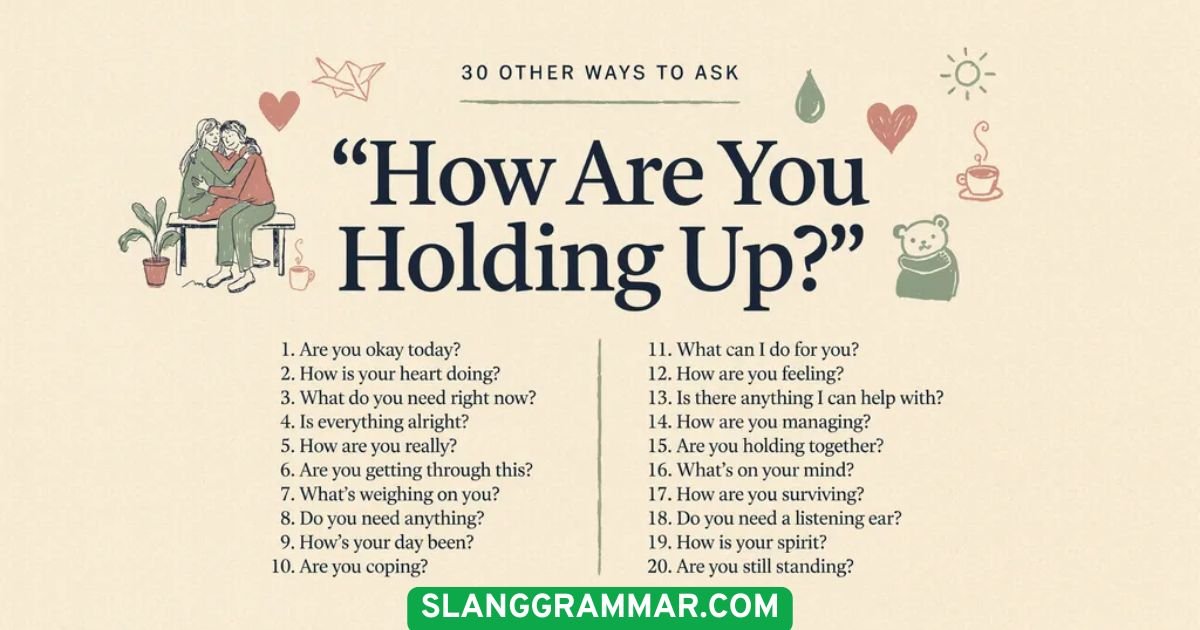
30 Other Ways to Ask “How Are You Holding Up?” With Care and Support
“How Are You Holding Up” means asking someone how they are managing during a hard time. It shows care when a person feels stressed, sad, tired, or emotionally weak. People use this phrase to check on someone with kindness and support.
Sometimes, a normal “How are you?” does not feel deep enough. When someone is going through pain, they may need softer and kinder words. That is why “How Are You Holding Up” can feel warm, honest, and helpful.
“How Are You Holding Up” is often used with friends, family, or coworkers. It fits during grief, illness, stress, loss, or any difficult life moment. This phrase helps start a caring talk and shows that someone is not alone.
What Does How Are You Holding Up Mean?
How are you holding up means, “How are you managing emotionally, mentally, or physically during this hard time?” It is a thoughtful question people use when they know someone may be under ongoing pressure or coping with challenges.
The phrase comes from the idea of “holding up” under weight or pressure. When someone is “holding up,” they are trying to stay steady even when life feels heavy. So when you ask this question, you are really asking whether they are managing, coping, or staying emotionally balanced.
People often use How are you holding up after sad news, during illness, after a breakup, during job stress, after a family emergency, or when someone is going through a tough phase. It works best when you already know something difficult is happening in that person’s life.
When to Use How Are You Holding Up
You can use how are you holding up when someone has clearly been through a difficult time and you want to show concern without sounding too casual. It is especially helpful when “How are you?” feels too light.
For example, you might say it to a friend who recently lost someone, a coworker who has been under heavy pressure, or a family member dealing with health problems. It also fits when someone has been quiet, distant, overwhelmed, or emotionally drained.
This phrase works well in a private message, phone call, or face-to-face conversation. It may not fit as well in a group setting because the person may not want to share personal feelings in front of others. A gentle check-in should give the person space, not pressure.
Is It Professional or Polite to Say How Are You Holding Up?
Yes, how are you holding up is polite, but the setting matters. In personal situations, it sounds warm and caring. In professional settings, it can still be appropriate, especially if you know the coworker or client is going through a hard time. However, in a formal workplace conversation, a softer professional check-in may feel more natural.
Here is a simple comparison to help you decide.
| Point | Why It Works | Possible Risk |
| Polite | It shows genuine concern and care. | It may feel too personal in formal settings. |
| Professional | It can offer professional support during stress. | It should not be used too casually with clients or managers. |
| Warm | It opens the door to a meaningful conversation. | The person may not feel ready to share. |
| Respectful | It can be a respectful check-in if said privately. | It can feel uncomfortable in public or group chats. |
A good rule is simple: use it when you have a real reason to check on the person. If the situation is more formal, choose a lighter phrase like how are things going for you or how have you been managing.
30 Other Ways to Say How Are You Holding Up?
There are many human-sounding alternatives to how are you holding up. Some sound casual, some sound warm, and some work better as a work-related check-in. The best choice depends on your relationship, the situation, and how much emotional space the other person may have.
1. “How are you doing today?”
How are you doing today is a simple and gentle way to check in with someone. It feels softer than how are you holding up because it focuses only on the present day. This makes it easier for the person to answer without feeling pressured to explain everything.
You can use it when someone has been dealing with a difficult time, but you want to keep your message light and caring. For example, you might say, “I know yesterday was hard, so I just wanted to ask, how are you doing today?” This works well as a friendly check-in for friends, family, coworkers, or classmates.
This phrase may not be strong enough if someone is facing a very serious loss or deep emotional pain. In that case, a warmer phrase like how are you coping or how are you feeling through all of this may feel more supportive.
2. “How have you been managing?”
How have you been managing shows that you understand the person has been handling a lot. It is a thoughtful way to ask about someone’s emotional well-being, stress, and daily life without sounding too dramatic.
This phrase has a warm and semi-formal tone. You can say, “You’ve had so much going on lately. How have you been managing?” It works well for friends, family members, and even coworkers because it sounds caring but still respectful.
It may not fit very casual conversations where there is no clear problem. If someone is not going through a stressful period, this phrase might sound heavier than needed.
3. “How are things going for you?”
How are things going for you is a natural and open question. It gives the other person space to talk about work, family, emotions, health, or anything else they want to share.
The tone is friendly, neutral, and easy to use in many situations. For example, you could say, “I haven’t checked in for a while. How are things going for you?” This is good for casual talks, text messages, and professional check-in situations.
This phrase may feel too general if the person is grieving or facing a serious crisis. In those moments, a more specific emotional check-in may feel more thoughtful.
4. “How are you coping?”
How are you coping is direct and caring. It clearly shows that you know the person is dealing with something hard and you want to understand how they are getting through it emotionally.
The tone is compassionate and serious. You might say, “I heard about what happened, and I’m so sorry. How are you coping?” This phrase is best for grief, illness, family problems, or a painful life event.
It should not be used for light or casual situations. If someone is only dealing with a busy week, this phrase may sound too intense.
5. “How are you feeling about everything?”
How are you feeling about everything invites the person to talk about their emotions. It is a gentle way to ask about feelings when someone is processing news, change, stress, or uncertainty.
This phrase has a warm and personal tone. You could say, “I know a lot has changed recently. How are you feeling about everything?” It works well when you want to start a meaningful conversation.
It may not fit well in formal workplace conversations unless you know the person well. Some people may find it too personal if your relationship is not close.
6. “How’s everything holding up on your end?”
How’s everything holding up on your end is a casual variation of how are you holding up. It still shows care, but it sounds more relaxed and conversational.
This phrase works well in texts or friendly calls. For example, “Just checking in. How’s everything holding up on your end?” It is useful when you want to sound supportive without making the message too heavy.
It may not be the best choice in a formal email or serious professional message. In those cases, how have you been managing may sound more polished.
7. “How have things been lately?”
How have things been lately is a soft, open-ended question. It allows the person to share as much or as little as they want.
The tone is casual, friendly, and natural. You might say, “You’ve been on my mind. How have things been lately?” This is a good phrase when reconnecting with someone after a few days, weeks, or months.
It may not feel specific enough after a major loss or serious problem. If you know the person is hurting, a more caring phrase may show stronger genuine concern.
8. “How are you getting through it?”
How are you getting through it recognizes that the person is in a hard season. It suggests that each day may take effort, which can feel validating.
The tone is supportive, serious, and caring. For example, “I know this has been painful. How are you getting through it?” This phrase works well when someone is facing grief, heartbreak, illness, or a tough phase.
It may sound too heavy for everyday stress. If the situation is not very serious, use something softer like how are things going for you.
9. “How are you holding up these days?”
How are you holding up these days is very close to the main phrase, but it feels more current and natural. It works well when someone has been dealing with a problem for some time.
The tone is warm, thoughtful, and caring. You can say, “I know this has been going on for a while. How are you holding up these days?” It is useful for ongoing pressure, long-term stress, or emotional recovery.
It may feel repetitive if you have already asked the same question many times. In that case, change the wording to keep your kind check-in fresh and sincere.
Read Also: 25 Other Ways to Say “Thank You Both” in Emails, Messages, and Everyday Conversations
10. “How’s your mental space lately?”
How’s your mental space lately is a modern way to ask about someone’s mental space and emotional health. It focuses on how someone is doing mentally, not just physically or socially.
The tone is personal, caring, and emotionally aware. For example, “You’ve had a lot on your plate. How’s your mental space lately?” This works best with close friends, partners, or people who are comfortable talking about mental health.
It may not fit in formal or traditional settings. Some coworkers, clients, or older relatives may find the phrase too casual or unfamiliar.
11. “Are you doing okay?”
Are you doing okay is short, clear, and caring. It is a direct way to ask if someone is alright without using too many words.
The tone is gentle and supportive. You might say, “You seemed quiet earlier. Are you doing okay?” It works well in texts, in-person conversations, or moments when you notice someone seems upset.
It may not be enough if the person is facing a very serious situation. For deeper support, follow it with I’m here if you need to talk.
12. “How are you feeling these days?”
How are you feeling these days is a soft way to ask about someone’s emotional or physical state. It feels caring without sounding too intense.
The tone is warm and gentle. For example, “I know recovery can take time. How are you feeling these days?” This phrase works well after illness, stress, grief, or a major life change.
It may not fit if you need a quick professional update. In a workplace setting, how are things going for you may sound more natural.
13. “How are you managing everything?”
How are you managing everything shows that you understand the person may be dealing with many responsibilities. It is practical and supportive at the same time.
The tone is thoughtful, semi-formal, and caring. You could say, “Between work, family, and everything else, how are you managing everything?” This works well for overwhelmed friends, parents, caregivers, or coworkers.
It may not fit if the person is mainly dealing with emotional pain rather than responsibilities. In that case, use a phrase that focuses more on feelings.
14. “How’s life treating you lately?”
How’s life treating you lately is relaxed and conversational. It does not directly mention struggle, but it gives the person space to talk about what has been happening.
The tone is friendly and informal. You might say, “It’s been a while. How’s life treating you lately?” This is good for casual conversations, old friends, or reconnecting with someone.
It is not the best choice for grief, illness, or serious emotional pain. In those moments, it may sound too casual.
15. “How are you really doing?”
How are you really doing asks for a more honest answer. It shows that you do not just want the automatic “I’m fine” response.
The tone is sincere, personal, and warm. For example, “I know you said you’re okay, but how are you really doing?” This phrase is best for close friends, partners, or family members.
It may feel too direct for someone you do not know well. If the relationship is not close, choose a softer respectful check-in instead.
16. “How are you feeling holding everything together?”
This phrase recognizes that someone may be trying hard to stay strong. It shows that you see the emotional effort behind their calm appearance.
The tone is deeply supportive and personal. You could say, “You’ve been taking care of everyone else. How are you feeling holding everything together?” This is best for caregivers, parents, leaders, or people carrying heavy responsibilities.
It may be too emotional for casual or professional settings. Use it only when your relationship is close enough for a deeper personal conversation.
17. “How are things emotionally?”
How are things emotionally is clear and honest. It asks directly about feelings instead of general life updates.
The tone is direct, warm, and personal. For example, “You’ve gone through a lot recently. How are things emotionally?” This works well with someone who is open to talking about feelings.
It may feel too personal for coworkers, clients, or people who prefer privacy. If you are unsure, use a gentler phrase first.
18. “How are you dealing with everything?”
How are you dealing with everything is a natural way to ask how someone is handling a hard situation. It shows that you understand there may be a lot happening at once.
The tone is caring and straightforward. You might say, “I know this week has been heavy. How are you dealing with everything?” It is useful for stress, family issues, work pressure, or emotional overload.
It may not fit if the person has not shared any problem with you. Asking it too soon may feel like you are assuming something is wrong.
19. “How’s your energy these days?”
How’s your energy these days focuses on tiredness, burnout, and emotional drain. It is less intense than asking directly about pain or sadness.
The tone is thoughtful, friendly, and modern. For example, “You’ve been working nonstop lately. How’s your energy these days?” This is great for burnout, busy seasons, illness recovery, or stress.
It may not be strong enough for grief or a serious crisis. In deeper situations, choose a phrase that offers more emotional support.
20. “How are you staying afloat?”
How are you staying afloat means, “How are you managing to keep going?” It suggests that life feels heavy or overwhelming.
The tone is supportive but serious. You could say, “You’ve had so much happening at once. How are you staying afloat?” This works well for financial stress, work pressure, caregiving, or a very busy season.
It may sound too dramatic for small problems. Use it when the person is truly under a lot of pressure.
21. “How are you handling things right now?”
How are you handling things right now focuses on the present moment. It is useful when someone has just received bad news or is currently dealing with a hard situation.
The tone is practical, caring, and direct. For example, “I heard what happened this morning. How are you handling things right now?” This phrase is best for immediate emotional support.
It may not fit casual follow-ups after time has passed. If the issue is ongoing, how have you been managing may sound better.
22. “How’s your heart these days?”
How’s your heart these days is a tender and emotional phrase. It asks about someone’s inner feelings in a soft and caring way.
The tone is warm, loving, and personal. You might say, “I know this has been painful. How’s your heart these days?” This works best with close friends, family members, or partners.
It may feel too intimate for professional settings or casual friendships. Use it only when the relationship already has emotional closeness.
23. “How are you feeling through all of this?”
How are you feeling through all of this shows that you know the person is still in the middle of a hard experience. It is compassionate and patient.
The tone is supportive, warm, and respectful. For example, “This has been such a long road. How are you feeling through all of this?” This is good for ongoing illness, grief, family stress, or major life changes.
It may not fit light situations or casual chats. The phrase works best when the person is truly going through something difficult.
24. “How are you keeping yourself together?”
This phrase recognizes that someone may be trying very hard not to fall apart emotionally. It can feel validating when used with care.
The tone is serious, personal, and emotional. You could say, “I know this is a lot. How are you keeping yourself together?” It is best for close relationships and very heavy situations.
It may sound too intense or uncomfortable for some people. Avoid using it with someone who may feel embarrassed by emotional questions.
25. “How’s everything feeling right now?”
How’s everything feeling right now is soft and present-focused. It allows the person to talk about emotions, stress, confusion, or tiredness.
The tone is calm, gentle, and supportive. For example, “Before we talk about solutions, how’s everything feeling right now?” This works well in a caring one-on-one conversation.
It may not fit a formal workplace message. In professional settings, use a cleaner phrase like how are things going for you.
Read Also: 30 Other Ways to Say “I Hope Everything Is Going Well” That Sound Genuine and Fresh
26. “How are you carrying all of this?”
How are you carrying all of this is a deep and compassionate way to ask about emotional weight. It shows that you understand the person may be holding a lot inside.
The tone is heartfelt, serious, and caring. You might say, “You’ve been carrying so much lately. How are you carrying all of this?” This works well for grief, caregiving, family problems, or long-term emotional pain.
It may feel too heavy for everyday stress. Use it only when the situation truly calls for deeper supportive words.
27. “How are you staying steady?”
How are you staying steady asks how someone is staying calm, balanced, or grounded during pressure. It sounds supportive without being overly emotional.
The tone is respectful, caring, and encouraging. For example, “With everything going on at work, how are you staying steady?” This works well for stress, leadership pressure, or professional challenges.
It may not feel emotional enough for someone who is grieving or deeply hurt. In that case, choose a warmer phrase that focuses more on feelings.
28. “How are you doing, all things considered?”
How are you doing all things considered is thoughtful because it recognizes that the situation is not normal or easy. It gives the person permission to answer honestly.
The tone is polite, caring, and semi-formal. You could say, “After everything that happened this month, how are you doing all things considered?” This works well with coworkers, friends, family members, and acquaintances.
It may sound a little formal with very close friends. For close relationships, how are you really doing may feel more natural.
29. “Just checking in — how are you?”
Just checking in makes the message feel light and low-pressure. It is a gentle way to show that you care without making the other person feel like they must explain everything.
The tone is friendly, simple, and casual. For example, “Just checking in — how are you doing today?” This works well as a short text, especially when you want to send a caring text without overwhelming someone.
It may not be enough after a serious loss or crisis. In those cases, add more warmth, such as thinking of you or I’m here if you need to talk.
30. “I’m here if you need to talk — how are you feeling?”
I’m here if you need to talk is one of the most supportive ways to check on someone. It combines care with emotional safety, which helps the person feel less alone.
The tone is warm, supportive, and gentle. You might say, “I’ve been thinking of you. I’m here if you need to talk — how are you feeling?” This is perfect for a supportive message, caring text, or close personal conversation.
It may not fit a formal business message. In professional settings, it is better to say something like, “I hope you’re managing okay. Please let me know if there’s anything I can support with.”
Bonus Section: Short, Gentle Check-In Texts
Sometimes the best supportive words are simple. A person going through a tough phase may not have the energy to reply, so a short message with no pressure to reply can feel comforting.
You could write, “Thinking of you today. No pressure to reply, but I’m here.” Another gentle option is, “I know things have been heavy lately. I’m here if you need to talk.” These messages work because they offer care without demanding anything back.
A few more natural options include: “Just wanted to send a little care your way,” “I hope today feels a bit lighter,” “You’ve been on my mind,” and “I’m around if you want company.” These are good examples of words of comfort because they are soft, respectful, and easy to receive.
Quick Reference Table
This table gives you a simple way to compare the best alternatives to how are you holding up by tone and use case.
| Alternative Phrase | Best Use Case | Tone |
| How are you doing today? | Informal or semi-formal daily check-in | Friendly |
| How have you been managing? | Stress, work pressure, life problems | Warm, semi-formal |
| How are things going for you? | Casual or professional check-in | Neutral |
| How are you coping? | Grief, illness, serious stress | Compassionate |
| How are you feeling about everything? | Emotional support conversations | Warm |
| How’s everything holding up on your end? | Casual text check-in | Friendly |
| How have things been lately? | Reconnecting with someone | Casual |
| How are you getting through it? | Serious hardship | Supportive |
| How are you holding up these days? | Ongoing pressure | Caring |
| How’s your mental space lately? | Mental health check-in | Personal |
| Are you doing okay? | Quick caring check-in | Gentle |
| How are you feeling these days? | Recovery or emotional support | Warm |
| How are you managing everything? | Busy or overwhelmed person | Supportive |
| How’s life treating you lately? | Casual conversation | Friendly |
| How are you really doing? | Close relationship | Sincere |
| How are you feeling holding everything together? | Caregivers or overwhelmed people | Deeply caring |
| How are things emotionally? | Close personal support | Direct |
| How are you dealing with everything? | Multiple problems or stress | Caring |
| How’s your energy these days? | Burnout or tiredness | Thoughtful |
| How are you staying afloat? | Heavy pressure | Serious |
| How are you handling things right now? | Immediate support | Practical |
| How’s your heart these days? | Grief or close emotional support | Tender |
| How are you feeling through all of this? | Ongoing hardship | Compassionate |
| How are you keeping yourself together? | Very close relationships | Intense, caring |
| How’s everything feeling right now? | Gentle emotional check-in | Calm |
| How are you carrying all of this? | Deep emotional pain | Heartfelt |
| How are you staying steady? | Pressure or work stress | Respectful |
| How are you doing, all things considered? | Polite serious check-in | Semi-formal |
| Just checking in — how are you? | Low-pressure text | Friendly |
| I’m here if you need to talk — how are you feeling? | Supportive message | Warm |
Best Ways to Use How Are You Holding Up in Real Conversations
The words you choose matter, but your timing matters too. A gentle check-in works best when the person feels safe, not watched or pressured. If you are texting, keep your message short and kind. If you are speaking in person, ask privately and give them time to answer.
You can make the phrase warmer by adding a caring sentence before it. For example, “I’ve been thinking of you, and I wanted to ask how are you holding up?” This sounds more natural than asking the question by itself.
You can also make the message softer by adding no pressure to reply. For example, “Just checking in. No pressure to reply today, but I’m here if you need anything.” This is helpful because people in a difficult time may appreciate support but not have the energy to respond.
FAQs About How Are You Holding Up
How are you holding up meaning reply?
It means someone is asking how you are managing during a hard or stressful time.
You can reply, “I’m doing okay, thanks for checking on me,” or “It has been hard, but I’m managing.”
Is it okay to say “how are you holding up?”
Yes, it is okay to say “How are you holding up?” when someone is facing stress, grief, illness, or pressure.
It sounds caring, polite, and supportive when used in the right situation.
What to say instead of “how are you holding up”?
You can say, “Are you doing okay?”, “How have you been managing?”, or “How are you feeling today?”
These phrases sound gentle, natural, and kind.
Is how are you holding up a caring question?
Yes, “How are you holding up?” is a caring question because it shows concern for someone’s feelings.
It helps a person feel supported during a difficult time.
How are you holding up response flirty?
A flirty reply can be, “Better now that you asked,” or “I’m holding up pretty well, especially after your message.”
Keep it light, sweet, and friendly if the situation feels right.
Conclusion
“How Are You Holding Up” is a caring phrase that helps people show support during hard times. It means asking someone how they feel and how they manage their pain, stress, or sadness. This phrase sounds kind because it gives comfort and shows real concern. People can use it with friends, family, classmates, coworkers, or anyone facing a difficult moment.
Using the right words can make someone feel less alone. “How Are You Holding Up” opens a gentle space for honest feelings and calm support. It works well during grief, illness, stress, or big life changes. Simple and kind words can bring peace, trust, and comfort to a person who needs care.
Related Guides:
1: 30 Better Ways to Say “Please Accept My Apologies”
2: 30 Ways to Say “By Way of Introduction” (Friendly Email Phrases That Actually Work)
3: Clear Guide to 25 Other Ways to Say “Positive Impact”
4: 26+ Other Ways to Say “Please Discard My Previous Email” (Without Sounding Like a Robot)
5: 30 Other Ways to Say “Please Note” With Clear Examples