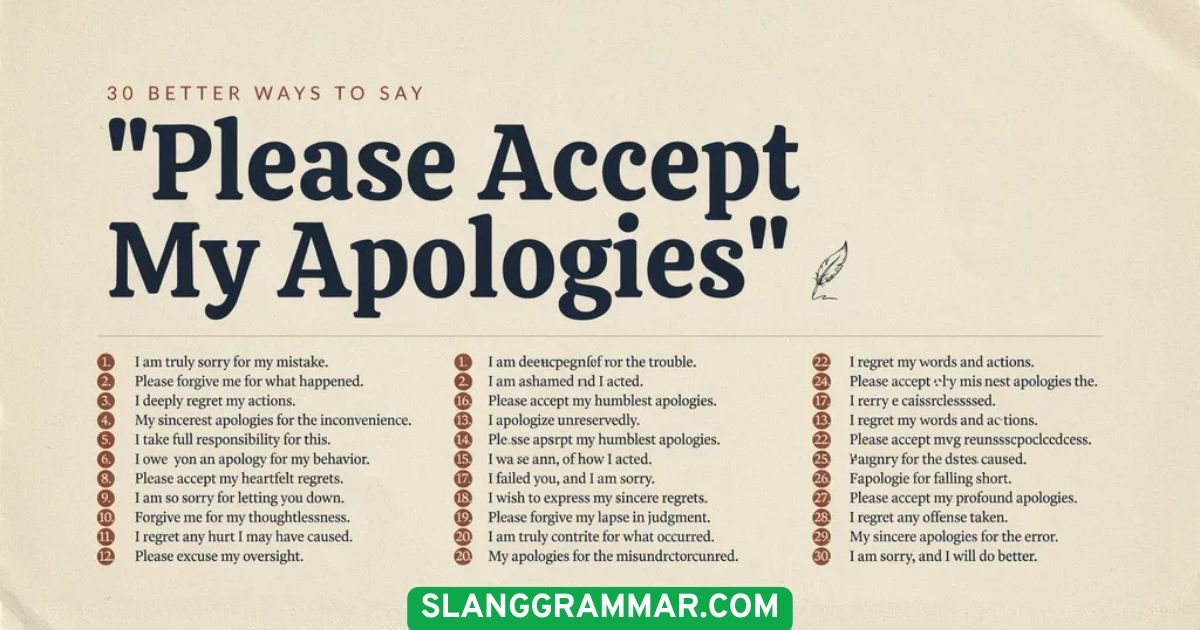
30 Better Ways to Say “Please Accept My Apologies”
Please Accept My Apologies means asking someone to forgive you for a mistake, delay, or problem. It shows that you feel sorry and want to make things right. People use this phrase when they want their apology to sound polite, clear, and sincere.
Sometimes, a simple “sorry” does not feel strong enough. A thoughtful apology can help repair trust, reduce hurt feelings, and show respect. That is why Please Accept My Apologies is a useful phrase in serious or professional situations.
Please Accept My Apologies is often used in emails, letters, workplace messages, and customer service replies. It works well when you need to apologize for confusion, inconvenience, or a late response. This phrase helps your message sound respectful and responsible.
What Does Please Accept My Apologies Mean?
Please Accept My Apologies means “I am sorry for what happened, and I hope you can accept my regret.” It is a polite way to acknowledge mistake, show remorse, and ask the other person to receive your apology.
People often use this phrase in professional communication, client communication, business apology messages, and formal situations where they want to sound respectful. For example, someone might write, “Please accept my apologies for the delay in sending the report.” This shows that the person knows the delay caused a problem and wants to respond with a respectful tone.
The phrase is more formal than “sorry.” It works well when you need formal email wording, polite expressions, or professional wording. However, in casual conversation, it may sound too serious. A close friend might prefer “I’m really sorry” or I’m truly sorry because those phrases feel more natural and personal.
When to Use Please Accept My Apologies
You can use Please Accept My Apologies when the situation needs a polite and serious apology. It is a good choice when you are writing to a boss, teacher, client, customer, coworker, or someone you do not know very well.
This phrase fits naturally in a workplace apology, especially when a mistake affects another person’s time or work. For example, if you missed a meeting, sent the wrong file, or replied late, this phrase sounds mature and professional.
It also works well in a customer service apology. Businesses often use it when an order is delayed, a service fails, or a customer has a poor experience. In this setting, the phrase helps maintain a professional tone and shows that the company cares about the issue.
You can also use it in an apology letter when the situation is serious. If you want your words to sound thoughtful, calm, and respectful, this phrase can help. However, for a very emotional heartfelt apology, a warmer phrase may work better.
Is It Professional or Polite to Say Please Accept My Apologies?
Yes, Please Accept My Apologies is both professional and polite. It is one of the most common formal apology phrases used in emails, letters, customer service replies, and workplace messages.
The phrase carries an apologetic tone and uses humble wording. It does not sound careless or rushed. It tells the reader that you are not just saying sorry quickly; you are trying to offer a sincere apology.
However, it can sometimes feel too formal or distant. If you are speaking to a close friend, family member, or partner, it may sound stiff. In those cases, I’m truly sorry, please forgive me, or I was wrong may sound more honest and human.
| Pros | Cons |
| Sounds professional, polite, and respectful | Can sound too formal in casual talks |
| Works well in apology emails and business messages | May feel cold without personal responsibility |
| Helps you express regret clearly | Can sound overused in customer service |
| Shows a serious formal apology tone | Not always best for emotional situations |
30 Other Ways to Say Please Accept My Apologies
1. I’m Truly Sorry
I’m truly sorry is one of the best sorry alternatives when you want to sound honest and warm. It means you feel real regret and care about how your actions affected the other person.
This phrase has a warm and sincere tone. You can say, “I’m truly sorry for what I said earlier. I should have been more careful.” It works well in personal messages, serious conversations, and moments where you want to show remorse.
It is best for a personal apology or emotional apology. It may not be the strongest choice for a very formal business email, where I sincerely apologize may sound more polished.
2. I Owe You an Apology
I owe you an apology means you know you did something wrong and you are ready to admit it. It is direct, honest, and shows that you want to admit fault instead of avoiding the issue.
This phrase has a humble and responsible tone. For example, “I owe you an apology for not listening carefully during our conversation.” It works well when you want to open a serious apology in a natural way.
Use it when you want to take responsibility before explaining anything else. It may not fit small mistakes, like a simple typo or quick delay, because it can sound heavier than needed.
3. I Regret My Actions
I regret my actions is a strong phrase that shows deep sincere regret. It means you are not only sorry about the result, but also sorry about what you personally did.
This phrase sounds serious and mature. You might say, “I regret my actions and understand why they caused disappointment.” It is useful when your behavior hurt someone or created a problem.
It works best when you need an honest and serious apology message. It may not fit casual situations because it can sound too intense for small mistakes.
4. I’m Sorry for the Inconvenience
I’m sorry for the inconvenience is a common professional apology phrase used when something caused trouble, delay, or extra work for another person.
This phrase has a professional and polite tone. For example, “I’m sorry for the inconvenience caused by the schedule change.” It is useful in customer service apology messages, business emails, and support replies.
This is best when the issue affected someone’s time or comfort. It may not be enough for a serious personal mistake because it can sound too general.
5. I Apologize Sincerely
I apologize sincerely is a polished way to give a formal apology. It means your apology is honest, respectful, and serious.
The tone is formal and professional. You could write, “I apologize sincerely for the error in the document.” It works well in apology phrases for emails, official messages, and workplace communication.
Use it when you need how to say sorry formally in writing. It may sound a little stiff in a text to a close friend.
6. Please Forgive Me
Please forgive me is more emotional than formal. It means you are asking the other person to let go of the hurt or disappointment caused by your mistake.
This phrase has a heartfelt and personal tone. For example, “Please forgive me for speaking without thinking.” It is useful when you want to ask for forgiveness directly.
It works best with family, friends, or someone close to you. It may not fit a normal business email because it can sound too emotional for professional communication.
7. I Deeply Regret This
I deeply regret this shows strong regret and seriousness. It means the mistake matters to you, and you understand its effect.
This phrase carries a remorseful and formal tone. You might say, “I deeply regret this mistake and will take steps to correct it.” It works well when the problem is serious and you want to show accountability phrases clearly.
Use it when a small “sorry” feels too weak. Avoid using it for minor issues because it can sound dramatic.
8. I’m Sorry About That
I’m sorry about that is simple, friendly, and easy to use. It means you are sorry for something that just happened or something you noticed went wrong.
The tone is casual and friendly. For example, “I’m sorry about that. I sent the wrong link by mistake.” It is good for quick conversations, small errors, and everyday situations.
It works best for minor mistakes. It would not be strong enough for a serious business apology or major problem.
Read Also: Clear Guide to 25 Other Ways to Say “Positive Impact”
9. I Take Full Responsibility
I take full responsibility is one of the strongest better ways to apologize because it focuses on ownership. It means you are not blaming anyone else.
This phrase sounds professional, mature, and accountable. You could say, “I take full responsibility for the mistake and will make sure it is corrected.” It is useful when you need to acknowledge mistake and take responsibility clearly.
Use it when your action caused the issue. It may not fit if the problem was not fully your fault, because it accepts complete blame.
10. I Regret the Confusion
I regret the confusion is useful when your words, message, or instructions were unclear. It means you are sorry that the other person felt confused because of what happened.
This phrase has a professional and polite tone. For example, “I regret the confusion caused by my earlier email.” It works well in formal email wording and workplace updates.
It is best when the issue is about unclear communication. It may not work if the problem was emotional or personal.
11. My Apologies
My apologies is short, polite, and easy to use. It is a simple way to say sorry without sounding too emotional.
The tone is neutral and semi-formal. You might write, “My apologies for the late reply.” This phrase works well in short emails, quick corrections, and polite messages.
It is best for small mistakes. It may feel too brief if someone expects a deeper sincere apology.
12. I’m Ashamed of My Mistake
I’m ashamed of my mistake means you feel personally disappointed by what you did. It is a strong phrase that shows deep regret.
This phrase sounds emotional and serious. For example, “I’m ashamed of my mistake, and I know I need to do better.” It can help when you want to show real remorseful language.
Use it in personal or serious situations where honesty matters. Avoid it in normal workplace emails because it may sound too personal.
13. I Apologize for the Oversight
I apologize for the oversight is a professional way to say you missed something. An oversight means you forgot, skipped, or failed to notice an important detail.
The tone is professional and respectful. You could write, “I apologize for the oversight. I have attached the missing file now.” It is excellent for apology email messages and office communication.
Use it when you missed a detail or made a small work-related error. It may not fit personal conflicts because it sounds more business-focused.
14. Please Pardon Me
Please pardon me means “please excuse me” or “please forgive this mistake.” It sounds polite and slightly formal.
This phrase has a formal and respectful tone. For example, “Please pardon me for the interruption.” It works well when you make a small mistake, interrupt someone, or need to correct yourself.
It is best for polite conversation and formal settings. It may sound old-fashioned in casual texts.
15. I Shouldn’t Have Done That
I shouldn’t have done that is direct and honest. It means you clearly understand your action was wrong.
The tone is personal, clear, and accountable. You might say, “I shouldn’t have done that, and I’m sorry for putting you in that position.” This phrase works well when you need to admit fault without hiding behind excuses.
Use it when you want to sound real and responsible. It may not fit formal business writing because it sounds more conversational.
16. Forgive Me
Forgive me is short and emotional. It directly asks the other person to accept your apology.
The tone is heartfelt and personal. For example, “Forgive me for not being there when you needed me.” It works best when there is a close relationship and the mistake caused emotional hurt.
Use it in personal situations. Avoid it in most client communication because it may sound too emotional or dramatic.
17. I Want to Apologize
I want to apologize is a natural way to begin a clear apology. It shows that you are ready to speak honestly about what happened.
This phrase has a calm and sincere tone. You could say, “I want to apologize for the way I handled the situation.” It works well in both personal and professional communication.
It is best when you want to start a serious conversation. It may sound incomplete if you do not explain what you are apologizing for.
18. I’m Sorry for the Delay
I’m sorry for the delay is one of the most useful apology phrases for emails. It means you regret being late with a reply, delivery, task, or update.
The tone is polite and practical. For example, “I’m sorry for the delay in getting back to you.” This phrase is perfect for late email replies, missed updates, and delayed projects.
Use it when time is the main issue. It may not fit if the mistake is about behavior, poor service, or hurt feelings.
19. I Regret Any Inconvenience
I regret any inconvenience is a formal phrase often used in business or customer service messages. It means you are sorry if your action or the situation caused trouble.
The tone is formal and professional. You might write, “I regret any inconvenience this change may have caused.” It is useful for notices, updates, and service-related messages.
Use it when the problem may have affected someone’s plans. Avoid it when a warmer and more personal apology is needed.
20. My Sincere Apologies
My sincere apologies is a respectful and polished phrase. It is close in meaning to Please Accept My Apologies, but it sounds a little shorter and smoother.
The tone is formal, polite, and professional. For example, “My sincere apologies for the mistake in the invoice.” It works well in business emails, letters, and serious messages.
Use it when you want a clean formal apology phrase. It may feel too formal for close friends or family.
21. I Didn’t Mean to Hurt You
I didn’t mean to hurt you is a personal phrase used when your words or actions affected someone emotionally. It shows that hurting them was not your intention.
The tone is emotional and caring. You might say, “I didn’t mean to hurt you, and I’m truly sorry for what I said.” It works well in friendships, relationships, and family conversations.
Use it when feelings are involved. It may not fit professional situations unless the relationship is personal and the context allows it.
Read Also: 30 Ways to Say “By Way of Introduction” (Friendly Email Phrases That Actually Work)
22. I Take the Blame
I take the blame means you accept that the mistake was yours. It is direct and clear.
This phrase has a responsible and honest tone. For example, “I take the blame for the error and will fix it today.” It works well when you need to show ownership quickly.
Use it when you want to be very direct. Avoid using it if the issue is shared or unclear, because it places the whole fault on you.
23. I Hope You Can Forgive Me
I hope you can forgive me is gentle and sincere. It asks for forgiveness without forcing the other person to accept right away.
The tone is warm, emotional, and respectful. You could say, “I hope you can forgive me for missing your important day.” This phrase works well in personal apologies when trust has been hurt.
Use it when the relationship matters deeply. It may not fit a workplace email because it can sound too personal.
24. I Apologize for the Delay
I apologize for the delay is the formal version of sorry for the delay. It works well when you want to sound polite and professional.
The tone is professional and calm. For example, “I apologize for the delay in sending the updated file.” It is very useful in apology emails, work messages, and customer updates.
Use it when something was late. It would not fit if the issue was about emotional harm or poor behavior.
25. I Hope This Hasn’t Caused Trouble
I hope this hasn’t caused trouble is a thoughtful phrase that shows concern. It means you realize your mistake may have affected the other person.
The tone is considerate and gentle. You might write, “I hope this hasn’t caused trouble on your end.” It works well when you are unsure how serious the effect was.
Use it for small mistakes, changes, or delays. It may sound too soft if you already know the problem caused real damage.
26. I Regret Any Misunderstanding
I regret any misunderstanding is useful when something was not clear and caused confusion. It is a polite way to smooth conflict.
The tone is formal and neutral. For example, “I regret any misunderstanding caused by my previous message.” This phrase is helpful in workplace emails, client updates, and careful explanations.
Use it when unclear wording caused the issue. Do not use it when you clearly made a direct mistake, because it may sound like you are avoiding full responsibility.
27. I Was Wrong
I was wrong is simple but powerful. It shows you are ready to admit fault clearly.
The tone is honest, direct, and mature. You could say, “I was wrong to make that decision without speaking to you first.” It works well when you want to repair trust and show real accountability.
Use it when you clearly made the wrong choice. It may feel too blunt in formal emails unless you add a respectful sentence after it.
28. I Regret Missing That
I regret missing that means you are sorry for overlooking a detail, message, task, or important point.
The tone is polite and professional. For example, “I regret missing that detail in the first draft.” It works well in work, school, and project-related messages.
Use it when you missed something specific. It may not fit emotional apologies because it focuses on an overlooked detail, not feelings.
29. Please Excuse My Mistake
Please excuse my mistake is a polite phrase used when you want someone to overlook a small error.
The tone is respectful and slightly formal. You might say, “Please excuse my mistake in the earlier message.” It works well for typos, wrong details, or small errors.
Use it for minor issues. Avoid it when the mistake is serious, because it may sound too light.
30. I Sincerely Apologize
I sincerely apologize is one of the strongest and most useful professional apology phrases. It means your apology is honest, respectful, and serious.
The tone is formal, sincere, and professional. For example, “I sincerely apologize for the oversight and appreciate your patience.” It works well in business emails, workplace messages, customer service replies, and formal notes.
Use it when you need how to apologize professionally. It may sound too formal for a casual text, but it is excellent for serious communication.
Quick Reference Table
This table gives you a simple way to compare all 30 apology synonyms and choose the best phrase for your situation.
| Alternative Phrase | Best Use Case | Tone |
| I’m truly sorry | Personal apology | Warm |
| I owe you an apology | Admitting fault | Honest |
| I regret my actions | Serious mistake | Remorseful |
| I’m sorry for the inconvenience | Customer service | Professional |
| I apologize sincerely | Formal email | Formal |
| Please forgive me | Emotional apology | Heartfelt |
| I deeply regret this | Serious regret | Serious |
| I’m sorry about that | Small mistake | Friendly |
| I take full responsibility | Accountability | Responsible |
| I regret the confusion | Miscommunication | Professional |
| My apologies | Short email apology | Neutral |
| I’m ashamed of my mistake | Deep personal regret | Emotional |
| I apologize for the oversight | Missed detail | Professional |
| Please pardon me | Polite correction | Formal |
| I shouldn’t have done that | Personal fault | Direct |
| Forgive me | Close relationship | Heartfelt |
| I want to apologize | Starting an apology | Sincere |
| I’m sorry for the delay | Late reply or task | Polite |
| I regret any inconvenience | Formal notice | Professional |
| My sincere apologies | Business apology | Respectful |
| I didn’t mean to hurt you | Hurt feelings | Caring |
| I take the blame | Clear responsibility | Direct |
| I hope you can forgive me | Personal forgiveness | Gentle |
| I apologize for the delay | Formal late response | Professional |
| I hope this hasn’t caused trouble | Minor concern | Thoughtful |
| I regret any misunderstanding | Confusion | Formal |
| I was wrong | Honest admission | Direct |
| I regret missing that | Overlooked detail | Polite |
| Please excuse my mistake | Small error | Respectful |
| I sincerely apologize | Professional apology | Formal |
FAQ
How do I say “please accept my apology”?
You can say “Please accept my apologies” or “I sincerely apologize for my mistake.”
Both phrases sound polite, respectful, and suitable for formal situations.
How do you apologize professionally?
Say “I sincerely apologize for the inconvenience and take full responsibility.”
Keep your apology clear, polite, and focused on fixing the issue.
Is “please accept my apologies” correct?
Yes, “Please accept my apologies” is correct and professional.
It is often used in emails, letters, and formal apology messages.
How do you apologize politely?
You can say “I’m sorry for the trouble, and I appreciate your understanding.”
A polite apology should sound kind, sincere, and respectful.
How do I say “sorry, my apologies”?
You can say “My apologies for the mistake” or “I’m sorry for the confusion.”
These phrases sound natural, clear, and polite.
Conclusion
Please Accept My Apologies is a polite and respectful phrase that helps a person say sorry in a serious way. It shows that the person understands the mistake and wants to make things right. This phrase works well in emails, letters, school messages, workplace notes, and formal conversations. It can be used for delays, confusion, wrong information, or any action that caused a problem. A good apology helps reduce hurt feelings and shows care for the other person. It also shows honesty, respect, and responsibility.
Using the right apology words can make your message stronger and kinder. Please Accept My Apologies sounds more formal than a simple “sorry,” so it is useful when the situation needs more respect. This phrase helps the reader understand that the apology is sincere. It also shows that the person wants to learn from the mistake and do better next time. A strong apology should be clear, gentle, and honest. It should also show that the person accepts the mistake and values the relationship.
Related Guides:
1: 26+ Other Ways to Say “Please Discard My Previous Email” (Without Sounding Like a Robot)
2: 30 Other Ways to Say “Please Note” With Clear Examples
3: Better Formal Wording: 30 Ways to Say “It Would Be Greatly Appreciated”
4: Better Encouragement: 28 Other Ways to Say Rooting for You
5: 30 Other Ways to Say “Infectious Smile” With Clear Examples