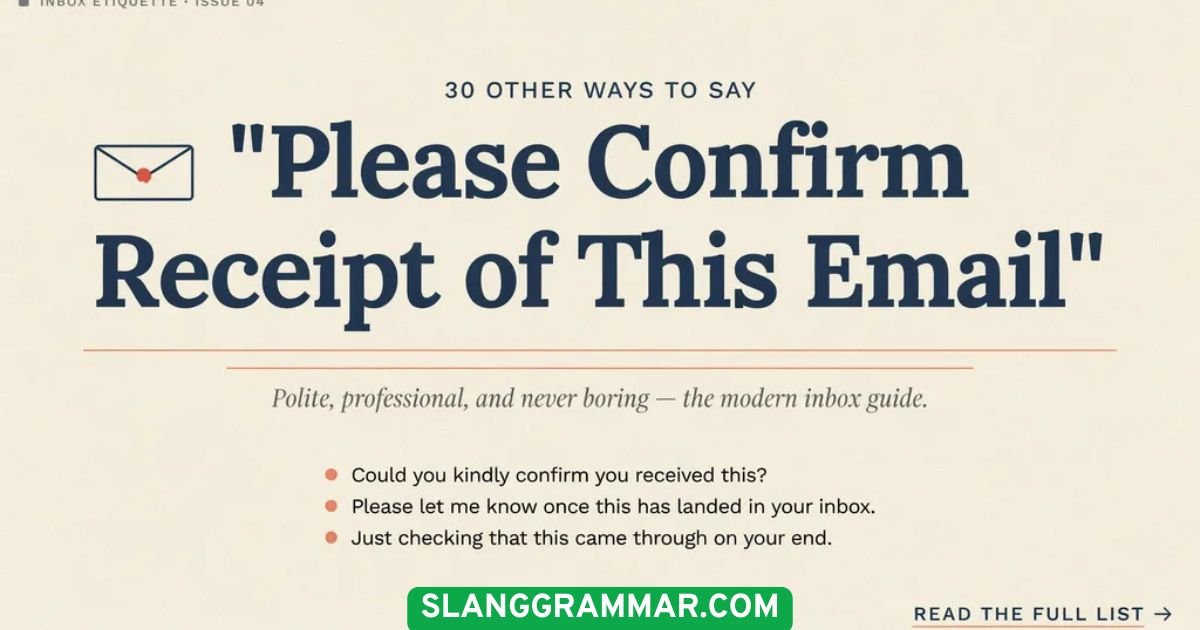
30 Other Ways to Say “Please Confirm Receipt of This Email”
“Please Confirm Receipt of This Email” means asking someone to tell you that they got your email. It is used when the message, file, or document is important. The sender only needs a short reply to confirm the email arrived.
Sometimes, you send an email and wait for a reply. You may not know if the person received it or missed it. A polite confirmation line can save time and avoid confusion.
“Please Confirm Receipt of This Email” is common in professional emails. People use it for reports, forms, contracts, invoices, and attachments. It helps both sides stay clear, organized, and ready for the next step.
What Does “Please Confirm Receipt of This Email” Mean?
Please confirm receipt of this email means “Please let me know that you received this email.” It is a simple professional email phrase used when the sender wants proof that the message arrived safely.
This phrase is common in business correspondence because many emails include important information. For example, you may send a contract, a proposal, a report, a payment receipt, a meeting schedule, or a document that needs review. In these cases, asking someone to confirm receipt helps avoid confusion.
It does not always mean the person must answer everything in the email right away. Most of the time, you only need a short email response such as “Received, thank you” or “Confirmed.” This type of business email acknowledgment tells the sender that the email arrived and can be tracked if needed.
When to Use “Please Confirm Receipt of This Email”
You should use please confirm receipt of this email when your email contains something important and you need a clear record that the recipient got it. This is especially useful in work, school, customer service, legal, finance, HR, and project communication.
For example, if you send a contract to a client, asking for receipt confirmation makes sense. You need to know the document reached them before you wait for a signature. If you send a report to your manager, you may also ask them to acknowledge receipt so you know they have it before the meeting.
This phrase is also helpful when sending attachments. If the email includes PDFs, forms, spreadsheets, images, or project files, it is better to ask the person to confirm they can access the attached files. That way, you know the files did not fail, get blocked, or arrive damaged.
You can also use a variation when following up. If someone has not replied, you can say, “Please let me know if you received my previous message.” This sounds polite and gives the person a chance to respond without feeling blamed.
Is It Professional or Polite to Say “Please Confirm Receipt of This Email”?
Yes, please confirm receipt of this email is professional and polite. It is a normal phrase in formal email communication, especially when the email includes documents, deadlines, instructions, or important details.
The phrase is clear, but it can feel too formal in casual workplace emails. If you are writing to a coworker you know well, “A quick confirmation would be great” may sound warmer. If you are writing to a client, “I’d appreciate confirmation upon receipt” may sound more polished.
Here is a simple comparison:
| Point | Good Side | Possible Issue |
| Clarity | It clearly asks for email confirmation. | It may sound too stiff in casual emails. |
| Professionalism | It works well in formal email communication. | It can feel repeated if used often. |
| Usefulness | It helps with tracking purposes. | It may be unnecessary for simple updates. |
| Tone | It is polite and direct. | A warmer courteous email phrase may fit better sometimes. |
30 Other Ways to Say “Please Confirm Receipt of This Email”
Below are 30 other ways to say “please confirm receipt of this email.” Each option has a slightly different meaning, tone, and best use. Some phrases are better for formal business emails, some are better for attachments, and some sound more friendly when you are writing to coworkers, clients, or students.
1. Kindly confirm receipt of this email.
Kindly confirm receipt of this email is a polite and professional phrase. It means you want the recipient to send a short reply saying they received your message. The word “kindly” makes the request sound softer and more respectful, which is why this phrase works well in formal email communication.
You can use it when sending important documents, project updates, client files, or official information. For example, you might write, “Kindly confirm receipt of this email so I can update our records and move forward with the next step.” This sounds clear without being rude or pushy.
This phrase is best for business emails, client communication, HR messages, and official workplace updates. It may not fit well in casual emails to close coworkers because it can sound a little too formal for a simple message.
2. Please acknowledge receipt.
Please acknowledge receipt is short, direct, and professional. It means the recipient should confirm that they received the email, file, document, or notice. This is one of the strongest alternatives to please confirm receipt of this email because it is clear and widely used in business writing.
For example, you could write, “Please acknowledge receipt of the attached agreement so we can keep our records updated.” This tells the reader exactly what you need without adding unnecessary words.
This phrase is best for legal documents, HR forms, contracts, invoices, payment records, and administrative emails. It may not be the best choice for friendly or casual emails because it sounds formal and official.
3. Please confirm you’ve received this message.
Please confirm you’ve received this message sounds clear, simple, and natural. It is less stiff than please confirm receipt of this email, but it still keeps a professional tone. This phrase works well when you want confirmation but do not want your email to sound too formal.
A good example is, “Please confirm you’ve received this message before our meeting tomorrow, as it includes the updated agenda.” This sentence explains why the confirmation matters, which makes the request feel practical.
This phrase is best for workplace emails, project updates, school messages, and team communication. It may not be formal enough for legal notices or very official business documents.
4. I’d appreciate confirmation upon receipt.
I’d appreciate confirmation upon receipt is polite, respectful, and professional. It sounds softer because you are showing appreciation instead of giving a direct instruction. This makes it a good phrase when writing to clients, managers, or people you want to address carefully.
For example, you might write, “I’d appreciate confirmation upon receipt of the attached proposal so I know it reached you successfully.” This sounds polished and courteous while still asking clearly for an email received confirmation.
This phrase is best for client proposals, reports, business files, and formal requests. It may sound too polished for a quick message to a teammate or friend.
5. Kindly acknowledge this email.
Kindly acknowledge this email means you want the person to reply and confirm they received your message. It is a formal and polite phrase that works well when you need a written record of communication.
For example, you could write, “Kindly acknowledge this email once received, as the information will be needed for tomorrow’s review.” This gives the recipient a clear reason to respond.
This phrase is best for workplace notices, internal updates, company communication, and formal reminders. It may not fit casual conversations because it sounds more administrative than friendly.
6. Please reply to confirm you received this.
Please reply to confirm you received this is direct and easy to understand. It clearly tells the recipient that you want a response. Unlike some softer phrases, this one leaves no confusion about what action is needed.
A realistic example is, “Please reply to confirm you received this before 3 PM, as we need your confirmation before sending the final version.” This works well when timing matters and you need the person to respond.
This phrase is best for deadlines, urgent updates, team coordination, and approval-related emails. It may sound too direct if the matter is not important or if you are writing to someone senior and want a softer tone.
7. When you have a moment, please confirm receipt.
When you have a moment, please confirm receipt is a gentle and polite way to ask for confirmation. It tells the recipient that you need a reply, but it does not pressure them to respond immediately.
For example, you might write, “When you have a moment, please confirm receipt of the attached report so I can make sure it reached the right inbox.” This sounds calm, respectful, and professional.
This phrase is best for non-urgent emails, workplace communication, and polite follow-ups. It may not be strong enough when you need confirmation quickly before a deadline.
8. Please let me know once you’ve received this.
Please let me know once you’ve received this is friendly, natural, and easy to use. It sounds less formal than please confirm receipt of this email, which makes it a good choice for everyday professional communication.
You could write, “Please let me know once you’ve received this so I can send the next document.” This is helpful because it connects the confirmation to a real next step.
This phrase is best for coworkers, students, clients you know well, and general workplace emails. It may not be formal enough for legal, finance, or official HR communication.
9. A quick confirmation of receipt would be appreciated.
A quick confirmation of receipt would be appreciated is polite and professional. It lets the recipient know that you only need a short reply, not a long explanation. This can make your request feel easier to answer.
For example, you might write, “A quick confirmation of receipt would be appreciated so we can make sure all project files were delivered correctly.” This sounds helpful and respectful.
This phrase is best for client emails, project updates, document sharing, and polite follow-ups. It may feel slightly formal in casual messages between close teammates.
Read Also: 30 Professional Ways to Say “Congratulations to You Both”
10. Kindly let me know if this reached you.
Kindly let me know if this reached you is a warm and polite phrase. It focuses on whether the email arrived successfully. This is useful when you are unsure if the email went through, especially after sending large files or replying to a long thread.
A good example is, “Kindly let me know if this reached you, as my previous email may not have delivered properly.” This sounds natural and gives the reader a clear reason for the request.
This phrase is best for delivery checks, follow-ups, and semi-formal emails. It may not be strong enough for official documents where you need a formal business email acknowledgment.
11. Please confirm that everything came through correctly.
Please confirm that everything came through correctly is especially useful when your email includes attachments, links, images, or multiple documents. It asks the recipient to check that the content arrived properly and nothing is missing.
For example, you could write, “Please confirm that everything came through correctly, including the PDF, spreadsheet, and signed form.” This is more useful than simply asking for confirm receipt because it checks both delivery and completeness.
This phrase is best for emails with attachments, project files, shared folders, and important documents. It would not fit well if you are sending a simple text-only email.
12. Please verify that you received this email.
Please verify that you received this email sounds formal and careful. The word “verify” makes the request feel more official than casual. It is a good option when accuracy and records matter.
You might write, “Please verify that you received this email and the attached documents by the end of the day.” This gives the recipient a clear request and a clear time frame.
This phrase is best for finance, HR, legal, compliance, and official business messages. It may sound too serious for friendly workplace communication.
13. Could you please confirm receipt when convenient?
Could you please confirm receipt when convenient? is very polite and respectful. It asks for confirmation while giving the recipient flexibility. This makes it a good option when the matter is important but not urgent.
For example, you could write, “Could you please confirm receipt when convenient? I want to make sure the updated file reached you before our review.” This sounds thoughtful and professional.
This phrase is best for managers, clients, senior professionals, and polite workplace emails. It may not be the best choice if you need a quick reply because “when convenient” makes the request feel less urgent.
14. Please advise once this email has been received.
Please advise once this email has been received is a formal business phrase. “Please advise” means “please let me know.” This wording is often used in corporate, administrative, and official emails.
A realistic example is, “Please advise once this email has been received so we can update the status of your request.” This sounds formal and organized.
This phrase is best for corporate emails, customer service, admin work, and official updates. It may sound a little stiff in casual workplace emails or friendly client messages.
15. Kindly notify me once you’ve received this.
Kindly notify me once you’ve received this means you want the person to tell you when the email arrives. It sounds professional and clear, especially when the confirmation affects the next step.
For example, you might write, “Kindly notify me once you’ve received this so we can proceed with next steps.” This phrase is useful because it explains why the reply matters.
This phrase is best for project updates, process tracking, onboarding, document sharing, and approval emails. It may sound too formal for simple day-to-day messages.
16. Please confirm you can access the attached files.
Please confirm you can access the attached files is one of the most useful phrases when your email includes documents. It does more than ask for an email confirmation. It also checks whether the recipient can open the files.
You could write, “Please confirm you can access the attached files, especially the contract and pricing sheet, before our call tomorrow.” This helps prevent problems before a meeting or deadline.
This phrase is best for PDFs, spreadsheets, reports, contracts, presentations, and shared documents. It should not be used when there are no attachments.
17. Please acknowledge that you’ve received the materials.
Please acknowledge that you’ve received the materials is useful when you send more than a regular email. The word “materials” can refer to documents, training files, lesson notes, project resources, or onboarding information.
For example, you might write, “Please acknowledge that you’ve received the materials for Monday’s training session.” This sounds professional and helps the sender know the recipient has what they need.
This phrase is best for HR, education, training, project management, and team preparation. It may sound too formal for a simple email with one small attachment.
18. Let me know if this email reaches you successfully.
Let me know if this email reaches you successfully is friendly and conversational. It sounds natural when you are not sure whether the message will deliver correctly.
A good example is, “Let me know if this email reaches you successfully, since the attachment is larger than usual.” This makes the request feel practical instead of demanding.
This phrase is best for semi-formal emails, delivery issues, large attachments, and friendly workplace communication. It may not be formal enough for official records or legal documents.
19. Please send a brief confirmation once received.
Please send a brief confirmation once received is clear and efficient. It tells the recipient that you only need a short reply. This can make people more likely to respond quickly.
For example, you could write, “Please send a brief confirmation once received so we can note it in the project tracker.” This works well when confirmation is needed for records.
This phrase is best for project management, admin tasks, client files, and workplace tracking. It may sound too direct if you are writing a warm email to a close contact.
20. Please confirm delivery of this email.
Please confirm delivery of this email is formal and focused on whether the email arrived. It sounds more technical than friendly, but it is useful when tracking matters.
You might write, “Please confirm delivery of this email for our records.” This phrase is short and clear, especially when the email itself is part of an official process.
This phrase is best for admin, compliance, logistics, customer service, and official documentation. It may sound too cold in friendly or relationship-based communication.
21. Please confirm safe receipt.
Please confirm safe receipt means you want the recipient to confirm that the email, file, or document arrived safely. This phrase sounds formal and is often used for important documents.
For example, you could write, “Please confirm safe receipt of the attached contract and let me know if any pages are missing.” This is helpful because it checks both delivery and completeness.
This phrase is best for contracts, official forms, legal documents, and sensitive files. It may sound slightly unusual in casual American emails because it is more formal and traditional.
22. Do let me know once this message arrives.
Do let me know once this message arrives is polite and slightly conversational. It sounds warmer than please confirm receipt of this email, but it still asks for a clear response.
A natural example is, “Do let me know once this message arrives, and I’ll send over the remaining files.” This connects the recipient’s confirmation to the next action.
This phrase is best for friendly business emails, semi-formal communication, and messages to people you already know. It may not fit strict corporate, legal, or HR emails.
Read Also: 32 Other Ways to Say “Family Emergency” With Examples
23. Please confirm that the information has reached you.
Please confirm that the information has reached you focuses on the content of the email rather than the email itself. This is helpful when you are sending instructions, updates, or important details.
For example, you might write, “Please confirm that the information has reached you before the team meeting.” This makes sense when the recipient needs to know something before taking action.
This phrase is best for updates, instructions, notices, schedules, and important announcements. It may feel too formal for quick everyday messages.
24. Kindly reply to acknowledge receipt.
Kindly reply to acknowledge receipt is polite, clear, and formal. It asks the recipient to send a written reply confirming they received the email or document.
You could write, “Kindly reply to acknowledge receipt of this notice so we can keep the file updated.” This works well when you need a record of the person’s response.
This phrase is best for official notices, contracts, HR documents, compliance messages, and formal business emails. It may sound too official for relaxed workplace communication.
25. Please let me know if you received my previous message.
Please let me know if you received my previous message is useful when you are following up after no response. It sounds polite because it does not blame the recipient. It simply checks whether they saw your earlier email.
For example, you might write, “Please let me know if you received my previous message about the revised project timeline.” This gives the person an easy way to respond and keeps the conversation moving.
This phrase is best for follow-up emails, missed replies, project updates, and client communication. It does not fit a first email because there is no previous message to mention.
26. Please confirm that everything was received.
Please confirm that everything was received is a helpful phrase when you sent multiple items. It asks the recipient to check that all documents, files, links, or details arrived.
A good example is, “Please confirm that everything was received, including the invoice, project brief, and signed agreement.” This is useful because it helps prevent missing-file problems.
This phrase is best for emails with multiple attachments, grouped documents, or several important details. It may be unnecessary for a simple email with only one message.
27. A quick acknowledgment would be great.
A quick acknowledgment would be great is friendly and easygoing. It asks for a short reply without sounding stiff or overly formal.
For example, you could write, “A quick acknowledgment would be great when you get this, just so I know it reached you.” This sounds natural and polite.
This phrase is best for coworkers, friendly clients, regular contacts, and casual workplace emails. It may be too relaxed for legal documents, HR notices, or official business records.
28. Please confirm once this is in your inbox.
Please confirm once this is in your inbox is simple and direct. It asks the recipient to let you know when the email arrives. This phrase sounds more casual than formal.
You might write, “Please confirm once this is in your inbox so I know the message went through properly.” This is useful when you are testing delivery or sending time-sensitive information.
This phrase is best for informal professional emails, delivery checks, and messages to people you know well. It may not sound polished enough for formal client emails.
29. Kindly confirm that the files came through.
Kindly confirm that the files came through is a natural phrase for attachment emails. It asks the recipient to check whether the files arrived successfully.
For example, you could write, “Kindly confirm that the files came through and let me know if you have trouble opening any of them.” This is helpful because it invites the recipient to report file problems early.
This phrase is best for emails with documents, images, large files, presentations, or shared resources. It should not be used when your email has no files attached.
30. Please acknowledge receipt when you get a chance.
Please acknowledge receipt when you get a chance is polite, relaxed, and professional. It asks for confirmation but does not make the request sound urgent.
A natural example is, “Please acknowledge receipt when you get a chance, as I only need to confirm that the file reached you.” This sounds respectful and easy to respond to.
This phrase is best for non-urgent workplace emails, polite follow-ups, and messages where confirmation is helpful but not time-sensitive. It may not be strong enough if you need an immediate reply before a deadline.
Quick Reference Table
This table gives you a fast way to choose the right phrase based on tone and situation.
| Alternative Phrase | Best Use Case | Tone |
| Kindly confirm receipt of this email. | Formal document emails | Professional |
| Please acknowledge receipt. | HR, legal, admin emails | Formal |
| Please confirm you’ve received this message. | General workplace emails | Neutral |
| I’d appreciate confirmation upon receipt. | Client or manager emails | Polite |
| Kindly acknowledge this email. | Official workplace notices | Formal |
| Please reply to confirm you received this. | Time-sensitive requests | Direct |
| When you have a moment, please confirm receipt. | Non-urgent emails | Warm |
| Please let me know once you’ve received this. | Friendly professional emails | Friendly |
| A quick confirmation of receipt would be appreciated. | Polite follow-ups | Professional |
| Kindly let me know if this reached you. | Delivery concerns | Warm |
| Please confirm that everything came through correctly. | Attachments or links | Helpful |
| Please verify that you received this email. | Formal records | Professional |
| Could you please confirm receipt when convenient? | Respectful requests | Polite |
| Please advise once this email has been received. | Corporate communication | Formal |
| Kindly notify me once you’ve received this. | Process tracking | Professional |
| Please confirm you can access the attached files. | File attachments | Practical |
| Please acknowledge that you’ve received the materials. | Training or project materials | Formal |
| Let me know if this email reaches you successfully. | Semi-formal delivery checks | Friendly |
| Please send a brief confirmation once received. | Quick workplace confirmation | Professional |
| Please confirm delivery of this email. | Official tracking | Formal |
| Please confirm safe receipt. | Important files or contracts | Formal |
| Do let me know once this message arrives. | Friendly business emails | Warm |
| Please confirm that the information has reached you. | Important updates | Professional |
| Kindly reply to acknowledge receipt. | Written record needed | Formal |
| Please let me know if you received my previous message. | Follow-up emails | Friendly |
| Please confirm that everything was received. | Multiple items | Neutral |
| A quick acknowledgment would be great. | Casual workplace emails | Friendly |
| Please confirm once this is in your inbox. | Delivery testing | Casual |
| Kindly confirm that the files came through. | Attachments | Professional |
| Please acknowledge receipt when you get a chance. | Non-urgent confirmation | Polite |
FAQ About “Please Confirm Receipt of This Email”
How do I ask for a confirm receipt of an email?
You can write, “Please confirm receipt of this email.”
You can also say, “Please let me know once you receive this message.”
Is it correct to say “please confirm receipt of this email”?
Yes, “Please confirm receipt of this email” is correct and professional.
It is useful when you send important documents, files, or formal messages.
How do you politely ask for confirmation email?
You can say, “Kindly confirm receipt of this email when you get a chance.”
This sounds polite, clear, and respectful.
What is another way to say please confirm receipt?
You can say, “Please acknowledge receipt.”
You can also say, “Please confirm you received this message.”
How do I confirm an email?
You can reply, “I confirm that I have received your email.”
You can also write, “Received, thank you.”
Conclusion
“Please Confirm Receipt of This Email” is a useful phrase for professional messages. It helps the sender know that the email reached the right person. People often use it when they send forms, reports, contracts, invoices, or important files. This phrase keeps communication clear and organized. It also helps both sides avoid confusion and delays.
You can use this phrase in formal emails, but you can also choose softer alternatives. Phrases like “Please acknowledge receipt” or “Please let me know once you receive this” sound polite and clear. The best phrase depends on the situation and the person you contact. Clear wording helps your message sound professional, respectful, and easy to understand.
Related Guides:
1: 25 Other Ways to Say “Happy Birthday in Advance” for Any Situation
2: 30 Other Ways to Say “Sincerely” for Better Emails and Letters
3: Friendly Guide to 35 Other Ways to Say “Well Noted”
4: Better Ways to Say Have a Good Rest of Your Day in Everyday and Professional Conversations
5: 30 Other Ways to Say “In the Text It States” Clearly and Professionally