
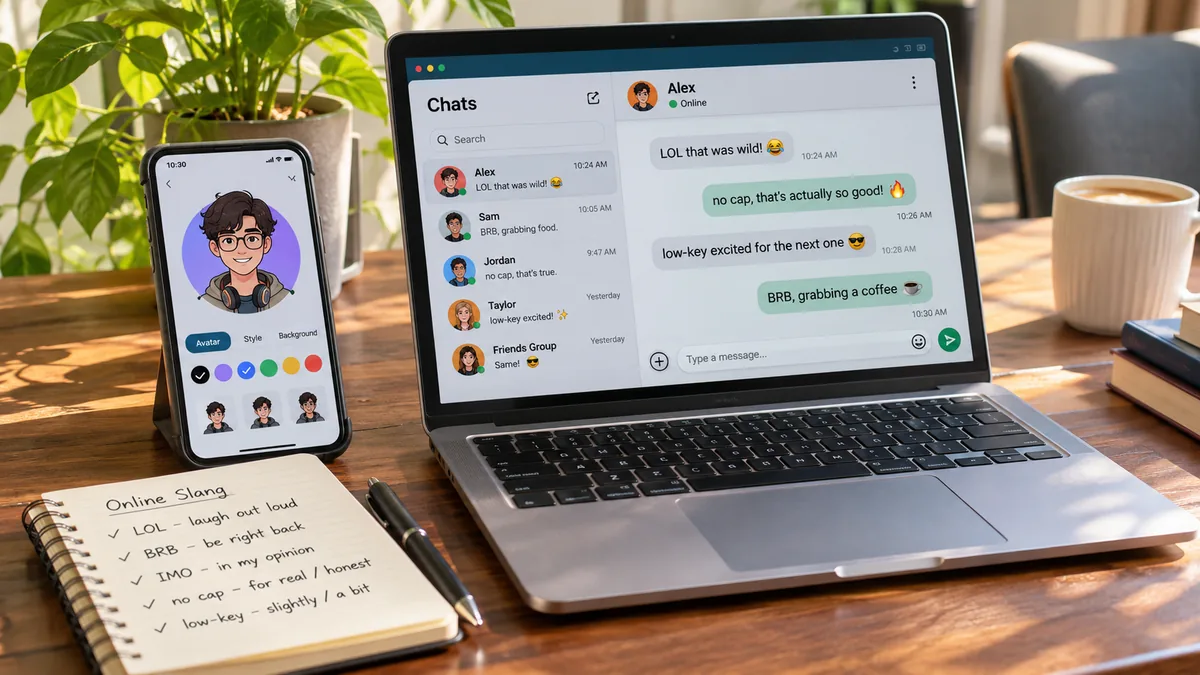
How Digital Avatars and Modern Slang Are Changing the Way We Communicate Online
Online communication has changed dramatically over the past decade. Conversations that once relied almost entirely on written messages now include emojis, memes, abbreviations, reaction images, and personalized profile pictures. The way people express themselves online is no longer just about choosing the right words. It is also about creating a recognizable personality that others can connect with.
Whether you are chatting with friends, participating in online communities, building a social media presence, or creating content for a personal brand, your digital identity plays an important role in how people perceive you. A distinctive profile picture, for example, can make an account more memorable and give others a quick impression of your personality. Tools such as an avatar maker make it easier to create a personalized digital representation without needing professional design experience.
But digital identity is only one part of the picture. Understanding internet slang, modern expressions, and the unwritten rules of online conversations can help you communicate more naturally and confidently.
Why Digital Identity Matters in Online Conversations
Think about the last time you visited a social media profile. Before reading someone’s posts or sending a message, you probably noticed their username, profile picture, and short biography.
These small details help establish an identity.
In online spaces, people often make quick judgments based on visual presentation. A carefully chosen profile image can communicate creativity, humor, professionalism, or a particular interest. It also makes it easier for friends, followers, and community members to recognize you across different platforms.
For example, someone who regularly posts about gaming might choose a colorful illustrated character, while a language enthusiast might prefer a simple, friendly design. Neither option is necessarily better. The right choice depends on the impression you want to create.
A good digital identity should feel authentic rather than overly polished. The goal is not to look like someone else but to create a visual representation that reflects your personality.
Understanding Internet Slang and Its Role in Modern Language
Internet slang has become a major part of everyday communication. Expressions that once appeared mainly in online gaming communities, forums, and social media platforms are now regularly used in text messages and casual conversations.
Words such as “LOL,” “BRB,” “IMO,” and “TBH” are familiar to many internet users. Newer expressions, including “no cap,” “low-key,” “rizz,” and “delulu,” demonstrate how quickly online vocabulary evolves.
These expressions often communicate more than their literal meanings.
For instance, saying something is “low-key exciting” suggests a feeling of excitement that is understated or not particularly obvious. Similarly, “no cap” is used to emphasize that someone is being honest or serious.
Understanding these expressions can make online conversations easier to follow, particularly when communicating with people from different age groups or online communities.
Why Slang Changes So Quickly
Unlike traditional vocabulary, internet slang often develops organically through social interaction.
A phrase might begin in a gaming community, become popular on TikTok, spread through memes, and eventually enter everyday conversations. Sometimes an expression becomes popular because it is funny. Other times, it gains attention because it communicates an emotion more effectively than a longer sentence.
Social media accelerates this process. A popular video, celebrity comment, or viral meme can introduce millions of people to a new expression within days.
However, not every trending phrase remains relevant. Some disappear almost as quickly as they appear, while others become established parts of everyday language.
This is why keeping up with modern slang requires more than memorizing definitions. Understanding context is equally important.
How Your Profile Picture Influences First Impressions
Your profile picture is often one of the first things people notice when interacting with you online.
A recognizable image can help build familiarity, especially if you participate in multiple communities or regularly publish content.
Here are a few practical considerations when choosing one:
Keep it recognizable. Avoid overly complicated designs that become difficult to identify when displayed as small icons.
Reflect your personality. Choose colors, expressions, and visual elements that match your interests or communication style.
Consider your audience. A playful illustrated character may work perfectly for a gaming account, while a professional networking profile may benefit from a more understated appearance.
Maintain consistency. Using a similar visual identity across platforms makes it easier for people to recognize you.
Think about privacy. Not everyone wants to use a real photograph online. An illustrated character or personalized graphic can provide an alternative while maintaining a recognizable presence.
These choices are especially useful for people who create online content, participate in discussion forums, or manage several social media accounts.
The Connection Between Memes, Slang, and Digital Personality
Memes have become one of the most recognizable forms of online communication.
A simple image combined with a short caption can express frustration, excitement, sarcasm, or amusement in a way that would otherwise require several sentences.
Consider how people use memes during everyday conversations. Someone might respond to an unexpected situation with a reaction image instead of writing a detailed explanation. The recipient immediately understands the intended emotion because the image references a familiar cultural moment.
Slang works in a similar way. Both memes and internet expressions depend on shared knowledge.
When someone uses a popular phrase, they are often signaling that they understand a particular online culture. This can create a sense of belonging and make conversations feel more relaxed.
However, context matters. A phrase that works perfectly in a casual group chat might sound confusing or inappropriate in a professional email.
Learning when to use internet slang is just as important as knowing what it means.
Practical Tips for Using Internet Slang Naturally
If you are trying to become more comfortable with modern online language, start by paying attention to how expressions are used in real conversations.
Here are several ways to develop a better understanding:
1. Learn the Meaning Before Using an Expression
It is easy to misunderstand slang when relying on short definitions alone. Look at examples and pay attention to the situations in which people use particular expressions.
Some words have multiple meanings depending on the community or context.
2. Avoid Forcing Trending Words Into Conversations
Using every popular expression can make communication feel unnatural. Choose phrases that fit your personality and the conversation.
Natural communication is more effective than trying too hard to sound fashionable.
3. Understand Your Audience
Different online communities develop their own vocabulary. Gaming discussions, social media comments, professional groups, and everyday messaging may all use different expressions.
Adjusting your language to the audience helps prevent misunderstandings.
4. Pay Attention to Tone
Written communication does not always make emotions obvious. Slang, emojis, punctuation, and reaction images can help clarify whether someone is joking, being sarcastic, or expressing genuine frustration.
Still, when something is important, clear language is usually the safest option.
5. Keep Learning
Internet vocabulary changes constantly. Following online discussions, reading language explanations, and observing how people communicate can help you stay familiar with new expressions.
Why Clear Language Still Matters
Although internet slang makes conversations more expressive, traditional language skills remain important.
Knowing how to communicate clearly helps you avoid misunderstandings, express complicated ideas, and connect with people who may not understand particular online expressions.
For example, a message containing several abbreviations might be perfectly understandable to a close group of friends but confusing to a new colleague.
The best communicators know how to move between informal and formal language depending on the situation.
Websites dedicated to slang definitions, grammar explanations, and everyday language usage can be valuable resources for developing this flexibility. They help readers understand not only what expressions mean but also how and when to use them appropriately.
Understanding online slang is helpful, but knowing how to choose the right words for different situations is just as important. Whether you’re chatting casually with friends or communicating professionally, your tone can shape how others interpret your message. For example, our guide to other ways to say “Stay Tuned” explains how simple expressions can be adapted for social media, everyday conversations, and professional communication.
Conclusion
Digital communication is about more than exchanging messages. It involves personality, creativity, cultural awareness, and the ability to understand how language evolves. From choosing a recognizable profile image to learning the meaning of trending expressions, small details can make online interactions more engaging and meaningful.
By combining an authentic digital identity with a good understanding of modern slang and clear communication, you can navigate online conversations with greater confidence while expressing yourself in a way that feels genuinely your own.