27 Other Ways to Say “It Was Nice Talking to You” Naturally and Politely
“It Was Nice Talking to You” means you enjoyed speaking with someone and valued the conversation. It shows kindness, respect, and appreciation after a chat. People often use this phrase after calls, meetings, text messages, or friendly talks.
Sometimes this phrase can feel too simple when you want to sound warmer or more thoughtful. You may need a better reply for work, friendship, family, or texting. The right words can help you end the conversation in a polite and natural way.
“It Was Nice Talking to You” is a useful phrase for many daily situations. You can say it to friends, coworkers, clients, teachers, or people you meet for the first time. It helps leave a positive impression and keeps the conversation friendly.
What Does “It Was Nice Talking to You” Mean?
It was nice talking to you means that you enjoyed the conversation and appreciated the time spent speaking with someone. It is a polite way to end a chat, call, meeting, or message exchange. The phrase shows that the conversation felt pleasant, useful, or friendly.
People often use it after a polite conversation, especially when they want to end things on a kind note. For example, after a phone call with a client, you might say, “It was nice talking to you today. I’ll send the details shortly.” After talking with a friend, you might say, “It was nice talking to you. Let’s catch up again soon.”
The phrase is common in American English because it is simple, warm, and easy to understand. It works in daily conversation, business communication, casual texting, and even short email closings. It is not too emotional, not too cold, and not too formal, which makes it useful in many situations.
You may also hear similar versions like nice talking with you, enjoyed talking to you, pleasure talking to you, or great speaking with you. These phrases all carry the same basic meaning, but each one has a slightly different tone.
When to Use “It Was Nice Talking to You”
You can use it was nice talking to you when you want to close a conversation politely. It is especially helpful when you do not want the ending to feel sudden or awkward. Instead of simply saying “bye,” this phrase adds appreciation and warmth.
It works well after a phone call with someone you just met. For example, if you speak with a recruiter, teacher, customer, or business contact, saying it was nice talking to you shows good conversation etiquette. It tells the person that you valued their time and respected the conversation.
It also fits after a friendly catch-up. If you have not spoken to a friend or relative in a while, this phrase can sound natural and kind. You might say, “It was nice talking to you. I missed hearing from you.” In this case, the phrase feels more personal and caring.
You can also use it in written communication. In an email reply, it may appear as “It was nice speaking with you earlier today.” In a text message reply, it may appear as “Nice talking to you! Talk soon.” The wording may change, but the purpose stays the same.
This phrase also works after networking events, interviews, group calls, online meetings, and social media chats. It helps you close the exchange with polite communication and leaves the door open to connect again or follow up soon.
Is It Professional or Polite to Say “It Was Nice Talking to You”?
Yes, it was nice talking to you is both professional and polite. It is a safe phrase in most business, school, and everyday settings. It shows respect without sounding too stiff. That makes it useful when speaking to coworkers, managers, clients, teachers, neighbors, or new contacts.
However, the phrase can sometimes sound a little basic. It is not wrong, but it may not always be the strongest choice. For example, after a job interview, “I appreciated the opportunity to speak with you” may sound more polished. After a deep personal talk, “I’m really glad we talked” may feel more sincere.
Here is a simple look at the pros and cons.
| Point | Why It Helps | Possible Limit |
| Polite | It shows respect and kindness | It may sound common if overused |
| Professional | It works in meetings, interviews, and emails | Some formal settings may need stronger wording |
| Friendly | It makes the conversation end warmly | It may feel too plain for close relationships |
| Simple | Anyone can understand it easily | It may not show deep emotion or excitement |
The best way to think about it is this: it was nice talking to you is a good phrase, but it is not the only phrase. If the situation needs more warmth, humor, confidence, or professionalism, you can choose a better match from the alternatives below.
27 Other Ways to Say “It Was Nice Talking to You”
1. I Enjoyed Speaking With You
“I enjoyed speaking with you” is one of the best professional answers because it sounds respectful and polished. It means the conversation was useful or pleasant, and it works especially well after business calls, interviews, meetings, or formal discussions.
The tone is formal and professional, but it still feels friendly enough for normal use. You could say, “I enjoyed speaking with you today and learning more about the position.” This phrase works best when you want to leave a mature and respectful impression.
It is a strong choice for work, school, and networking situations. It may not fit as well in a very casual chat with a close friend because it can sound slightly too polished for a relaxed conversation.
2. It Was Great Speaking With You
“It was great speaking with you” is a warm and flexible alternative to it was nice talking to you. It means you enjoyed the conversation and found it positive. This phrase works well in both semi-formal and professional settings.
The tone is friendly, polite, and confident. For example, you might write, “It was great speaking with you earlier. I look forward to your feedback.” This sounds natural in an email, LinkedIn message, or follow-up note.
Use it when the conversation went well and you want to sound professional without being too stiff. Avoid it if the conversation was very serious, emotional, or difficult, because “great” may sound too cheerful in those moments.
3. I Appreciated Our Conversation
“I appreciated our conversation” is a thoughtful way to say you valued what the other person shared. It is not only about enjoying the talk; it also shows respect for the person’s time, ideas, or support.
This phrase carries a thoughtful and professional tone. You could say, “I appreciated our conversation and the advice you gave me about the project.” This example works well after a mentoring session, meeting, interview, or serious discussion.
It is best when the conversation had value, advice, insight, or meaning. It may not be the best fit for a quick casual chat, because it can sound a little too serious for a simple joke-filled conversation.
4. It Was a Pleasure Talking to You
“It was a pleasure talking to you” is a classic formal reply. It means the conversation was enjoyable and respectful. Many people use this phrase in business, customer service, interviews, and professional emails.
The tone is formal, polite, and polished. A natural example would be, “It was a pleasure talking to you today. Thank you for taking the time to explain the next steps.” This sounds professional and leaves a strong impression.
Use it after important conversations where respect matters. It may not fit well with close friends or family members because it can sound too formal for people who expect a relaxed tone.
5. I’m Glad We Had the Chance to Talk
“I’m glad we had the chance to talk” feels warmer than the original phrase. It means you are happy the conversation happened, especially if it was needed, meaningful, or long overdue.
The tone is warm, friendly, and sincere. You might say, “I’m glad we had the chance to talk today. I feel much better about everything now.” This works well after personal discussions, problem-solving conversations, or friendly check-ins.
It is a good choice when the talk helped clear something up or brought people closer. It may not be ideal for a very formal business message where you want a sharper professional reply.
6. Thanks for the Great Conversation
“Thanks for the great conversation” adds gratitude to your response. It means you enjoyed the talk and also appreciate the other person’s time and effort.
The tone is friendly, positive, and slightly casual. For example, “Thanks for the great conversation. I really enjoyed hearing your thoughts on the idea.” This phrase works well after a meeting, coffee chat, podcast-style conversation, or casual professional call.
Use it when the conversation felt engaging or helpful. It may not fit after a short or serious conversation where “great” would feel too strong.
7. I Really Enjoyed Talking With You
“I really enjoyed talking with you” is more personal than it was nice talking to you. The word “really” adds warmth and makes the message feel sincere.
The tone is friendly, heartfelt, and natural. You could say, “I really enjoyed talking with you last night. We should do it again soon.” This works beautifully for friends, dates, close coworkers, or family members.
Use it when you genuinely liked the conversation and want the other person to know. Avoid it in very formal settings if you need a more polished phrase like great speaking with you or pleasure talking to you.
8. I Loved Our Conversation
“I loved our conversation” is warm and expressive. It means the talk was not just nice, but truly enjoyable or meaningful.
The tone is sweet, warm, and personal. A clear example is, “I loved our conversation about travel and family. It was so easy talking to you.” This phrase works well with friends, romantic interests, or people you feel comfortable with.
It is best for personal and friendly situations. It may not fit a business meeting unless the tone between both people is already relaxed and informal.
9. It Was Nice Catching Up With You
“It was nice catching up with you” is perfect when you talk to someone after a long time. It means you enjoyed hearing updates about their life, work, family, or plans.
The tone is friendly, relaxed, and familiar. You might say, “It was nice catching up with you after so long. I’m happy to hear things are going well.” This works well with old friends, relatives, former coworkers, or classmates.
Use it when the conversation is about reconnecting. It does not fit well when you are talking to someone for the first time, because you cannot “catch up” with someone you do not already know.
10. I’m Happy We Got to Connect
“I’m happy we got to connect” is a strong phrase for networking replies and new relationships. It means you are glad you had the opportunity to speak and build a connection.
The tone is professional, warm, and modern. For example, “I’m happy we got to connect today. I’d love to keep in touch and learn more about your work.” This sounds natural after a LinkedIn chat, business call, conference, or online meeting.
Use it when you want to build future communication. It may sound a little too networking-focused for a close friend or family member.
11. I Enjoyed Hearing Your Thoughts
“I enjoyed hearing your thoughts” shows that you listened carefully. It means you valued the other person’s ideas, opinions, or advice.
The tone is thoughtful, respectful, and semi-formal. You could say, “I enjoyed hearing your thoughts on the new plan. Your perspective was helpful.” This works well in meetings, study discussions, team calls, or advice-based conversations.
Use it when the other person shared ideas or feedback. It may not fit a light conversation that was mostly jokes or small talk.
12. I Appreciate You Taking the Time to Talk
“I appreciate you taking the time to talk” is one of the strongest thank you responses. It shows that you respect the other person’s time, especially if they are busy or helped you with something.
The tone is professional, grateful, and polite. A good example is, “I appreciate you taking the time to talk with me today. Your guidance was very helpful.” This works well after interviews, client calls, teacher meetings, or mentoring conversations.
Use it when someone made time for you. It may sound too formal if you send it to a best friend after a casual phone call.
Read Also: Better Ways to Say Thank You for Your Concern in Everyday and Professional Situations
13. It Was Wonderful Talking With You
“It was wonderful talking with you” is warmer and more expressive than the original phrase. It means the conversation was pleasant, enjoyable, and possibly meaningful.
The tone is warm, kind, and slightly polished. You might say, “It was wonderful talking with you today. I’m glad we finally got to meet.” This works well after meeting someone new, speaking with a relative, or having a meaningful professional conversation.
Use it when you want to sound sincere and friendly. Avoid it if the conversation was very short or routine, because “wonderful” may feel too strong.
14. I’m Glad We Spoke
“I’m glad we spoke” is simple, sincere, and useful after meaningful talks. It means the conversation mattered or helped in some way.
The tone is thoughtful, calm, and direct. For example, “I’m glad we spoke. I think we understand each other better now.” This phrase works well after clearing up confusion, discussing plans, or having an emotional conversation.
Use it when the conversation had a purpose. It may not be the best fit after casual small talk because it can sound more serious than needed.
15. That Was a Really Nice Chat
“That was a really nice chat” is a casual and friendly alternative. It sounds relaxed and natural, especially in texts or informal conversations.
The tone is casual, warm, and easygoing. You could say, “That was a really nice chat. Let’s talk again soon.” This works well with friends, online connections, classmates, and friendly coworkers.
Use it when the conversation felt light and pleasant. It may not fit in a formal email or professional interview follow-up.
16. I Had a Great Time Talking With You
“I had a great time talking with you” is more cheerful and personal. It means the conversation was enjoyable, fun, or exciting.
The tone is friendly, upbeat, and sometimes a little flirty depending on the context. For example, “I had a great time talking with you tonight. I didn’t realize how fast the time went.” This works well after a date, friendly call, or fun conversation.
Use it when the talk felt enjoyable and relaxed. Avoid it after a serious business meeting unless the relationship is already very casual.
17. Talking With You Was Really Helpful
“Talking with you was really helpful” is useful when the conversation gave you clarity, advice, or direction. It focuses on the value of the talk, not just the enjoyment.
The tone is thoughtful, grateful, and practical. You might say, “Talking with you was really helpful. I understand the next steps much better now.” This works well after speaking with a teacher, coach, mentor, manager, or support person.
Use it when someone helped you solve a problem. It may not fit a fun or casual conversation where no advice was shared.
18. I Learned a Lot From Our Conversation
“I learned a lot from our conversation” shows respect for the other person’s knowledge. It means their ideas taught you something useful.
The tone is professional, respectful, and appreciative. A natural example is, “I learned a lot from our conversation about marketing strategy. Thank you for sharing your experience.” This works well in networking, business, education, and mentoring settings.
Use it when the other person shared helpful knowledge. It may sound too formal or intense for a quick friendly chat.
19. Let’s Keep in Touch
“Let’s keep in touch” is a simple way to keep the connection open. It means you want to speak again in the future.
The tone is friendly, open, and semi-formal. You could say, “It was great speaking with you. Let’s keep in touch.” This phrase works well after networking, meeting someone new, or ending a positive conversation.
Use it when you genuinely want future contact. Avoid it if you do not plan to respond later, because it can feel empty if there is no real follow-up.
20. Hope We Can Talk Again Soon
“Hope we can talk again soon” is warm and forward-looking. It means you enjoyed the conversation and would like another one.
The tone is friendly, hopeful, and kind. For example, “I really enjoyed catching up. Hope we can talk again soon.” This works well with friends, family, romantic interests, or friendly professional contacts.
Use it when you want to continue the relationship. It may not fit a one-time formal interaction where future contact is unlikely.
21. I’m Looking Forward to Our Next Conversation
“I’m looking forward to our next conversation” sounds positive and confident. It means you expect another talk and are happy about it.
The tone is professional, warm, and forward-moving. You might say, “I’m looking forward to our next conversation and continuing this discussion.” This works well in business, coaching, interviews, and project planning.
Use it when another meeting or follow-up is likely. Avoid it when there is no planned future conversation, because it may sound too strong.
22. This Was a Meaningful Conversation
“This was a meaningful conversation” is deeper than a simple goodbye. It tells the other person that the talk had emotional or personal value.
The tone is heartfelt, sincere, and thoughtful. A clear example is, “This was a meaningful conversation, and I’m grateful you were honest with me.” This works well after emotional talks, personal support, conflict resolution, or important life discussions.
Use it when the conversation truly mattered. It may feel too serious for casual chatting or small talk.
23. You Gave Me a Lot to Think About
“You gave me a lot to think about” means the conversation was interesting, useful, or thought-provoking. It shows that the other person’s words stayed with you.
The tone is thoughtful, respectful, and reflective. For example, “You gave me a lot to think about. I appreciate your honest advice.” This works well after feedback, mentoring, problem-solving, or deep discussions.
Use it when someone shared ideas that made you reflect. It may not fit a light, funny chat where nothing serious was discussed.
24. I Always Enjoy Talking With You
“I always enjoy talking with you” is warm and familiar. It means the person is someone you regularly like speaking with.
The tone is friendly, sweet, and personal. You could say, “I always enjoy talking with you. You make every conversation feel easy.” This works well with close friends, family, romantic partners, or trusted coworkers.
Use it when you have an ongoing relationship with the person. It would not fit well with someone you just met for the first time.
25. Talking to You Made My Day
“Talking to you made my day” is one of the best sweet replies when someone made you feel happy or comforted. It means the conversation brightened your mood.
The tone is heartfelt, cute, and warm. For example, “Talking to you made my day. I really needed that smile.” This can work with close friends, family members, or someone you have romantic interest in.
Use it when the conversation truly made you feel better. Avoid it in formal work situations, because it may sound too personal.
26. I Could Talk to You All Day
“I could talk to you all day” is a warm, playful, and sometimes flirty phrase. It means the conversation felt easy, enjoyable, and hard to end.
The tone is romantic, flirty, or deeply friendly depending on the relationship. You might say, “I could talk to you all day. Time goes by so fast with you.” This works well in romantic conversations, close friendships, or playful texting.
Use it when the relationship is comfortable enough for warmth or charm. It may not fit professional settings because it can sound too personal.
27. Talk Soon
“Talk soon” is short, simple, and very common in American English. It means you expect or hope to speak again soon.
The tone is casual, friendly, and easy. For example, “Nice talking with you. Talk soon!” This works well in texts, social media messages, friendly emails, and casual closings.
Use it when you want a quick ending that still feels warm. Avoid it in very formal emails if you need a complete sentence like “I look forward to speaking with you again.”
Quick Reference Table for Other Ways to Say “It Was Nice Talking to You”
This table gives you a fast way to choose the right phrase based on tone and situation.
| Alternative Phrase | Best Use Case | Tone |
| I enjoyed speaking with you | Interviews, meetings, formal calls | Professional |
| It was great speaking with you | Emails, calls, semi-formal chats | Friendly professional |
| I appreciated our conversation | Advice, meetings, serious talks | Thoughtful |
| It was a pleasure talking to you | Business, customer service, formal settings | Formal polite |
| I’m glad we had the chance to talk | Personal or important conversations | Warm |
| Thanks for the great conversation | Friendly meetings or helpful chats | Appreciative |
| I really enjoyed talking with you | Friends, close coworkers, dates | Friendly warm |
| I loved our conversation | Close friends or romantic interest | Sweet |
| It was nice catching up with you | Old friends, family, past coworkers | Friendly |
| I’m happy we got to connect | Networking, LinkedIn, business events | Professional warm |
| I enjoyed hearing your thoughts | Meetings, feedback, idea sharing | Respectful |
| I appreciate you taking the time to talk | Interviews, mentoring, business calls | Grateful professional |
| It was wonderful talking with you | New meetings, warm conversations | Kind |
| I’m glad we spoke | Meaningful or serious talks | Sincere |
| That was a really nice chat | Texts, casual conversations | Casual |
| I had a great time talking with you | Fun chats, dates, friendly calls | Upbeat |
| Talking with you was really helpful | Advice or support conversations | Practical thoughtful |
| I learned a lot from our conversation | Mentoring, business, education | Respectful |
| Let’s keep in touch | Networking or new connections | Open and friendly |
| Hope we can talk again soon | Friends, family, personal chats | Warm |
| I’m looking forward to our next conversation | Business follow-ups, planned meetings | Professional |
| This was a meaningful conversation | Emotional or serious talks | Heartfelt |
| You gave me a lot to think about | Advice, feedback, deep discussions | Thoughtful |
| I always enjoy talking with you | Close relationships | Sweet friendly |
| Talking to you made my day | Loved ones, close friends | Cute heartfelt |
| I could talk to you all day | Romantic or flirty chats | Flirty |
| Talk soon | Texts, DMs, casual emails | Short casual |
Polite Responses to “It Was Nice Talking to You”
When someone says it was nice talking to you, the easiest polite answer is to return the kindness. A simple “It was nice talking to you too” works in almost every situation. It is clear, respectful, and natural.
If you want to sound a little more professional, you can say, “Likewise, I enjoyed speaking with you.” This works well in work calls, interviews, and networking chats. It carries a professional tone while still feeling friendly.
For a warmer reply, you can say, “Thank you, I really enjoyed our conversation too.” This is a great polite reply when the conversation felt helpful or meaningful. It shows that you did not just hear the phrase; you are also returning the appreciation.
Casual Responses to “It Was Nice Talking to You”
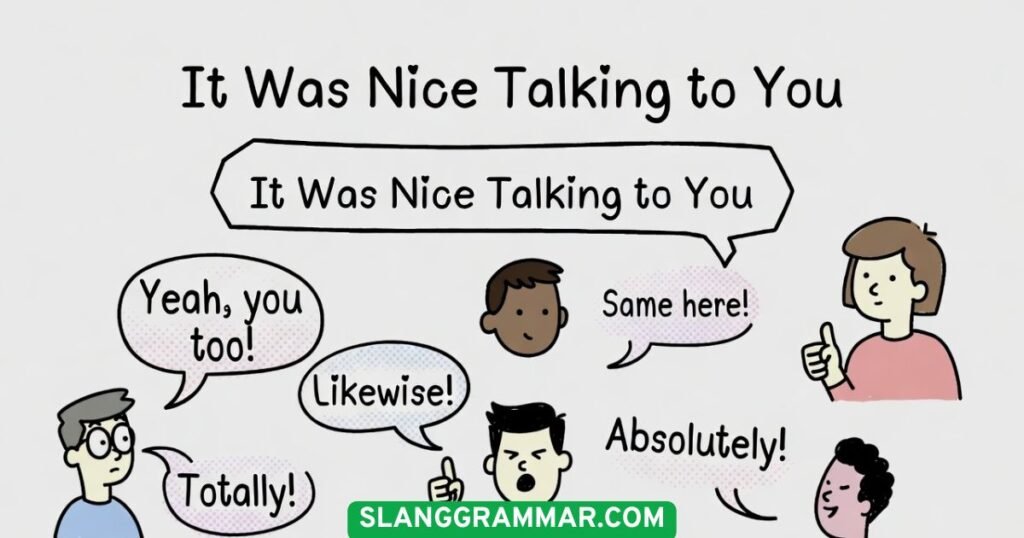
For friends, classmates, and people you know well, casual responses are usually better than formal ones. You can say, “Same here, it was fun talking to you,” or “Yeah, I enjoyed it too.” These sound natural in everyday texting and relaxed conversations.
A phrase like “Glad we got to talk” also works well. It feels easygoing but still thoughtful. It is the kind of response you might send after a phone call with a friend or a quick catch-up with a coworker.
In casual settings, you do not need to sound perfect. The goal is to sound real. Short phrases like nice chat, talk soon, and loved chatting with you often feel more natural than long formal sentences.
Funny Replies to “It Was Nice Talking to You”
Funny replies work best when you already have a playful relationship with the person. You might say, “Same here, I’ll try not to miss your voice too much,” or “Best conversation of the day, easily.” These replies add humor without making the other person uncomfortable.
Another light option is, “I survived the conversation, so that’s a win.” This can be funny with close friends, but it may sound rude if used with someone who does not understand your humor.
The key with a funny response is timing. Use humor when the conversation was relaxed and both people enjoy joking around. Avoid funny replies after serious talks, interviews, or formal meetings.
Professional Answers to “It Was Nice Talking to You”
In work settings, professional answers should sound respectful and clear. You can say, “Thank you, I appreciated the opportunity to speak with you,” or “It was a pleasure speaking with you as well.” These phrases are polished and safe.
If the conversation involved future contact, you can say, “I look forward to staying in touch.” This is a strong networking response because it keeps the connection open without sounding too casual.
A good professional reply should match the moment. After an interview, use a more formal phrase. After a friendly coworker chat, a warmer semi-formal phrase may work better.
Creative Ways to Reply to “It Was Nice Talking to You”
Sometimes you may want creative ways to reply that feel more memorable. Instead of saying the same line back, you can say, “The feeling is mutual,” or “Our conversation was a bright spot in my day.”
These phrases feel more personal because they show a little more thought. They work well in friendly emails, personal texts, and warm professional messages where you want to stand out.
Creative does not mean complicated. The best creative response still sounds natural. If the phrase feels too dramatic for the relationship, choose something simpler.
Short Replies to “It Was Nice Talking to You”
Short replies are useful when you do not need a long answer. “Same here,” “Likewise,” and “You too” are all simple options. They are quick, polite, and easy to understand.
In texting, “Talk soon” is one of the best simple responses because it closes the conversation while leaving a friendly feeling. It also suggests that you are open to talking again.
Short replies work best when the conversation is already ending. They may not be enough after an important meeting or emotional talk, where a more complete response would feel more respectful.
Sweet, Cute, Romantic, and Flirty Replies
For close relationships, sweet replies and cute replies can make the other person feel appreciated. You can say, “Talking with you made me smile,” or “I always enjoy talking with you.” These phrases feel warm without being too much.
For romantic situations, romantic replies and flirty replies can add charm. “I could talk to you all day” is a good example because it feels playful and affectionate. “Talking to you made my day” is softer and more heartfelt.
These replies work best when the relationship already has emotional closeness. They may not fit a business conversation or a first professional meeting because they can sound too personal.
Email Responses and Text Responses
For email responses, it is usually better to use complete and polished sentences. You might write, “Thank you, I enjoyed speaking with you as well,” or “I appreciated our conversation and look forward to following up soon.” These phrases work well because they sound clear and professional.
For text responses, shorter phrases often feel more natural. “Same here, talk soon,” “Loved chatting with you,” or “Nice talking with you too” can work well. Texting usually allows a more relaxed tone.
The main difference is the level of formality. Emails often need more structure, while texts can be short and casual. Choosing the right style shows strong communication skills.
Social Media Responses and Group Conversation Replies
For social media responses, keep things friendly and short. In a DM or comment, you might say, “Same here, great chat,” or “Loved this conversation.” These phrases feel natural and easy to read.
For group conversation replies, make sure your response includes everyone. You can say, “It was great talking with everyone,” or “I enjoyed hearing everyone’s thoughts.” This makes the whole group feel included.
Group replies should avoid sounding too personal unless you are replying to one specific person. A good group response is warm, simple, and respectful.
FAQ
How do you say it was nice talking to you?
You can say, “It was nice talking to you,” “I enjoyed speaking with you,” or “It was great chatting with you.”
These phrases are polite and work well after calls, meetings, or friendly talks.
What can I say instead of nice talking to you?
You can say, “I enjoyed our conversation,” “It was a pleasure speaking with you,” or “Thanks for the great chat.”
Use formal phrases for work and simple friendly phrases for casual talks.
Is nice talking with you correct?
Yes, “Nice talking with you” is correct and natural in everyday English.
For a more complete sentence, say, “It was nice talking with you.”
How do you tell someone you enjoyed talking to them?
You can say, “I really enjoyed talking with you” or “I enjoyed our conversation.”
These phrases sound kind, clear, and respectful.
How do I reply “It was my pleasure talking to you”?
You can reply, “The pleasure was mine,” or “Thank you, I enjoyed speaking with you too.”
Both replies are polite and suitable for formal or friendly situations.
Conclusion
It was nice talking to you is a simple and polite phrase that works in many situations. It helps you end a conversation with respect, kindness, and a good feeling. Still, the best phrase depends on who you are speaking to and what kind of conversation you had.
For work, use professional answers like “I enjoyed speaking with you” or “It was a pleasure talking to you.” For friends, use casual responses like “Great chatting with you” or “Talk soon.” For close relationships, choose heartfelt replies, sweet replies, or even light flirty replies when the moment feels right.
The goal is not to sound fancy. The goal is to sound natural, thoughtful, and clear. When you match your words to the situation, your conversation reply feels more genuine and leaves a better positive impression.
Related Guides:
1: Better Ways to Say “Wish You All the Best in Your Future Endeavours” With 28+ Natural Alternatives