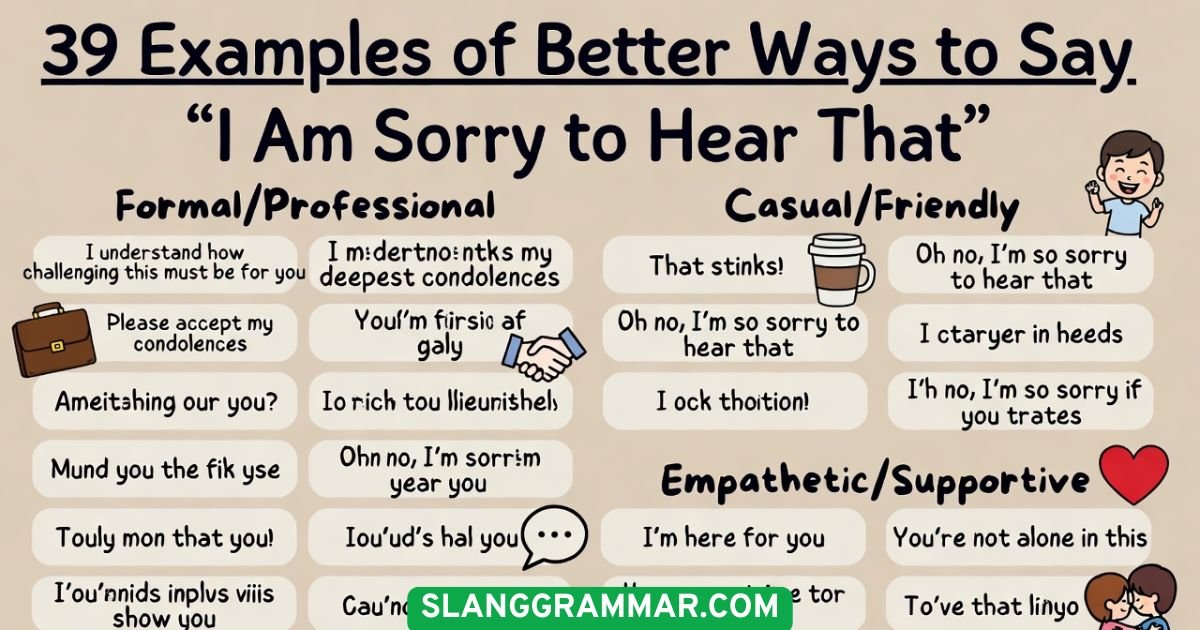
39 Examples of Better Ways to Say “I Am Sorry to Hear That” in Professional and Everyday Conversations
“I Am Sorry to Hear That” means you feel bad after hearing sad or difficult news. It is a kind phrase people use to show sympathy and care. You can say it when someone shares a problem, loss, or disappointment.
But sometimes, this phrase can sound too simple or repeated. The right words can make your reply feel warmer and more helpful. That is why learning better ways to say it can improve your communication.
“I Am Sorry to Hear That” is common in personal and professional conversations. People use it in emails, messages, customer support, and workplace talks. It sounds polite, but adding a helpful sentence can make it stronger.
What Does “I Am Sorry to Hear That” Mean?
The phrase “i am sorry to hear that” means you feel sympathy, concern, or regret after someone shares bad, difficult, disappointing, or stressful news. In simple words, it means, “I feel bad that this happened to you.”
People often use it as a polite response to bad news. For example, if a coworker says they are sick, a customer says their order arrived late, or a friend says they had a hard week, saying “I am sorry to hear that” shows that you noticed their situation and care enough to respond kindly.
The phrase is common in English because it works in many settings. It can fit personal messages, business communication, client correspondence, workplace conversations, and customer complaint response emails. The only problem is that it can sometimes sound too general if you do not add anything else after it.
A stronger response usually includes a little more context. Instead of only saying, “I’m sorry to hear that,” you might say, “I’m sorry to hear that. I can see how frustrating this must be, and I’ll look into it right away.” That small addition makes your response sound more sincere and useful.
When to Use It
You can use “i am sorry to hear that” when someone shares news that is negative, stressful, disappointing, or emotionally difficult. It is especially useful when you want to acknowledge the situation before offering help, asking a follow-up question, or moving toward a solution.
In personal conversations, it works when someone talks about illness, family problems, stress, loss, or disappointment. For example, if a friend says they did not get the job they wanted, “I’m sorry to hear that” is a natural and kind response.
In the workplace, it can be used when a coworker shares a setback, delay, or difficult update. This is part of workplace empathy and supportive workplace language. It shows you are not ignoring the emotional side of the situation, even if the conversation is professional.
In customer service, the phrase is useful when someone reports a poor experience. A customer might say their package was damaged, their appointment was missed, or their issue was not resolved. In that case, “I’m sorry you’re experiencing this issue” or “thank you for bringing this to my attention” may sound even better because they also move the conversation toward action.
You can also use it in formal emails, but it should usually be followed by a helpful next step. For example, “I am sorry to hear that the issue is still happening. I’ll review the case and follow up with an update.”
Is It Polite or Professional?
Yes, “i am sorry to hear that” is both polite and professional when used in the right context. It is simple, respectful, and easy to understand. That makes it safe for emails, workplace messages, and customer replies.
However, it is not always the strongest phrase. Sometimes it can sound like a default reply, especially if someone has shared something serious or frustrating. In professional communication phrases, a good response should not only acknowledge the issue but also show attention, care, or action.
| Point | Benefit | Possible Problem |
| Politeness | It sounds respectful and kind. | It may feel too basic if used alone. |
| Professional use | It works in emails, support replies, and workplace messages. | It may need a follow-up sentence to sound complete. |
| Emotional tone | It shows sympathy without being dramatic. | It may not feel personal enough for serious situations. |
| Clarity | Most people understand it immediately. | It does not explain what you will do next. |
The best approach is to match your wording to the situation. For a customer issue, use a solution-focused response. For a friend, use a warmer phrase. For a workplace problem, use a calm professional tone that shows you understand the concern.
39 Professional Alternatives to “I Am Sorry to Hear That”
Below are 39 useful alternatives to i am sorry to hear that. Each one has a slightly different tone, so choose the phrase that fits the situation instead of using the same response every time.
1. Thank you for letting me know
Thank you for letting me know is a calm and professional way to acknowledge information without sounding too emotional. It works well when someone gives you an update about a problem, delay, or change.
This phrase carries a neutral and professional tone. For example, you could write, “Thank you for letting me know. I’ll review the details and get back to you shortly.” It is best for workplace updates, client emails, and situations where you need to acknowledge information before taking action. It may not fit well if someone is sharing deeply personal or emotional news, because it can sound a little too practical.
2. I appreciate you sharing this with me
I appreciate you sharing this with me sounds warmer than a basic acknowledgment. It shows that you respect the person for being honest or open with you.
This is a strong phrase for HR communication, manager-employee conversations, and sensitive workplace discussions. For example, “I appreciate you sharing this with me. I know it may not have been easy to bring up.” It works best when someone shares feedback, concerns, or a personal challenge. It may not be ideal for a quick customer support reply where the person expects immediate action.
3. That sounds challenging—thank you for updating me
That sounds challenging is useful when someone is dealing with a difficult task, delay, or work problem. Adding “thank you for updating me” keeps the message professional and balanced.
The tone is semi-formal, supportive, and practical. You might say, “That sounds challenging—thank you for updating me. Let’s talk through the next steps.” It works well in team communication and project updates. It would not fit as well for very serious personal news, where a warmer phrase may be better.
4. I’m sorry you’re dealing with this
I’m sorry you’re dealing with this feels more personal and caring than “i am sorry to hear that.” It focuses on the person’s experience, not just the news itself.
The tone is warm and supportive. For example, “I’m sorry you’re dealing with this. Please let me know what would be helpful right now.” It is best for friends, coworkers, or clients who are under stress. It may sound too personal in a very formal legal, policy, or corporate statement.
5. I understand how difficult this must be
I understand how difficult this must be is an empathetic response that shows you recognize the weight of the situation. It is helpful when someone is dealing with something serious or emotionally draining.
The tone is warm, respectful, and emotionally aware. You could write, “I understand how difficult this must be, and I appreciate your patience while we work through it.” It fits customer service, HR, and supportive workplace conversations. It may not fit smaller problems, like a minor scheduling change, because it can sound too heavy.
6. I’m sorry this happened
I’m sorry this happened is short, direct, and sincere. It works when something unfortunate, unfair, or disappointing has occurred.
The tone is simple and caring. For example, “I’m sorry this happened. I’ll do what I can to help fix the issue.” It is useful in both personal and professional conversations. It may not be enough by itself in customer support, where the person also expects a clear next step.
7. That must be frustrating
That must be frustrating validates the person’s feelings. It is especially helpful when someone is annoyed, disappointed, or dealing with repeated inconvenience.
The tone is friendly and empathetic. You might say, “That must be frustrating. I can see why you’d want this resolved quickly.” It works well for customer complaints, coworker problems, and everyday conversations. It may not be the best choice for grief or serious loss, because “frustrating” may not be strong enough.
8. I can only imagine how stressful that is
I can only imagine how stressful that is is useful when you want to show care without claiming you fully understand someone’s experience.
The tone is warm and thoughtful. For example, “I can only imagine how stressful that is. Let’s see what we can do to make this easier.” It fits stressful work situations, personal problems, and client concerns. It may feel too emotional for a short transactional email.
9. I’m sorry you’re experiencing this issue
I’m sorry you’re experiencing this issue is one of the best professional apology phrases for customer support. It sounds polished, respectful, and service-focused.
The tone is formal and professional. You could write, “I’m sorry you’re experiencing this issue. Our team is reviewing it now.” It works best for technical problems, service complaints, and support tickets. It may sound too scripted in a personal conversation with a friend.
10. Thank you for bringing this to my attention
Thank you for bringing this to my attention is a strong phrase when someone reports a problem, mistake, or concern. It shows that you are listening and ready to take the matter seriously.
The tone is professional, calm, and action-focused. For example, “Thank you for bringing this to my attention. I’ll look into it and follow up with an update.” It is excellent for business email response, customer complaints, and workplace issues. It may not sound sympathetic enough if someone is sharing emotional pain.
11. I’m sorry things turned out this way
I’m sorry things turned out this way works when a result is disappointing or not what someone expected. It shows regret without sounding overly dramatic.
The tone is sincere and reflective. You might say, “I’m sorry things turned out this way. I know this was not the outcome you hoped for.” It fits failed plans, project setbacks, and difficult decisions. It may not be the best choice when someone needs a direct apology for a clear mistake.
12. I’m sorry for the inconvenience this caused
I’m sorry for the inconvenience is a common phrase in client support and service-related emails. It acknowledges that someone had to deal with trouble, delay, or extra effort.
The tone is formal and professional. For example, “I’m sorry for the inconvenience this caused. We are working to correct it as quickly as possible.” It is best for customer service, business delays, and order issues. It may feel too formal or distant for a close personal conversation.
13. I’m sorry you had to go through that
I’m sorry you had to go through that is a warmer and deeper phrase. It focuses on the person’s experience and shows emotional care.
The tone is sincere, supportive, and personal. You could say, “I’m sorry you had to go through that. I’m glad you told me.” It works well when someone shares a difficult personal experience. It may not fit routine workplace updates, where it might sound too emotional.
14. I understand why this would be upsetting
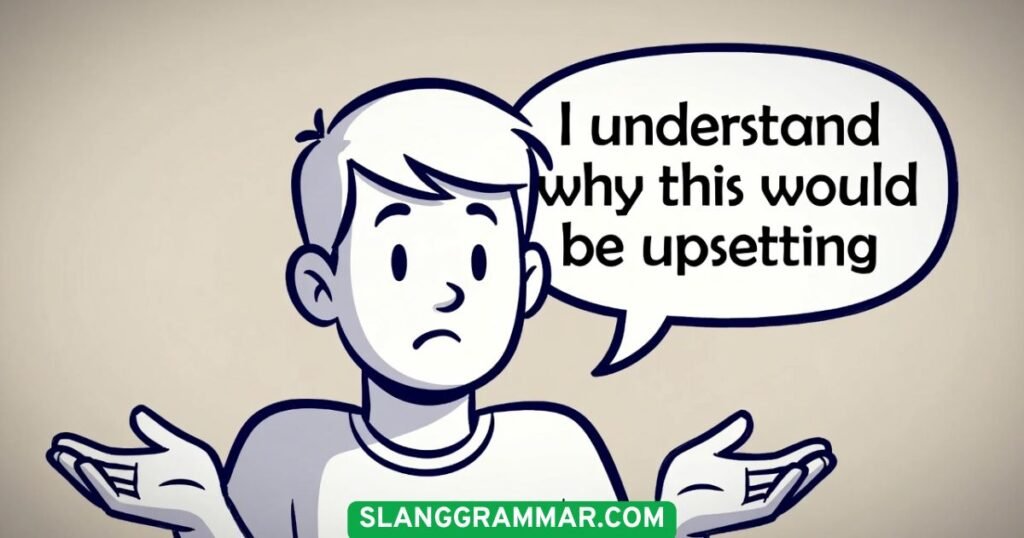
I understand why this would be upsetting is useful when someone is disappointed, angry, or hurt. It validates their reaction without arguing or minimizing the issue.
The tone is calm and empathetic. For example, “I understand why this would be upsetting. We’ll review what happened and make sure your concern is addressed.” It is excellent for complaints, workplace concerns, and tense conversations. It may not fit situations where the person is not upset but simply giving information.
15. I’m sorry you’re facing this situation
I’m sorry you’re facing this situation sounds respectful and supportive. It works well when the issue is serious, ongoing, or difficult to manage.
The tone is semi-formal and caring. You might write, “I’m sorry you’re facing this situation. Please let me know if there is anything I can do to assist.” It is useful for workplace, HR, and professional support messages. It may feel too formal for a casual text to a close friend.
16. That sounds really tough
That sounds really tough is a natural and conversational way to show support. It sounds less formal than “i am sorry to hear that” but often more human.
The tone is friendly and warm. For example, “That sounds really tough. I hope things start getting easier soon.” It works best in personal conversations or supportive messages to coworkers you know well. It may not be polished enough for formal client emails.
17. I’m sorry this has been your experience
I’m sorry this has been your experience is commonly used in customer support when someone has had a poor experience with a company, product, or service.
The tone is professional and service-focused. You could write, “I’m sorry this has been your experience. We want to make this right.” It fits reviews, complaints, and client feedback. It may not fit personal bad news because it sounds more like business wording.
18. I’m sorry for the trouble this caused
I’m sorry for the trouble this caused is simple and practical. It acknowledges that the situation created difficulty for the other person.
The tone is professional and direct. For example, “I’m sorry for the trouble this caused. We appreciate your patience while we resolve it.” It works well in support emails and service recovery messages. It may not be emotional enough for sensitive personal situations.
19. I appreciate your patience
I appreciate your patience is helpful when someone has been waiting, dealing with delays, or giving you time to fix something.
The tone is polite and professional. You might say, “I appreciate your patience while we look into this matter.” It is best for customer service, project delays, and support updates. It may not work as a direct replacement for sympathy when someone shares sad news.
20. I can see how this would be concerning
I can see how this would be concerning is a careful and respectful phrase. It shows that the person’s worry makes sense.
The tone is calm, professional, and reassuring. For example, “I can see how this would be concerning, and I’ll make sure it is reviewed properly.” It works well when someone raises a safety, quality, policy, or service concern. It may not fit light everyday problems where “concerning” sounds too serious.
21–39 Professional Alternatives
21. I’m sorry you’re going through this challenge
I’m sorry you’re going through this challenge is supportive and respectful. It works when someone is facing a difficult but manageable situation.
The tone is warm and semi-formal. You could write, “I’m sorry you’re going through this challenge. Let’s discuss how we can support you.” It fits workplace struggles, personal stress, and project difficulties. It may not fit a small inconvenience, where it could sound too serious.
22. Thank you for your honesty in sharing this
Thank you for your honesty in sharing this is useful when someone gives honest feedback or speaks openly about a concern.
The tone is respectful and mature. For example, “Thank you for your honesty in sharing this. Your feedback helps us understand what needs to improve.” It is great for HR communication, feedback sessions, and manager conversations. It may not fit simple customer service problems where the issue is more practical than personal.
23. I’m sorry this has been difficult for you
I’m sorry this has been difficult for you shows empathy without being too casual. It is a safe phrase for professional and personal situations.
The tone is sincere and balanced. You might say, “I’m sorry this has been difficult for you. We’ll do our best to help.” It works well in workplace support, client care, and serious conversations. It may sound too formal in a quick text to a close friend.
Read Also: Better Ways to Say “Wish You All the Best in Your Future Endeavours” With 28+ Natural Alternatives
24. I completely understand your concern
I completely understand your concern is a strong phrase for calming someone who is worried or unhappy. It shows that their concern is being taken seriously.
The tone is professional and reassuring. For example, “I completely understand your concern, and I’ll make sure this is escalated to the right team.” It fits client communication, complaints, and workplace concerns. It may not work if you do not actually understand the issue yet, because it can sound forced.
25. I’m sorry for any difficulty this may have caused
I’m sorry for any difficulty this may have caused is a careful formal phrase. It is often used when you want to apologize politely without making the message too emotional.
The tone is formal and polished. You could write, “I’m sorry for any difficulty this may have caused, and thank you for your understanding.” It works well in official emails and formal email wording. It may not feel personal enough for emotional conversations.
26. That must have been disappointing
That must have been disappointing is a good phrase when expectations were not met. It acknowledges the emotional reaction without overdoing it.
The tone is friendly and empathetic. For example, “That must have been disappointing. I appreciate you letting us know what happened.” It fits missed opportunities, poor service, and unexpected outcomes. It may not be strong enough for serious loss or major hardship.
27. I recognize this isn’t an ideal situation
I recognize this isn’t an ideal situation is a polished phrase for professional problems. It shows awareness without sounding overly emotional.
The tone is formal, calm, and practical. You might say, “I recognize this isn’t an ideal situation, and we’re working on the best available option.” It works in business communication, project delays, and client updates. It may sound too corporate in a personal conversation.
28. I’m sorry you’re having to manage this
I’m sorry you’re having to manage this recognizes that the person is carrying extra stress, work, or responsibility.
The tone is warm and supportive. For example, “I’m sorry you’re having to manage this. Let’s see what can be taken off your plate.” It is best for coworkers, employees, and friends dealing with pressure. It may not fit customer complaints where the customer wants a solution more than emotional support.
29. I hear your concerns clearly
I hear your concerns clearly is a strong phrase when someone feels ignored or misunderstood. It shows active listening.
The tone is serious and professional. You could write, “I hear your concerns clearly, and I’ll make sure they are shared with the appropriate team.” It works in conflict resolution, HR, and customer escalation messages. It may sound too formal in casual conversation.
30. I’m sorry about the circumstances
I’m sorry about the circumstances is a general phrase that expresses regret without taking direct blame. It works when the situation is unfortunate but not necessarily caused by you.
The tone is neutral and professional. For example, “I’m sorry about the circumstances. Thank you for working with us through this.” It fits difficult business decisions or unavoidable changes. It may not be strong enough when your company clearly made a mistake.
31. Thank you for bringing this issue forward
Thank you for bringing this issue forward sounds professional and action-oriented. It is useful when someone reports a concern that needs attention.
The tone is polished and respectful. You might say, “Thank you for bringing this issue forward. We’ll review it carefully.” It fits workplace complaints, client feedback, and quality concerns. It may not fit personal bad news because it sounds more procedural.
32. I’m sorry for the unexpected setback
I’m sorry for the unexpected setback is useful when plans, projects, or timelines do not go as expected.
The tone is professional and practical. For example, “I’m sorry for the unexpected setback. We’ll adjust the timeline and keep everyone updated.” It works well in project communication and team updates. It may not fit emotional personal situations.
33. I’m here to support however I can
I’m here to support however I can is caring and helpful. It offers support without forcing advice.
The tone is warm, sincere, and supportive. You could say, “I’m here to support however I can. Please let me know what would be most helpful.” It works well with friends, coworkers, and employees. It may not fit a formal customer support reply unless you pair it with a specific action.
34. I’m sorry you received this news
This phrase works well when someone shares disappointing, sad, or unexpected information. It sounds more specific than “i am sorry to hear that” because it focuses on the news they received.
The tone is warm and respectful. For example, “I’m sorry you received this news. I know it may take some time to process.” It is best for personal or sensitive workplace situations. It may not fit minor service complaints or routine updates.
35. I hate to hear that you’re going through this
This phrase is more personal and emotional. It shows that you genuinely feel bad about what the person is experiencing.
The tone is friendly, warm, and casual. You might say, “I hate to hear that you’re going through this. I’m thinking of you.” It works best with friends, close coworkers, or people you know well. It is not the best choice for formal business emails because it sounds too personal.
Read Also:
36. Please know that your feelings are completely valid
This phrase is useful when someone feels hurt, upset, ignored, or unsure whether their reaction is reasonable. It supports the person emotionally and helps them feel heard.
The tone is caring and reassuring. For example, “Please know that your feelings are completely valid. This is a difficult situation to handle.” It works well in personal support, HR, and sensitive conversations. It may not fit basic customer service replies where the customer mainly needs a fix.
37. I’m sorry this has caused you stress
This phrase is helpful when the main problem is pressure, worry, or emotional strain. It shows that you understand the effect of the situation.
The tone is empathetic and professional. You could write, “I’m sorry this has caused you stress. We’re working to resolve it as soon as possible.” It fits customer issues, workplace delays, and difficult communication. It may not fit situations where the person is sad rather than stressed.
38. I can understand why this matters to you
This phrase shows respect for the person’s priorities. It is useful when someone explains why a problem feels important to them.
The tone is thoughtful and validating. For example, “I can understand why this matters to you, and I appreciate you explaining it clearly.” It works well in client correspondence, workplace concerns, and personal conversations. It may not fit if the person has not explained why the issue matters yet.
39. I’m sorry you’ve had this experience
I’m sorry you’ve had this experience is a polished phrase for customer service and feedback responses. It shows regret while keeping the message professional.
The tone is formal, respectful, and service-focused. You might write, “I’m sorry you’ve had this experience. We appreciate the chance to make it right.” It is best for reviews, complaints, and customer support. It may sound too business-like for close personal conversations.
Quick Reference Table
This table gives you a fast way to compare these professional ways to say I am sorry to hear that by tone and best use case.
| Alternative Phrase | Best Use Case | Tone |
| Thank you for letting me know | Workplace update | Professional |
| I appreciate you sharing this with me | Sensitive conversation | Warm |
| That sounds challenging | Project or work difficulty | Semi-formal |
| I’m sorry you’re dealing with this | Personal or coworker support | Warm |
| I understand how difficult this must be | Serious situation | Empathetic |
| I’m sorry this happened | General bad news | Sincere |
| That must be frustrating | Complaint or delay | Friendly |
| I can only imagine how stressful that is | Stressful situation | Supportive |
| I’m sorry you’re experiencing this issue | Customer support | Professional |
| Thank you for bringing this to my attention | Reported issue | Professional |
| I’m sorry things turned out this way | Disappointing result | Sincere |
| I’m sorry for the inconvenience | Service problem | Formal |
| I’m sorry you had to go through that | Personal hardship | Warm |
| I understand why this would be upsetting | Emotional complaint | Empathetic |
| I’m sorry you’re facing this situation | Serious challenge | Semi-formal |
| That sounds really tough | Casual support | Friendly |
| I’m sorry this has been your experience | Customer feedback | Professional |
| I’m sorry for the trouble this caused | Service issue | Professional |
| I appreciate your patience | Delay or wait time | Polite |
| I can see how this would be concerning | Worry or risk | Reassuring |
| I’m sorry you’re going through this challenge | Difficult situation | Supportive |
| Thank you for your honesty in sharing this | Feedback or HR | Respectful |
| I’m sorry this has been difficult for you | Ongoing hardship | Warm |
| I completely understand your concern | Client concern | Professional |
| I’m sorry for any difficulty this may have caused | Formal email | Formal |
| That must have been disappointing | Missed expectation | Friendly |
| I recognize this isn’t an ideal situation | Business issue | Polished |
| I’m sorry you’re having to manage this | Work pressure | Supportive |
| I hear your concerns clearly | Escalation or conflict | Professional |
| I’m sorry about the circumstances | Difficult situation | Neutral |
| Thank you for bringing this issue forward | Workplace concern | Professional |
| I’m sorry for the unexpected setback | Project delay | Professional |
| I’m here to support however I can | Personal support | Warm |
| I’m sorry you received this news | Sad update | Respectful |
| I hate to hear that you’re going through this | Close relationship | Friendly |
| Please know that your feelings are completely valid | Emotional support | Reassuring |
| I’m sorry this has caused you stress | Stressful issue | Empathetic |
| I can understand why this matters to you | Important concern | Thoughtful |
| I’m sorry you’ve had this experience | Customer complaint | Professional |
How to Choose the Right Alternative to “I Am Sorry to Hear That”
Choosing the right phrase depends on the relationship, the seriousness of the situation, and what the person needs from you. If you are replying to a customer, your response should combine sincere acknowledgment with action. A phrase like “I’m sorry you’re experiencing this issue” works well because it sounds professional and leads naturally into a solution.
If you are replying to a coworker or employee, use wording that shows emotional intelligence in communication. Phrases like “I appreciate you sharing this with me” or “I hear your concerns clearly” help people feel respected and heard.
For friends or close coworkers, you can sound more natural and warm. Phrases like “that sounds really tough” or “I’m sorry you’re dealing with this” often feel more human than formal wording.
The biggest mistake is using a phrase that does not match the moment. A formal line may sound cold in a personal conversation, while a casual line may sound unprofessional in a client email. The best response feels natural, respectful, and useful.
FAQ Section
What to say instead of “I’m sorry to hear that”?
You can say, “I’m sorry you’re dealing with this,” or “That sounds really tough.”
For a professional reply, say, “Thank you for letting me know.”
How to professionally say “sorry to hear that”?
You can say, “I’m sorry you’re experiencing this issue.”
Another professional option is, “Thank you for bringing this to my attention.”
How do you say “I am sorry to hear that”?
Say it when someone shares sad, stressful, or difficult news.
Example: “I am sorry to hear that. I hope things get better soon.”
How to apologize in a professional way?
Use clear and respectful words like, “I apologize for the inconvenience.”
Then add a solution, such as, “I will look into this right away.”
How do I formally say “I am sorry”?
You can say, “Please accept my sincere apologies.”
Another formal option is, “I apologize for any inconvenience caused.”
Conclusion
“I Am Sorry to Hear That” is a polite and caring phrase. It helps you show kindness when someone shares sad news, a problem, or a hard experience. This phrase works well in personal talks, school messages, work emails, and customer support replies. It shows respect and sympathy in a simple way. Still, using different words can make your message sound more thoughtful and clear.
Choosing the right phrase helps you support others better. Some situations need a warm reply, while others need a more formal and professional response. Simple phrases like “I understand your concern” or “I’m sorry this happened” can make your words feel sincere. Good communication starts with care, respect, and the right tone.