
25 Other Ways to Say Have a Good Day
You hear it at the supermarket till, at the end of a phone call, and from the barista sliding your coffee across the counter: “Have a good day!” It is kind and polite — and said so often, on total autopilot, that it can land like a recording rather than a real wish. A farewell that everyone uses for everyone slowly stops meaning anything to anyone.
The wish underneath it is a good one, though. Have a good day is a small, generous thing to say to a colleague, a client, or a stranger you will never see again. The fix is not to drop it, but to vary it. A version picked for the person and the moment — something softer for a nervous friend, something brighter for a child, something shorter for a busy customer service desk — carries real warmth again. It is no surprise that so many people end up searching for how to say have a good day in a way that sounds fresh instead of recited. This guide gathers 25 other ways to say have a good day, each with its own tone and its own best moment.
Below: what the phrase actually means, when it fits, whether it sounds professional, and 25 alternatives — from safe all-rounders to playful send-offs best kept for people who know you well.
What Does Have a Good Day Mean?
At its heart, have a good day is a wish disguised as a goodbye. You are not describing the day or predicting it — just hoping, out loud, that the hours ahead treat the other person well. It belongs to the family of parting words — things said at the moment of leaving, whether that is the end of a chat, the bottom of an email, or the door of a shop. Unlike “good morning,” which greets someone at the start, this phrase looks forward from the point where your paths split.
Its tone is lightly positive by default. It carries goodwill without closeness, which is exactly why it works so well with strangers: you can wish a bus driver a good day without implying anything more than basic human kindness. With people you know, tone does the extra work — said warmly, it feels personal; said flatly, it feels like a full stop.
When to Use Have a Good Day
The classic setting is the end of a short, friendly transaction: shop staff, receptionists, and call-centre workers close encounters with it all day because it is warm, quick, and safely neutral. If you work in customer service, it is probably already your default sign-off — which is also why customers barely hear it anymore.
It also fits the everyday goodbyes of working life. You say it to a colleague leaving the office before you, to a client at the end of a call, or in the last line of a work email for a friendly close. At home, it is the natural send-off for the school run, a partner heading out, or a friend hanging up after a quick catch-up. In a text message, it ends a morning exchange gently, without leaving the conversation hanging.
Is It Professional or Polite to Say Have a Good Day?
Yes, on both counts — it is polite in nearly every setting and professional enough for clients, managers, and strangers alike. Nobody is offended by it, and it never sounds too familiar. Its weakness is not rudeness but repetition: in service jobs it is often a required line, so it can sound like the company talking rather than the person. Tone decides everything. Said with genuine sincerity, it is a small kindness; said flatly, or through gritted teeth after an argument, the exact same words turn sarcastic. If you want the wish to land, a fresher version from the list below usually works better.
| Pros | Cons |
|---|---|
| Polite and safe in almost any setting | Can sound scripted or automatic |
| Warm without being personal | Can sound sarcastic if the tone is flat |
| Works spoken, in emails, and in texts | Says nothing specific about the person or their day |
25 Other Ways to Say Have a Good Day
1. Have a Great Day
The closest upgrade to the original: swapping “good” for “great” lifts the energy a notch and makes the wish sound chosen rather than recited. It keeps the same safe, friendly tone, so it works at shop counters, office doors, and on calls. Its only weakness is seriousness — for someone heading into bad news, a hospital visit, or a funeral, that extra bounce can feel too breezy.
Example: “Thanks for coming in — have a great day, and good luck with the move!”
2. Have a Lovely Day
“Lovely” softens the farewell and gives it a gentle, slightly British polish. It suits unhurried settings — a neighbour over the fence, an older customer at a bakery, a guest leaving a small hotel — where a slower pace makes the softness feel natural rather than quaint. In a loud, fast group of younger friends it can sound a touch twee, so save it for calmer moments.
Example: “Here is your receipt, Mrs. Parker — have a lovely day.”
3. Have a Wonderful Day
This one turns the warmth up further. “Wonderful” makes a bigger promise than “good,” so it feels heartfelt rather than routine, and it suits people you actually know: a friend setting off on a trip, a colleague before a big event, a line in a card. Aim it at a stranger in a two-second transaction, though, and its size can feel over the top.
Example: “It was so good seeing you — have a wonderful day, and give my love to the kids.”
4. Wishing You a Bright Day Ahead
A forward-looking wish built for the morning. “Bright” borrows the language of light and good weather, and “ahead” points at everything still to come, which makes it a lovely first text of the day or a doorstep send-off. By mid-afternoon the “ahead” has mostly run out — and it is no match for a morning someone is dreading.
Example: “Early start today — wishing you a bright day ahead at the new office.”
5. Hope Your Day Goes Well
Where the others wish generally, this one wishes for an outcome, which makes it quietly supportive before something specific: an interview, a presentation, a first day, a driving test. For a lazy day off, though, “goes well” misses the point — nothing needs to go well, and a softer wish fits better.
Example: “Big presentation at ten — hope your day goes well; you have got this.”
6. Enjoy Your Day
Short, warm, and built around pleasure rather than luck. It gives the other person permission to have a good time, so it shines for days off and treats: the friend heading to the beach, the couple off sightseeing, the colleague finally taking leave. Point it at someone heading into a double shift and it lands badly — there is nothing there to enjoy.
Example: “The park should be lovely in this weather — enjoy your day!”
7. Make Today Count
A motivational nudge rather than a passive wish: it hands the day over to the other person and trusts them to do something with it. That encouragement suits students before exams, Monday-morning teams, and anyone starting a project. It is the wrong tool for someone who is ill, grieving, or resting on purpose — nobody recovering on the sofa needs to make anything count.
Example: “First day of the course — make today count.”
8. Make Today Amazing
The bolder cousin of the phrase above. Where “count” is steady and purposeful, “amazing” is pure upbeat energy, at home with friends, children, and cheerful group chats — even as a social media caption. In a formal workplace, that energy can sound like an advertising slogan, so keep it for people who share your bounce.
Example: “Sun is out and the plan is set — go on, make today amazing.”
9. May Today Be Kind to You
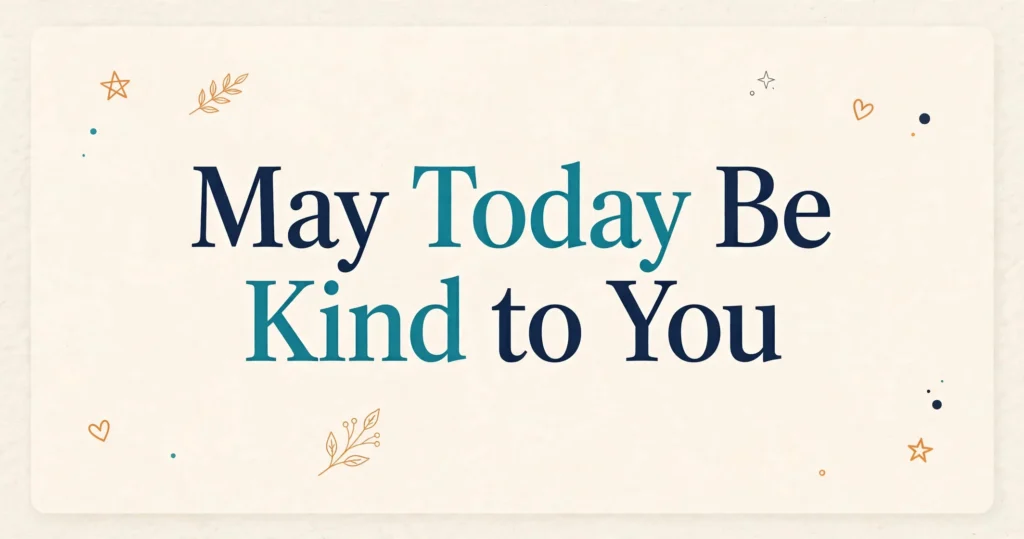
The gentlest option on this list. It accepts that some days are not good at all and simply hopes this one goes easy on the person — which is why it suits someone coming through a rough patch: illness in the family, a hard few weeks at work, a recent loss. That tenderness makes it too heavy for a breezy counter exchange, but for the right person it says more than any cheerful version could.
Example: “I know the last few weeks have been hard — may today be kind to you.”
10. Sending Positive Vibes Your Way
A modern, relaxed wish that lives mostly in texts and online. Positive vibes is the language of group chats and comment sections, so it feels natural between friends and hopeless in a formal email to a client. It is light rather than deep — its charm and its limit: lovely before a date or a gig, far too weightless before a funeral or a hospital appointment.
Example: “Sending positive vibes your way for the exam results — let me know how it goes.”
11. Have a Day as Lovely as You Are
This one doubles as a compliment, because the day is measured against the person. That makes it sweet and personal — right for a partner, a close friend, a grandparent, or a birthday message — and completely wrong for anyone you do not know well, where it can sound flirty or oddly intense.
Example: “Happy birthday, Grandma — have a day as lovely as you are.”
12. Go Make It a Good One
An active send-off: instead of hoping the day behaves, it backs the person to shape it themselves. That confidence suits teenagers heading into try-outs, a colleague before a pitch, or anyone who responds well to a push. Its energy is also its risk: said to someone exhausted or quietly struggling, it can sound like pressure dressed as cheer.
Example: “The pitch is yours — go make it a good one.”
13. Wishing You a Smooth Day
The practical wish for a complicated day. “Smooth” is about nothing going wrong — no delays, no dramas, no last-minute fires — so it lands well with delivery drivers, parents juggling a school run and a shift, and anyone travelling. For a holiday or a celebration it aims too low: nobody dreams of a merely smooth wedding day.
Example: “Three deliveries and a school run — wishing you a smooth day.”
14. Hope Today Treats You Well
This version hands the day a personality and asks it to behave kindly, which gives the wish a storybook softness without making it childish. It works as an all-rounder for friends, family, and new starts. When you know exactly what someone is facing, though, a more specific wish shows more thought.
Example: “New city, new job — hope today treats you well.”
15. Have a Relaxing Day
A wish aimed squarely at rest. It belongs to days off, slow Sundays, spa bookings, and the first morning after a long exam season, anywhere relaxation is the point. The flip side is obvious: said to someone marching into work while you stay home, it can sound like rubbing it in.
Example: “No alarms, no emails — have a relaxing day; you have earned it.”
16. May Your Day Be Full of Good Moments
A gentle blessing in modern dress. It does not demand that the whole day be perfect — just that good moments show up inside it — which makes it honest as well as kind, and a good fit for cards, older relatives, and thoughtful texts. It is a little long for a shouted goodbye across a car park, where shorter versions win.
Example: “May your day be full of good moments, small ones and big ones alike.”
17. Take Care and Have a Good One
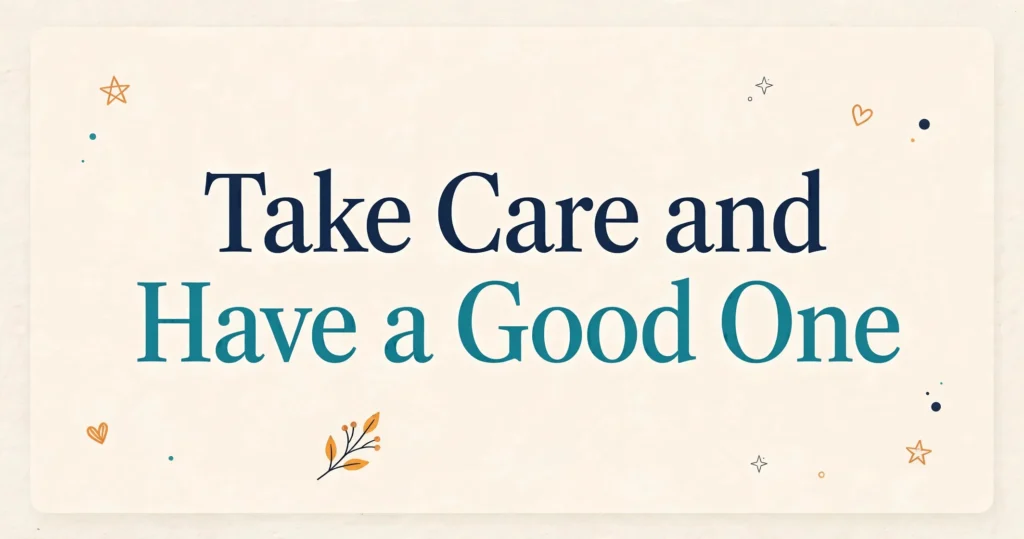
Two farewells for the price of one. “Take care” adds a note of genuine concern, and “have a good one” keeps things loose and casual, so the pair suits acquaintances, neighbours, and the colleague you like but do not know deeply. In very formal settings, though, “good one” can sound slightly vague, so dress it up there.
Example: “Right, I am off — take care and have a good one.”
18. Here’s to a Great Day Ahead
The toast of the list. “Here’s to” borrows the language of raising a glass, making it a natural opener for group messages, team chats, and cards signed by several people. It performs best to an audience; one-to-one at a quiet, serious goodbye, its little ceremony can feel out of place.
Example: “Here’s to a great day ahead, team — let’s finish the week strong.”
19. Wishing You Sunshine and Smooth Sailing
Pure playfulness: weather and sailing rolled into one lucky wish. It is made for travellers, weekend plans, and anyone whose day involves the outdoors, and it raises a smile precisely because it is not serious. Point it at a formal contact, or someone whose day is indoors and difficult, and the whimsy falls flat.
Example: “Ferry at nine — wishing you sunshine and smooth sailing!”
20. Have a Productive Day
The work-focused option. It wishes someone output — things finished, lists cleared, progress made — so it fits colleagues before a deadline, students heading to the library, and anyone who has told you what they hope to get done. Just never aim it at a day off, a retiree, or someone recovering: it quietly suggests their worth is measured in tasks — the opposite of a kind wish there.
Example: “Hope the writing flows — have a productive day at the library.”
21. May Today Bring You Good News
A hopeful wish with a specific shape: it is for days when someone is waiting — on results, a decision, an offer, a phone call. Naming the hope tells them you remembered what today means. Use it carefully, though: when bad news is likely, it can rub salt in the worry instead of easing it.
Example: “May today bring you good news about the house — fingers crossed.”
22. Enjoy Every Moment Today
The savouring option, built for days that will not come again: graduations, weddings, the last day of a trip, a child starting school. “Every moment” gives it a heartfelt, ceremonial weight those occasions can hold; used for an ordinary Tuesday of errands, it tips into melodrama.
Example: “It is your graduation — enjoy every moment today.”
23. Have a Beautiful Day
A softer, more visual cousin of the original. “Beautiful” is about how the day feels and looks rather than how it goes, which gives the phrase a poetic, unhurried quality that suits mornings, countryside send-offs, and creative friends. In a grey, rushed office farewell it can sound a little dreamy, so it works best where there is something beautiful actually in view.
Example: “Look at that sky — have a beautiful day out there.”
24. Wishing You a Day Full of Smiles
The sweetest entry here, and the most openly sentimental. Smiles are a child’s unit of happiness, which is why this one shines for children, cheerful friends, birthday cards, and anyone who enjoys a bit of sugar in a message. Around adults in a sombre mood it can feel childish, and with formal contacts it is far too cute.
Example: “Wishing you a day full of smiles, birthday girl.”
25. Go Out There and Shine
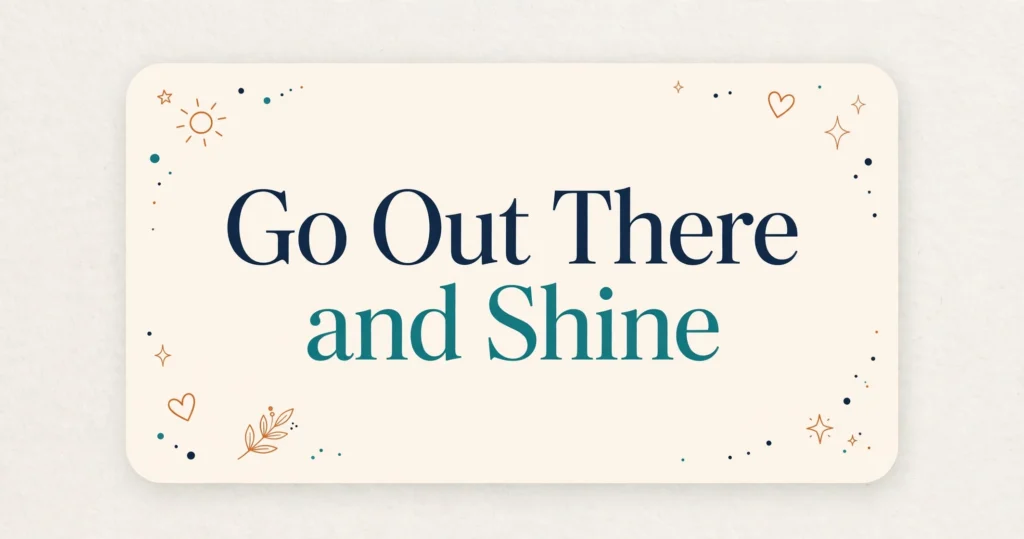
The spotlight send-off. It assumes the person has something to show the world — a performance, an interview, a match, a first day — and it sends them toward it with real uplifting energy. For shy people, quiet plans, or anyone who needs rest rather than an audience, that spotlight is the last thing they want — so save it for the performers and the ready.
Example: “You have rehearsed for weeks — go out there and shine.”
Quick Reference Table
Here is the full set at a glance, so you can match the phrase to the person and the moment in seconds.
| Phrase | Best Use Case | Tone |
|---|---|---|
| Have a Great Day | Everyday farewells at work, shops, and on calls | Friendly |
| Have a Lovely Day | Calm settings, neighbours, and older customers | Gentle |
| Have a Wonderful Day | Friends, trips, and cards | Heartfelt |
| Wishing You a Bright Day Ahead | Morning texts and early send-offs | Warm |
| Hope Your Day Goes Well | Before interviews, tests, and big meetings | Supportive |
| Enjoy Your Day | Days off, outings, and treats | Cheerful |
| Make Today Count | Students, teams, and new projects | Motivational |
| Make Today Amazing | Friends, children, and group chats | Upbeat |
| May Today Be Kind to You | Someone going through a hard time | Tender |
| Sending Positive Vibes Your Way | Casual texts and social media | Casual |
| Have a Day as Lovely as You Are | Partners, close friends, and birthdays | Personal |
| Go Make It a Good One | Challenges, try-outs, and pitches | Encouraging |
| Wishing You a Smooth Day | Busy, complicated, or travel-heavy days | Practical |
| Hope Today Treats You Well | New starts and general good wishes | Soft |
| Have a Relaxing Day | Days off and slow weekends | Restful |
| May Your Day Be Full of Good Moments | Cards and thoughtful messages | Gentle |
| Take Care and Have a Good One | Acquaintances and everyday partings | Casual |
| Here’s to a Great Day Ahead | Team chats, groups, and morning meetings | Warm |
| Wishing You Sunshine and Smooth Sailing | Travel and outdoor plans | Playful |
| Have a Productive Day | Colleagues and students before deadlines | Professional |
| May Today Bring You Good News | Waiting for results or decisions | Hopeful |
| Enjoy Every Moment Today | Graduations, weddings, and one-off days | Heartfelt |
| Have a Beautiful Day | Mornings and outdoor send-offs | Poetic |
| Wishing You a Day Full of Smiles | Children and cheerful friends | Sweet |
| Go Out There and Shine | Performances, interviews, and matches | Uplifting |
Frequently Asked Questions
Is “have a good day” ever rude?
The words themselves are always polite — any rudeness comes from the tone. Said warmly, it is a small kindness; said flatly or sarcastically, especially straight after a disagreement, it can sound like a door being closed. If your voice is friendly, you are safe.
What can I say instead of “have a good day” at work?
For colleagues and clients, “have a great day” is the safest upgrade, and “have a productive day” suits someone facing a deadline. In email, any of the shorter options works as a friendly closing line just above your sign-off.
Is there a difference between “have a nice day” and “have a good day”?
Practically, no. They mean the same thing and both are polite everywhere; “nice” can sound a touch softer and slightly older-fashioned to some ears. Most people just settle into one habit, and either is fine.
How should I reply when someone says “have a good day” to me?
Keep it short and return the wish: “Thanks — you too!” or “Same to you” covers almost every situation. In a shop or on a call, a smile and a quick thank-you is plenty.
Can I end an email with “have a good day”?
Yes. It works well as the last line before a sign-off like “Best regards,” especially in friendly professional mail. For very formal messages — legal, official, or a first approach to someone senior — a plainer close without it can look tidier.
Conclusion
Have a good day is a perfectly good phrase; it has just been worked very hard. Once you know how to say have a good day in more than one way, the right version tends to pick itself: something safe and bright for strangers and counters, something specific for the person whose day you actually know about, and something tender for the person whose day might not be good at all. Match the wish to the person, the moment, and how well you know them, and a line most people have stopped hearing becomes a small, real kindness again.
And if the day you are sending someone into happens to be a Friday, you might enjoy our guide to other ways to say have a great weekend — while for later on, our roundup of good evening wishes picks up exactly where these leave off.