Better Ways to Say Thank You for Your Concern in Everyday and Professional Situations
“Thank You for Your Concern” means you are thankful when someone shows care, worry, or support. People use this phrase when someone checks on their health, feelings, safety, or personal problem. It is a polite way to accept someone’s kindness.
Sometimes this phrase can sound too plain or formal. You may want a warmer, softer, or more natural reply. Learning better words can help you sound kind and sincere.
“Thank You for Your Concern” is useful in emails, texts, and daily talks. You can use it with friends, family, coworkers, or clients. The right phrase depends on the person and the situation.
What Does Thank You for Your Concern Mean?
The thank you for concern meaning is simple. It means you are thanking someone because they showed care, worry, kindness, or attention toward you. The person may not have fixed your problem, but they showed that your situation mattered to them.
This phrase is often used when someone says something like, “I hope you are okay,” “I heard you were sick,” or “Please let me know if you need anything.” In these moments, thank you for your concern works as a respectful and clear caring message response.
The phrase is common in both personal and professional communication. You may use it when replying to a coworker, manager, client, teacher, neighbor, friend, or family member. It is especially useful when you want to show appreciation for concern without giving too many personal details.
For example, if a coworker asks about your health after you missed work, you might say, “Thank you for your concern. I’m feeling better now.” This gives a polite answer while keeping the conversation simple.
When to Use Thank You for Your Concern
You can use thank you for your concern when someone checks on your health. If you were sick, injured, or absent, this phrase works well as a health check in response. It shows that you noticed their care and appreciate their kindness.
It also fits when someone asks about your emotional well-being. For example, after a stressful event, a loss, or a difficult personal matter, people may send supportive message replies or kind notes. Saying thank you for your concern lets them know their words mattered.
In the workplace, this phrase can be useful when you want to sound polite and composed. If a manager, coworker, or client shows care, you can use it as professional email gratitude. It keeps the message respectful without becoming too personal.
You may also use it when someone is worried about your safety. This can happen after bad weather, travel delays, an accident, or any situation where people want to know you are okay. In that case, the phrase works as a calm and respectful thank you wording.
Still, it is not always the warmest option. With close friends or family, thank you for checking in, thank you for caring, or that means a lot to me may sound more natural.
Is It Professional or Polite to Say Thank You for Your Concern?
Yes, thank you for your concern is both polite and professional. If you are wondering is thank you for your concern professional, the answer is yes. It is safe to use in emails, workplace replies, client messages, and formal conversations.
However, tone matters. In a professional email, it sounds calm and respectful. In a text to a close friend, it may sound a little stiff. That does not make it wrong, but it may not always feel personal enough.
Here is a simple comparison.
| Point | Pros | Cons |
| Politeness | Sounds respectful and mature | Can sound distant with close friends |
| Professional use | Works well in emails and workplace replies | May feel too formal in casual texting |
| Clarity | Clearly shows appreciation for concern | Does not always show deep emotion |
| Flexibility | Fits many serious situations | Better alternatives may sound warmer |
The best choice depends on your relationship with the person. For work, your concern is appreciated or I sincerely appreciate your support can work well. For friends, thanks for checking in or that means a lot to me usually feels warmer.
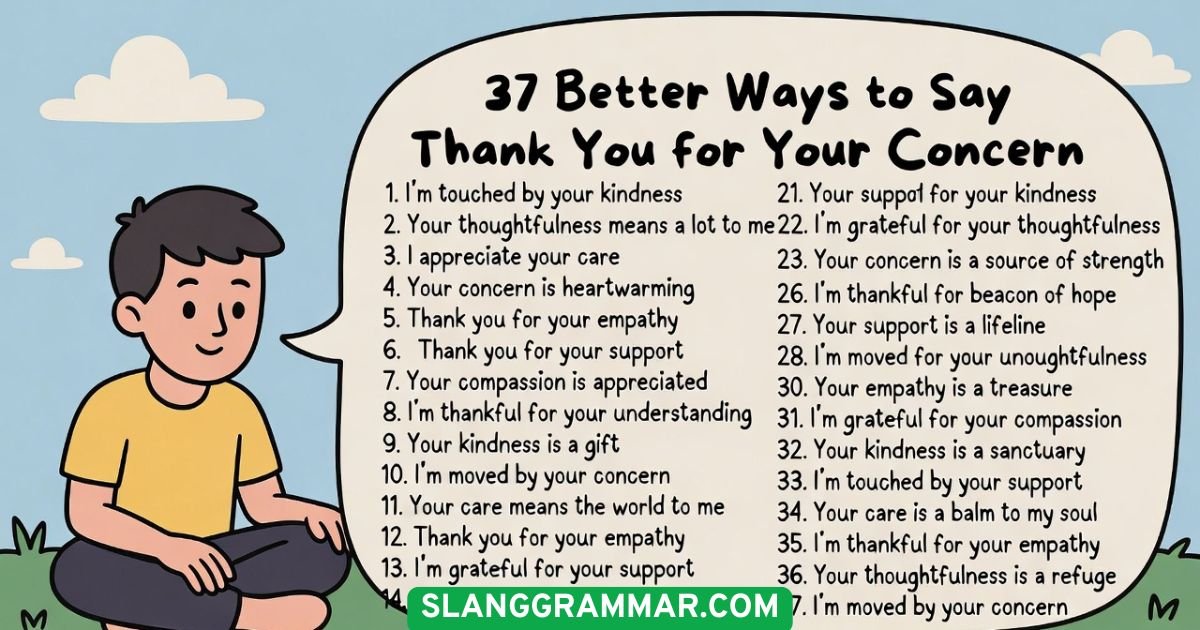
37 Other Ways to Say Thank You for Your Concern
Below are 37 other ways to say thank you for your concern with simple explanations and examples. These thank you alternatives include professional thank you phrases, formal appreciation phrases, polite gratitude expressions, and warmer options for personal messages.
1. Phrase: I Appreciate Your Support
I appreciate your support means you are thankful because someone stood by you or offered help. It has a warm and semi-formal tone, so it works well in both personal and professional situations.
You could say, “I appreciate your support during this difficult week.” This phrase is best when someone has done more than simply ask how you are. It fits when they offered encouragement, patience, or help.
It may not fit a very casual text where you want to sound light and friendly. In that case, thanks for checking in may feel more natural.
2. Phrase: Thank You for Checking In
Thank you for checking in is one of the most natural thanks for your concern alternatives. It means someone took time to ask how you were doing, and you appreciate that effort.
You might write, “Thank you for checking in. I’m doing much better today.” The tone is friendly, simple, and warm. It works well with coworkers, friends, neighbors, and family.
This phrase may not be formal enough for a serious business letter. For a more polished message, use I sincerely appreciate your support or your concern is appreciated.
3. Phrase: That Means a Lot to Me
That means a lot to me shows that someone’s care touched you emotionally. It sounds warm, personal, and sincere.
For example, you can say, “That means a lot to me. Thank you for thinking of me.” This phrase works best when someone sends kind words during a hard time.
It may not fit formal client communication because it can sound too personal. In business settings, a phrase like I appreciate your concern may be better.
4. Phrase: I’m Grateful for Your Kindness
I’m grateful for your kindness shows deep appreciation for kindness. It is polite, warm, and slightly formal.
You could say, “I’m grateful for your kindness and your thoughtful message.” This phrase works well after receiving sympathy, support, or a caring note.
It may feel a little too polished for a quick casual text. For close friends, thank you for caring may sound more relaxed.
5. Phrase: I Truly Value Your Thoughtfulness
I truly value your thoughtfulness means you noticed the person’s care and respect their effort. It carries a sincere and respectful tone.
A good example is, “I truly value your thoughtfulness during this time.” This works well in thank-you notes, professional replies, or serious personal situations.
It may not fit light conversations. If someone simply sends “Hope you’re okay,” then thanks for checking in may be enough.
6. Phrase: I Appreciate You Reaching Out
I appreciate you reaching out is useful when someone contacts you to show concern. It sounds friendly but still polished.
You might say, “I appreciate you reaching out to see how I’m doing.” This phrase works well in emails, text messages, and workplace replies.
It may not be the best choice if the person helped you in a bigger way. Then I appreciate your support or thank you for your support and understanding would be stronger.
7. Phrase: Thank You for Your Thoughtfulness
Thank you for your thoughtfulness means you appreciate the person’s careful and kind attention. It has a polite, warm, and semi-formal tone.
For example, “Thank you for your thoughtfulness. Your message really helped.” This is a good phrase for cards, emails, and supportive messages.
It may sound too formal between close friends who usually speak casually. A warmer option might be you’re so kind or thank you for caring.
8. Phrase: Your Concern Is Appreciated
Your concern is appreciated is a more formal version of thank you for your concern. It sounds professional and controlled.
You could write, “Your concern is appreciated, and I’m grateful for your message.” This phrase works well in workplace emails, official replies, and formal situations.
It may sound too distant in emotional conversations. If someone close to you is worried, I’m touched by your care would feel warmer.
9. Phrase: I’m Touched by Your Care
I’m touched by your care means the person’s kindness affected you emotionally. It has a heartfelt and warm tone.
You might say, “I’m touched by your care and thankful for your support.” This phrase is best for friends, family, or people who showed genuine emotional concern.
It may not fit a business email because it sounds personal. For work, I value your concern would be safer.
10. Phrase: Thank You for Being There

Thank you for being there means you are grateful that someone supported you when you needed it. It feels personal, kind, and emotional.
For example, “Thank you for being there when things were difficult.” This phrase works best for close relationships.
It may not fit a formal professional message unless you have a close relationship with the person. In a workplace setting, I appreciate your support may be more suitable.
Read Also:
11. Phrase: I’m Thankful for Your Support
I’m thankful for your support is a clear and sincere way to show gratitude for support. It is warm but still respectful.
You can say, “I’m thankful for your support and your kind words.” This phrase works well in personal messages, workplace notes, and thank-you emails.
It may not fit if the person only sent a small check-in message. In that case, thank you for checking in is more natural.
12. Phrase: It Means So Much That You Care
It means so much that you care is a warm and emotional phrase. It shows that the person’s concern gave you comfort.
A natural example is, “It means so much that you care. Thank you for thinking of me.” This works well for friends, family, and kind personal messages.
It may be too emotional for formal business communication. For a client or manager, I appreciate your concern is more appropriate.
13. Phrase: I Appreciate Your Kind Words
I appreciate your kind words is perfect when someone gives encouragement, comfort, sympathy, or support. It is one of the most useful thoughtful response phrases.
You might say, “I appreciate your kind words. They really helped me today.” The tone is warm, polite, and sincere.
It may not fit if the person did not actually say anything kind and only asked a question. In that case, thank you for checking in works better.
14. Phrase: Thank You for Your Support and Understanding
Thank you for your support and understanding is a strong phrase for work, school, family, and serious situations. It shows appreciation for both help and patience.
For example, “Thank you for your support and understanding while I handle this matter.” This is a great workplace email response because it sounds professional and thankful.
It may feel too long for a simple casual reply. If a friend texts, “You okay?” then thanks for checking in sounds better.
Read Also: Better Ways to Say “Wish You All the Best in Your Future Endeavours” With 28+ Natural Alternatives
15. Phrase: I Value Your Concern
I value your concern means you respect and appreciate someone’s care. It sounds mature, polite, and slightly formal.
You could write, “I value your concern and appreciate you reaching out.” This phrase works well in emails, professional messages, and respectful personal replies.
It may sound a bit stiff in a warm family conversation. For close relationships, thank you for caring may feel more natural.
16. Phrase: Your Support Means a Great Deal
Your support means a great deal shows strong appreciation. It sounds sincere and thoughtful without being overly emotional.
You can say, “Your support means a great deal to me during this time.” This phrase fits sympathy replies, professional appreciation, and personal support messages.
It may not fit a quick reply to a minor check-in. For smaller moments, I truly appreciate it is simpler.
17. Phrase: Thank You for Your Encouragement
Thank you for your encouragement is best when someone helps you feel hopeful, confident, or motivated. It has a positive and supportive tone.
For example, “Thank you for your encouragement. It helped me stay focused.” This works well after advice, motivation, or emotional support.
It may not fit if the person only expressed worry and did not encourage you. In that case, thank you for your concern or I appreciate your care would be clearer.
18. Phrase: I’m Grateful You Thought of Me
I’m grateful you thought of me means you appreciate being remembered. It sounds gentle, warm, and personal.
You might say, “I’m grateful you thought of me and took the time to message.” This phrase works well for friends, relatives, coworkers, and neighbors.
It may not be strong enough if someone gave major help. Then I sincerely appreciate your support would show deeper gratitude.
19. Phrase: I Appreciate Your Care
I appreciate your care is short, simple, and sincere. It directly shows appreciation for concern without sounding too formal.
For example, “I appreciate your care and your thoughtful message.” This phrase fits both personal and semi-formal situations.
It may sound slightly plain if you want a more emotional reply. In that case, I’m touched by your care gives more feeling.
20. Phrase: Thank You for Your Empathy
Thank you for your empathy means the person understood your feelings and responded with kindness. It is one of the best sympathy response phrases.
You could say, “Thank you for your empathy and understanding.” This phrase works well when someone responds with compassion during stress, grief, or emotional difficulty.
It may not fit if the person only asked a basic question. Use it when the person truly showed emotional understanding.
21. Phrase: I’m Thankful for Your Concern

I’m thankful for your concern is very close to thank you for your concern, but it sounds a little softer. It has a polite and sincere tone.
A good example is, “I’m thankful for your concern and appreciate your support.” This phrase works well in emails, texts, and respectful personal messages.
It may feel repetitive if you already used the word “concern” many times. In that case, choose I appreciate your support or thank you for checking in.
22. Phrase: I Sincerely Appreciate Your Support
I sincerely appreciate your support is a strong and polished phrase. It sounds professional, respectful, and heartfelt.
You might write, “I sincerely appreciate your support during this matter.” This phrase is ideal for professional emails, formal replies, and serious personal messages.
It may sound too formal for a casual chat with a close friend. For that, that means a lot to me sounds warmer.
23. Phrase: Your Kindness Means a Lot
Your kindness means a lot shows that someone’s care truly mattered to you. It is warm, personal, and easy to understand.
For example, “Your kindness means a lot. Thank you for reaching out.” This phrase works well in thank-you cards, texts, and emotional support replies.
It may not fit a very formal email. For a business setting, your concern is appreciated may be more suitable.
24. Phrase: I Appreciate Your Consideration
I appreciate your consideration thanks someone for being thoughtful, patient, or respectful. It has a formal and professional tone.
You could say, “I appreciate your consideration and understanding.” This phrase is useful in workplace emails, client communication, and formal requests.
It may not sound warm enough for a close friend. If you want a personal tone, use thank you for caring instead.
25. Phrase: Thank You for Caring
Thank you for caring is short, warm, and direct. It is one of the best casual ways to say thank you for your concern.
You might say, “Thank you for caring. It really means a lot.” This phrase works well with friends, family, and people you trust.
It may be too casual for a manager, client, or formal email. In those cases, choose I value your concern or I sincerely appreciate your support.
26. Phrase: I Truly Appreciate It
I truly appreciate it is simple and flexible. It works when the other person already knows what you are thanking them for.
For example, “I truly appreciate it. Your message helped more than you know.” This phrase is good for texts, emails, and everyday replies.
It may be unclear if used alone. If the situation is not obvious, add context like, “I truly appreciate your concern.”
27. Phrase: I Value Your Support
I value your support means the person’s help or care matters to you. It sounds respectful and steady.
You can write, “I value your support and appreciate your thoughtful message.” This phrase works in professional and personal situations.
It may not fit if the person only sent a very small message. For a simple check-in, thank you for checking in sounds more natural.
28. Phrase: Thank You for Your Understanding
Thank you for your understanding thanks someone for being patient or accepting your situation. It is common in professional and personal communication.
For example, “Thank you for your understanding while I take care of this issue.” This phrase works well when delays, absences, or personal matters affect others.
It may not fully express emotion if someone showed deep care. For emotional support, I’m grateful for your kindness may be better.
29. Phrase: I’m Grateful for Your Attention
I’m grateful for your attention means you appreciate someone noticing your situation or taking it seriously. It sounds formal and professional.
You might say, “I’m grateful for your attention to this matter.” This phrase is best for workplace or official communication.
It may not fit friendly or emotional messages. With a friend, it can sound too businesslike.
Read Also:
30. Phrase: I Deeply Appreciate Your Concern
I deeply appreciate your concern is a stronger version of thank you for your concern. It sounds sincere, serious, and respectful.
For example, “I deeply appreciate your concern and your kind words.” This phrase works best in emotional, formal, or sensitive situations.
It may be too strong for a small casual check-in. If the situation is light, use thanks for checking in.
31. Phrase: Thank You for Thinking of Me
Thank you for thinking of me means you appreciate that someone remembered you and cared enough to reach out. It is warm and friendly.
You could say, “Thank you for thinking of me. Your message was very kind.” This phrase fits personal messages, friendly emails, and thoughtful replies.
It may not be formal enough for serious business communication. For work, I appreciate your concern is safer.
32. Phrase: I’m Grateful for Your Message

I’m grateful for your message thanks someone for taking time to write to you. It sounds polite, warm, and simple.
For example, “I’m grateful for your message and appreciate your concern.” This phrase is good when replying to sympathy, support, or a check-in.
It may feel too general if the person gave real help. In that case, I appreciate your support is more meaningful.
33. Phrase: Your Thoughtful Words Mean So Much
Your thoughtful words mean so much shows that someone’s message brought comfort. It is emotional, warm, and sincere.
You might say, “Your thoughtful words mean so much to me right now.” This phrase works well after sympathy messages, encouragement, or emotional support.
It may be too personal for client communication. For clients, use thank you for your understanding or your concern is appreciated.
34. Phrase: Thank You for Your Compassion
Thank you for your compassion thanks someone for showing deep kindness and emotional understanding. It is a strong and respectful phrase.
For example, “Thank you for your compassion during this difficult time.” This phrase works best in grief, illness, family trouble, or serious emotional situations.
It may sound too heavy for a simple check-in. If someone only says, “Hope you’re okay,” then thank you for checking in is better.
35. Phrase: I’m Thankful You Reached Out
I’m thankful you reached out means you appreciate that someone contacted you. It sounds friendly, natural, and warm.
You could say, “I’m thankful you reached out. It really means a lot.” This phrase works well in texts, emails, and supportive replies.
It may not fit a very formal business message. In that case, I appreciate you reaching out sounds more professional.
36. Phrase: I Appreciate Your Warm Thoughts
I appreciate your warm thoughts thanks someone for kind wishes or caring words. It has a gentle and thoughtful tone.
For example, “I appreciate your warm thoughts and kind message.” This phrase works well for cards, emails, and personal support messages.
It may sound unusual in very casual texting. With close friends, thanks for caring is easier and more natural.
37. Phrase: Thank You for Your Care and Concern
Thank you for your care and concern keeps the original meaning but adds more warmth. It sounds polite, sincere, and complete.
You might say, “Thank you for your care and concern. I truly appreciate it.” This phrase works well in formal, semi-formal, and personal situations.
It may feel too long for a quick text. For short replies, thank you for caring or thanks for checking in works better.
Quick Reference Table
This table gives you a fast way to compare all other ways to say thank you for your concern and choose the best one for your situation.
| Alternative Phrase | Best Use Case | Tone |
| I appreciate your support | Semi-formal support | Warm |
| Thank you for checking in | Casual check-in | Friendly |
| That means a lot to me | Emotional support | Warm |
| I’m grateful for your kindness | Personal or sympathy reply | Heartfelt |
| I truly value your thoughtfulness | Formal appreciation | Respectful |
| I appreciate you reaching out | Email or text reply | Polite |
| Thank you for your thoughtfulness | Caring message | Warm |
| Your concern is appreciated | Formal email | Professional |
| I’m touched by your care | Close personal support | Emotional |
| Thank you for being there | Friends or family | Heartfelt |
| I’m thankful for your support | General support | Sincere |
| It means so much that you care | Emotional reply | Warm |
| I appreciate your kind words | Sympathy or encouragement | Gentle |
| Thank you for your support and understanding | Workplace or serious matter | Professional |
| I value your concern | Formal response | Respectful |
| Your support means a great deal | Serious support | Sincere |
| Thank you for your encouragement | Motivation or advice | Positive |
| I’m grateful you thought of me | Friendly message | Warm |
| I appreciate your care | Personal or semi-formal | Simple |
| Thank you for your empathy | Emotional understanding | Compassionate |
| I’m thankful for your concern | Polite reply | Sincere |
| I sincerely appreciate your support | Professional email | Formal |
| Your kindness means a lot | Personal gratitude | Warm |
| I appreciate your consideration | Work or client message | Professional |
| Thank you for caring | Friends and family | Casual |
| I truly appreciate it | Simple reply | Neutral |
| I value your support | Work or personal support | Respectful |
| Thank you for your understanding | Delays or personal matters | Professional |
| I’m grateful for your attention | Official matter | Formal |
| I deeply appreciate your concern | Serious situation | Sincere |
| Thank you for thinking of me | Friendly support | Warm |
| I’m grateful for your message | Reply to kind note | Polite |
| Your thoughtful words mean so much | Sympathy response | Emotional |
| Thank you for your compassion | Grief or hardship | Heartfelt |
| I’m thankful you reached out | Friendly check-in | Warm |
| I appreciate your warm thoughts | Cards or kind wishes | Gentle |
| Thank you for your care and concern | General polite reply | Sincere |
Common Mistakes When Using Thank You for Your Concern
One common mistake is using thank you for your concern when the situation needs more warmth. If a close friend sends a caring message after a hard moment, a plain reply may sound distant. A better warm response to support would be that means a lot to me or thank you for being there.
Another mistake is using the phrase when someone gave real help, not just concern. If someone brought food, covered your work shift, helped your family, or gave emotional support, use stronger ways to express appreciation like I sincerely appreciate your support or your kindness means a lot.
People also sometimes use the phrase too formally in text messages. With family or friends, casual use often sounds better. Simple phrases like thank you for caring or thank you for checking in feel more natural.
The last mistake is using it sarcastically. In writing, tone can be hard to read. If you want your message to sound sincere, add one warm sentence after the phrase. For example, “Thank you for your concern. Your message really means a lot to me.”
FAQ’s
How do you say thank you for concern?
You can say, “Thank you for your concern,” “I appreciate your support,” or “Thank you for checking in.”
These phrases show that you value someone’s care and kind attention.
Is it proper to say thank you for your concern?
Yes, “Thank you for your concern” is proper, polite, and professional.
You can use it in emails, messages, and respectful conversations.
What does I appreciate your concern mean?
“I appreciate your concern” means you are thankful because someone cares about you.
It shows respect for their worry, kindness, or support.
What does thank you for your concerned mean?
“Thank you for your concerned” is not correct grammar.
The correct phrase is “Thank you for your concern.”
What is another word for thank you for your concern?
Another phrase is “Thank you for checking in” or “I appreciate your support.”
You can also say “Thank you for caring” in a warm and simple way.
Conclusion
“Thank You for Your Concern” is a polite and kind phrase that helps someone show respect. People use it when another person shows care, support, or worry. This phrase is useful during illness, stress, sadness, or any hard situation. It tells the other person that their kind words matter. It also helps the reply sound calm, respectful, and thankful. A person can use this phrase in emails, text messages, school notes, and daily talks.
There are many other ways to say “Thank You for Your Concern” in a better tone. Some phrases sound warm, and some sound formal. A student can use simple words with friends, while a professional can use polite words at work. The best reply depends on the person and the moment. A clear and kind message always shows good manners and sincere thanks.